Only 18% of Gen X Feel Very Confident They’ll Retire Comfortably. Here’s Where the Rest Can Start
Most Gen Xers are racing toward retirement age carrying debt, depleted 401(k)s, and a savings gap that stretches into the hundreds of thousands of dollars. The window to close that gap is narrow, but it has not yet closed.

This post may contain links from our sponsors and affiliates, and Flywheel Publishing may receive compensation for actions taken through them.

Here’s how Gen X feels about retirement, what drives that worry, and where the numbers point for those who aren’t confident yet. Many Gen Xers are managing several financial responsibilities at once. They’re helping kids with tuition or rent, checking in on aging parents, and looking at a 401(k) that never quite feels like enough. Fidelity defines the generation as people born from 1965-1980, so the oldest are already in their early 60s.
Only a Small Share of Gen X Feels Very Confident
Transamerica’s 25th Annual Retirement Survey polled 10,009 adults between Sept 11 and Oct 17, 2024. Only 18% of Gen X said they’re very confident they’ll be able to retire comfortably. Their plans match that worry. 39% of Gen X expect to retire at 70 or later, or never, while just 23% expect to stop working before 65.
Why Gen X Carries More Retirement Worry
Gen X came up during the shift from traditional pensions to 401(k)s. Many workers saw their pensions frozen partway through their careers, and they’ve been through several market crashes since then. The Federal Reserve’s Distributional Financial Accounts show Gen X holds 29.4% of defined benefit pension entitlements, compared with 57.2% for Baby Boomers. Defined benefit means a guaranteed pension check. Gen X relies more on 401(k)-style accounts and holds 40.7% of those balances.
Debt also adds to this group’s financial pressure. The same Fed data for 2026 Q2 shows Gen X carries 34.5% of all household liabilities and 36.1% of home mortgages.
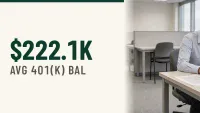
Account balances help explain the gap. Fidelity reported an average Gen X 401(k) balance of $217,500 in the third quarter of 2025. An average gets pulled up by a few very large accounts, so the typical saver usually has less. Meanwhile, Gen X estimates it needs $1.57 million to retire, according to Northwestern Mutual. Retirement calculators compare a personal balance with that kind of target.
Catch-Up Contributions Open Up After 50
Catch-up contributions are extra amounts older workers can add to a 401(k) beyond the regular limit. In 2026, the standard limit is $24,500. Those 50 and older can add $8,000 more, for a total of $32,500.
Those aged 60 to 63 get a bigger window. Their catch-up limit rises to $11,250, which brings the total to $35,750. There’s also a change this year: anyone 50 or older who earned more than $150,000 in wages from their employer in 2025 has to put catch-up money into a Roth 401(k). That means the contribution is made after taxes, not before.
What a Modest Increase Can Add by 67
For example, picture a 50-year-old who saves an extra $200 a month until 67. It earns a steady 6% a year, compounded monthly.
Under those assumptions, the deposits add up to $40,800, and the account grows to about $70,646 by 67. Real returns move around from year to year, so this is only a rough guide. Our recent piece on what the average Gen X balance could grow into by 67 runs the same kind of math using larger starting balances.
Social Security Timing and Card Debt Before Retirement
For anyone born in 1960 or later, full retirement age is 67. Taking at 62 pays about 70% of the full benefit, and that cut lasts for life. Our coverage of full retirement age goes through the details. After the 2.8% cost-of-living increase for 2026, the average retired worker gets about $2,071 a month.
High-interest debt cuts the money available for saving. The Federal Reserve put the average credit card rate at 21% as of August 2026. If a balance remains after retirement, that interest comes out of a fixed income. Card delinquencies were 2.9% in the latest reading.
Social Security Statements Show Estimated Benefits at Each Age
Estimated benefits are listed in one place on the statement. Anyone with a free My Social Security account on the agency’s website can see estimated monthly benefits for taking at 62, at 70, or at their full retirement age, along with their full earnings history. They can compare those estimates with how much the 401(k) and any catch-up contributions would need to cover.
Contact [email protected] for any questions or corrections.
David Beren has been a Flywheel Publishing contributor since 2022. Writing for 24/7 Wall St. since 2023, David loves to write about topics of all shapes and sizes. As a technology expert, David focuses heavily on consumer electronics brands, automobiles, and general technology. He has previously written for LifeWire, formerly About.com. As a part-time freelance writer, David’s “day job” has been working on and leading social media for multiple Fortune 100 brands. David loves the flexibility of this field and its ability to reach customers exactly where they like to spend their time. Additionally, David previously published his own blog, TmoNews.com, which reached 3 million readers in its first year. In addition to freelance and social media work, David loves to spend time with his family and children and relive the glory days of video game consoles by playing any retro game console he can get his hands on.