Santa Fe Has Art, Altitude and a New Mexico Tax Break for Retirees. What It Takes to Retire There at 65 on $1.3 Million

This post may contain links from our sponsors and affiliates, and Flywheel Publishing may receive compensation for actions taken through them.

Many visitors to Santa Fe wonder whether they could retire there for good. It’s a common retirement question, and the answer comes down to taxes, housing, and health care more than scenery. The example here is a married couple, both 65, with $1.3 million saved, just starting Medicare and Social Security.
How New Mexico Taxes a Retired Couple
New Mexico’s best-known break covers Social Security, which is fully exempt from state income tax when adjusted gross income is $150,000 or less for married couples filing jointly, or $100,000 or less for single filers. IRA withdrawals and pensions are taxed under the state’s progressive brackets, which top out at 5.9%. The 2026 federal standard deduction for joint filers is $32,200.
Instead of a regular sales tax, New Mexico has a gross receipts tax that is charged to the seller. The seller usually passes it on at the register, so it works much like a sales tax and also covers many services. Rate-lookup sites put Santa Fe’s combined rate somewhere between 8.19% and 8.4375%. For property tax, residential assessments are capped at 3% annual increases. There’s also a valuation freeze for homeowners over 65, but it depends on income, so it targets owners with limited income. A couple drawing from a seven-figure portfolio would need to check the current limit with the county assessor.
Turning $1.3 Million Into a Santa Fe Paycheck
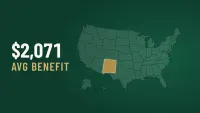
The SSA’s average benefit for a retired couple is $3,208 a month, or $38,496 a year. A 4% first-year withdrawal, a common starting rate for a 30-year retirement, gives $52,000. Together, that’s $90,496, about $7,541 a month before taxes. At a more conservative 3.5%, the total comes to $83,996. For comparison, the average U.S. household spent $81,905 in 2025.
Medicare Part B costs $202.90[1] per person per month, or $4,869.60 a year for two. Part D, a Medigap policy, and the $283[1] Part B deductible add to that. Income-based surcharges, called IRMAA, don’t begin until joint income passes $218,000[1].
Housing costs have a large effect on whether this plan works. Local brokers put Santa Fe’s median sold price at around $710,000, and the FHFA index for the metro is up 41.97%[2] over five years. For context, New Mexico’s statewide cost-of-living index is 92.212. Using equity from a previous home sale to pay for the house, the $90,000 plan holds up. If the median house comes out of the $1.3 million, 4% of what’s left is only $23,600. Add Social Security and total income falls to $62,096.
Art, Mountains and a Regional Hospital, With Trade-Offs
Retirees get galleries, a well-known food scene, and the Sangre de Cristo Mountains close by. The main hospital, CHRISTUS St. Vincent, has been ranked as New Mexico’s safest hospital in national patient-safety rankings. Some specialty care may require travel to Albuquerque. The altitude and dry air can require an adjustment period, and water supply and wildfire risk are often cited as long-term concerns that can affect insurance costs. New Mexico also had a net loss of 1,924[3] residents in the latest IRS migration data.
Watching the $150,000 Line
The Social Security exemption has an income limit that can matter in some years. In a normal year, a $52,000 withdrawal plus taxable Social Security benefits keeps this couple far below the limit. A single year with unusually high income can change that. A large Roth conversion, a new roof paid for with IRA funds, or a big capital gain can push adjusted gross income over $150,000. Once that happens, the exemption stops applying, and the couple’s Social Security becomes taxable in New Mexico for that year.
Timing affects how the exemption applies in conversion years. For people born in 1961, required minimum distributions don’t start until age 75, so there’s a ten-year window for Roth conversions. Spreading those conversions out so each year stays under $150,000 keeps the exemption in place. Social Security also keeps rising, with a 3.6% COLA set for 2027, which leaves a little less room under the line each year.
What It Takes to Pull It Off
This example depends on four conditions. The house gets bought with separate home equity, or the couple picks something well below the median. Withdrawals start at 3.5% to 4% of $1.3 million. That starting rate has drawn its share of pushback recently (we made the full case for an income-first alternative in a free report here: The 4% Rule Is Broken).
Spending stays near $90,000 a year, while adjusted gross income stays at or below $150,000 every year, including conversion years, and living at altitude is also a health consideration that some retired people review with a doctor.
Contact [email protected] for any questions or corrections.
David Beren has been a Flywheel Publishing contributor since 2022. Writing for 24/7 Wall St. since 2023, David loves to write about topics of all shapes and sizes. As a technology expert, David focuses heavily on consumer electronics brands, automobiles, and general technology. He has previously written for LifeWire, formerly About.com. As a part-time freelance writer, David’s “day job” has been working on and leading social media for multiple Fortune 100 brands. David loves the flexibility of this field and its ability to reach customers exactly where they like to spend their time. Additionally, David previously published his own blog, TmoNews.com, which reached 3 million readers in its first year. In addition to freelance and social media work, David loves to spend time with his family and children and relive the glory days of video game consoles by playing any retro game console he can get his hands on.