He Replaced Himself With a Delivery Robot at 63. Social Security Still Counted the Profit as Earnings.
When a 63-year-old sole proprietor bought a sidewalk robot to handle his delivery route and filed for early Social Security, he assumed the profit flowing in would finally count as passive income. Social Security saw the situation very differently.

This post may contain links from our sponsors and affiliates, and Flywheel Publishing may receive compensation for actions taken through them.
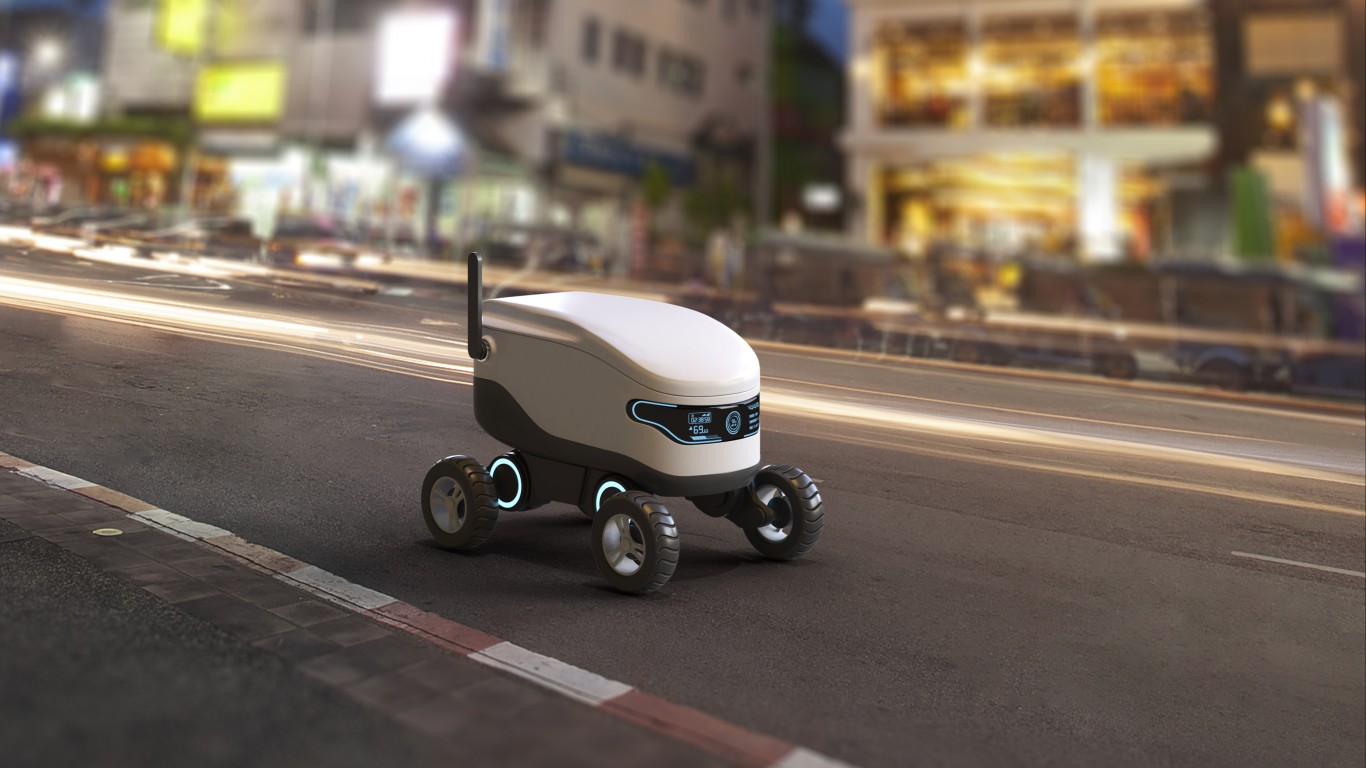
Picture a 63-year-old who has spent a decade running a one-person delivery service. He files for Social Security early, buys a sidewalk delivery robot to handle his route, and figures the checks that keep landing in his business account are now passive. The robot does the walking. He just watches the dashboard. On a retirement forum recently, a similar owner asked whether replacing his own driving with automation meant his profit would stop counting against the earnings test. The short answer surprised him.
Automation changes how the work gets done, but it does not automatically change how the resulting income is classified. For a sole proprietor, continuing business profit generally remains net earnings from self-employment. The company’s legal structure and how the owner is paid can also matter. That distinction is the whole ballgame for anyone claiming Social Security before full retirement age (FRA) while still owning a business.
Why the Earnings Test Cares Who Runs the Business
If you claim Social Security before FRA and keep earning, the Social Security Administration (SSA) applies an earnings test. In 2026, someone under full retirement age for the entire year can earn $24,480 before Social Security withholds $1 in benefits for every $2 earned above the limit. For the self-employed, the relevant number is net earnings after allowable business deductions and depreciation. Benefits withheld are not simply refunded later, but Social Security recalculates the monthly benefit at FRA to account for months in which checks were withheld.
Here is where the delivery-robot owner gets tripped up. For a sole proprietor, buying a machine to perform the physical work ordinarily does not change the character of the business’s Schedule C profit. If he still decides what the business charges, where it operates, which customers to take, and how the robot is maintained, the IRS and Social Security are likely to keep treating that profit as self-employment earnings.
So the robot may have eliminated his route. It did not necessarily convert his profit into passive income. The profit can still count under the earnings test and remain subject to self-employment tax.
What Actually Counts as Passive Income
Passive income is an especially slippery phrase here because the tax code’s passive-activity rules are not identical to Social Security’s retirement earnings test. Interest, dividends, capital gains, pensions, annuities, and generally certain rental income do not count toward the earnings limit. Profit from a sole proprietorship that the owner continues to operate generally does.
A corporate structure can produce a different result, but incorporating is not an automatic escape hatch. Wages paid to an owner count as earnings. An S corporation may pay distributions that are not treated as wages, but an owner who performs services generally must receive reasonable compensation before taking non-wage distributions.
The line is fact-specific. How much time the owner spends, who makes the operating decisions, the business entity involved, and whether the owner receives wages, distributions, or Schedule C profit all matter. Two owners with identical robots and identical revenue could receive different answers depending on how their businesses are structured and operated.
How This Interacts With the Rest of the Picture
For a 63-year-old collecting smaller benefits, three things move together. First, claiming before FRA locks in a permanent reduction to the monthly benefit. Second, the earnings test can withhold some of those already-reduced checks while business profit stays high. Third, the 2.8% Social Security cost-of-living adjustment (COLA) for 2026 does not override the separate earnings test. A strong business year can still overwhelm the annual benefit increase.
Add self-employment tax on that same net profit, and the passive robot framing gets expensive quickly. The owner may also face higher provisional income, which can pull more of the Social Security benefit itself into taxable territory.
What to Think Through Before Assuming Automation Retired You
Before treating automated revenue as retirement income, pin down three things:
- Identify the income and entity. Schedule C profit, corporate wages, and shareholder distributions do not necessarily receive identical treatment.
- Separate the labor question from the income question. Replacing your hours with a machine changes how the work gets done. It does not by itself change how the resulting profit is taxed or treated under the earnings test.
- Get detailed advice before restructuring. Producing income that genuinely falls outside the earnings test may require substantive changes to the business and the owner’s role, not merely a new piece of equipment.
Every situation turns on its own facts, and small details in how a business is run can flip the answer. Treat this as a starting point for a conversation with a tax professional or Social Security representative, not as a green light to assume the robot did the retiring for you.
Contact [email protected] for any questions or corrections.
Gerelyn Terzo is the author of dividend investing handbook "Dividend Investing Strategies: How to Have Your Cake & Eat It Too." A veteran financial journalist, she covers agri-finance for outlets like Global AgInvesting and the broader stock market and personal finance for 24/7 Wall Street. She began at CNBC and later helped launch Fox Business in New York. Gerelyn currently resides in Woodland Park, Colorado and dabbles in nature photography as a hobby.