His Cotton Farm Lost $200,000. Social Security Wouldn’t Let the Loss Offset This Year’s Comeback.
A cotton farmer claws back from a brutal loss year, only to discover that Social Security calculates his comeback by a completely different rulebook than the IRS does, and the gap between those two numbers can be stunning.

This post may contain links from our sponsors and affiliates, and Flywheel Publishing may receive compensation for actions taken through them.
Bad Crop, Good Crop
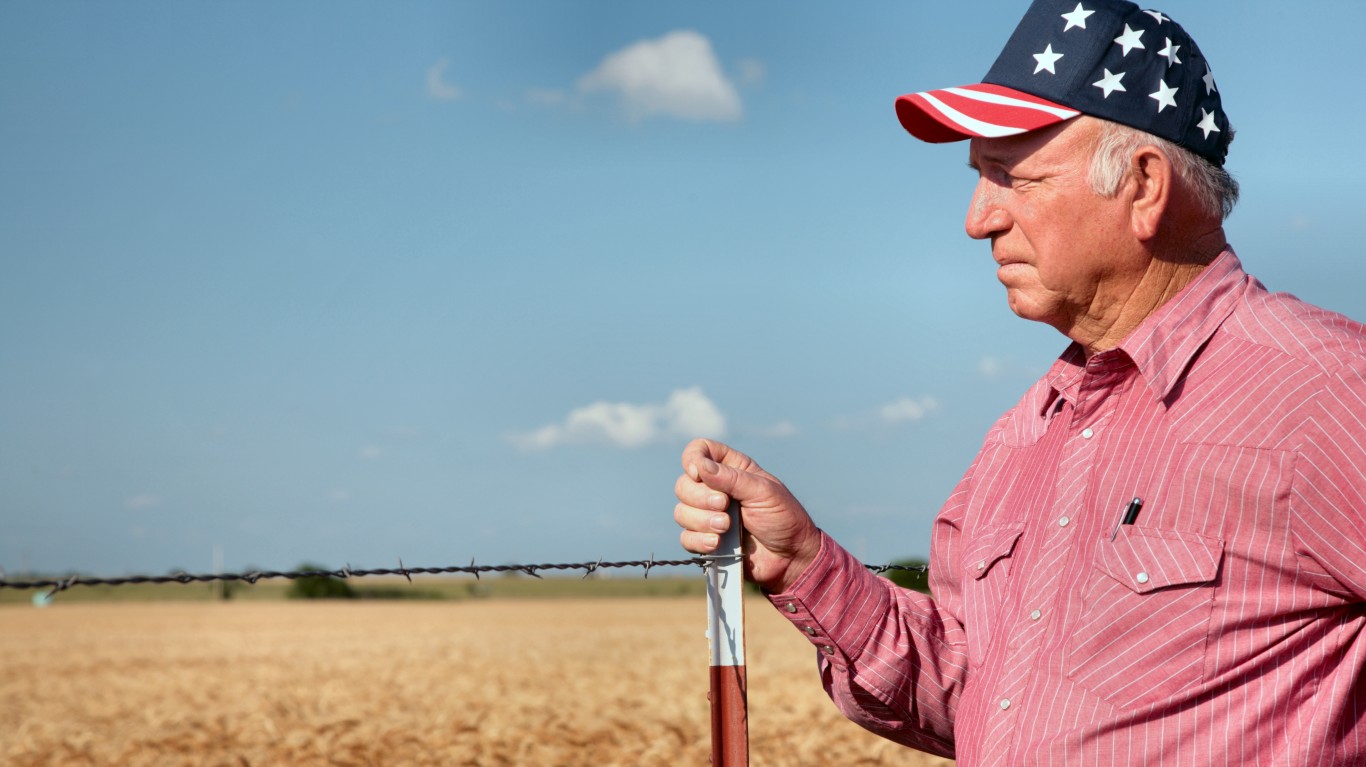
A cotton grower watches a storm tear through one season and finishes the year roughly $200,000 in the red. The next crop does what the first one could not: yields recover, prices cooperate, and the farm returns to profit. He has already claimed Social Security before full retirement age (FRA), which is 67 for anyone born in 1960 or later.
On his federal income-tax return, a qualifying net operating loss (NOL) carried forward from the bad year may reduce taxable income in the rebound year, subject to the tax code’s NOL limits. Social Security, however, does not let that old loss perform the same job when it measures his current self-employment earnings. One farm can therefore produce a much softer income-tax year than Social Security earnings year, and the gap between those two numbers can be substantial.
Social Security Makes the New Year Stand Alone
A farmer generally reports current farming income and expenses on Schedule F and uses Schedule SE to calculate net earnings from self-employment. Social Security relies on those self-employment earnings both for the worker’s record and, before FRA, the retirement earnings test. The critical exception involves the old NOL. Under IRC Section 1402(a)(4), a deduction for a net operating loss sustained in another taxable year is specifically disallowed when net earnings from self-employment are calculated. A Tax Court decision confirmed this rule directly in the farming context.
Suppose this year’s cotton crop produces a healthy current-year farm profit. A prior loss may still help lower his federal taxable income, but it does not erase that profit when Social Security measures self-employment earnings. For someone who assumed the $200,000 disaster year had built a cushion for the recovery, that distinction can be expensive.
The Earnings Test Sees the Rebound
In 2026, someone under FRA for the entire year can earn up to $24,480 before Social Security begins withholding $1 in benefits for every $2 above the limit. The test counts wages and net earnings from self-employment. That means the farmer cannot use taxable income after an NOL carryforward to estimate whether his benefits will be withheld. The number Social Security cares about can be considerably higher than the tax return suggests.
There is relevant legislative activity worth noting here. A bipartisan bill introduced in 2026, the Senior Citizens’ Freedom to Work Act (H.R. 8344 in the House, sponsored by Rep. Greg Murphy of North Carolina, and a companion Senate measure from Sen. Rick Scott of Florida), would repeal the retirement earnings test entirely. As of September 2026, neither bill has advanced out of committee, so the current rules remain in effect. Farmers and other self-employed workers planning for 2026 should operate under the existing thresholds.
The result of the current rules is not entirely punitive. Benefits withheld under the earnings test are not simply erased. When the farmer reaches FRA, Social Security recalculates his retirement benefit to account for the months in which benefits were withheld, which typically increases the monthly payment going forward.
The Comeback Year Can Help Him Too
The same current-year earnings that can trigger withholding may also strengthen his retirement benefit. Social Security bases retirement benefits on a worker’s highest 35 years of indexed covered earnings. A profitable farming year can potentially replace a weaker year already in that calculation, up to the annual taxable earnings maximum. In 2026, that ceiling is $184,500, up from $176,100 in 2025. Schedule SE is the form through which self-employed workers report earnings counted by Social Security.
For a farmer whose earnings history contains thin years from drought, illness, or earlier crop failures, another profitable season may therefore carry lasting value. The old loss cannot reduce this year’s Social Security earnings, but it also cannot prevent those new earnings from improving the lifetime record. That makes the rebound more than a tax problem to manage.
Put Both Calculations on the Same Page
Before year-end, the useful exercise is to calculate the income-tax result and the Social Security result separately, rather than assuming one bottom line controls both.
- Ask the tax preparer how much of the prior NOL can actually be used on this year’s income-tax return and what current-year Schedule F profit will flow toward Schedule SE.
- Compare expected net self-employment earnings with the 2026 retirement earnings limit if benefits began before FRA. Current deductible farm expenses can affect that calculation even though an old NOL cannot.
- Check the Social Security earnings record for low years. If the rebound can replace one, part of today’s higher earnings may come back as a stronger monthly benefit later.
Last year’s cotton loss can still have real value on the tax return. Social Security simply keeps a different set of books. For a farmer coming back from a disastrous season, that means a good year can cost more right now while also doing something useful for retirement later.
Editor’s note: This article was updated to add the 2026 Social Security taxable wage base of $184,500 (up from $176,100 in 2025), the higher $65,160 earnings-test limit that applies in the year a beneficiary reaches full retirement age, the IRC Section 1402(a)(4) statutory basis for disallowing NOL deductions in self-employment earnings calculations, and the status of the Senior Citizens’ Freedom to Work Act of 2026, which proposes repealing the retirement earnings test but has not passed either chamber as of September 2026.
Contact [email protected] for any questions or corrections.
Gerelyn Terzo is the author of dividend investing handbook "Dividend Investing Strategies: How to Have Your Cake & Eat It Too." A veteran financial journalist, she covers agri-finance for outlets like Global AgInvesting and the broader stock market and personal finance for 24/7 Wall Street. She began at CNBC and later helped launch Fox Business in New York. Gerelyn currently resides in Woodland Park, Colorado and dabbles in nature photography as a hobby.