He Retired From the Airline at 63 and Kept Flying Standby. Social Security Never Saw the Empty Seat as Pay.
Retiree standby travel can save thousands of dollars a year, which raises a loaded question for anyone already collecting Social Security before full retirement age: does sliding into an otherwise empty seat count as compensation the government wants a piece…

This post may contain links from our sponsors and affiliates, and Flywheel Publishing may receive compensation for actions taken through them.

A Familiar Story at the Employee Gate
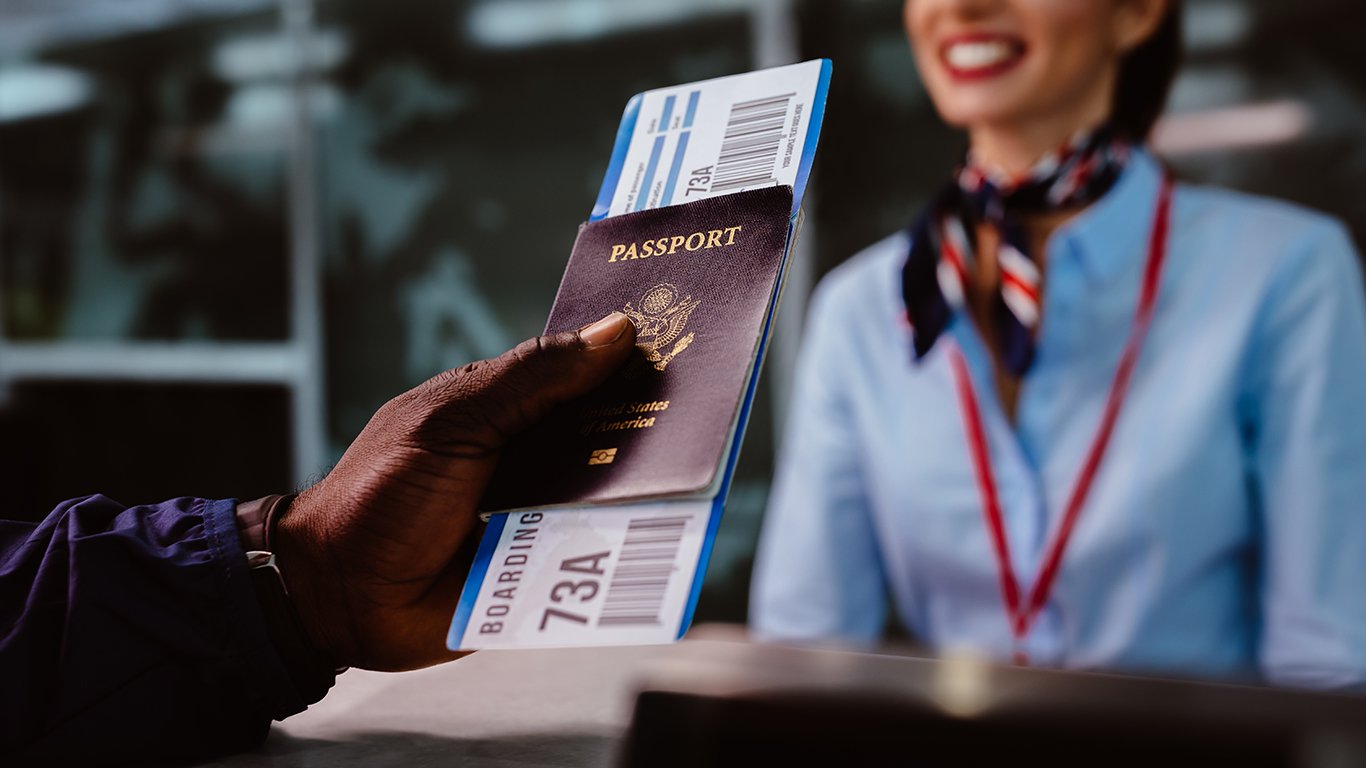
A longtime airline employee retires at 63 and begins collecting Social Security. He keeps one benefit from the career he left behind: retiree standby travel. When he wants to visit family, he arrives at the airport without a confirmed seat, watches the standby list and waits until the boarding door is nearly ready to close. If space remains, he gets on. If the flight fills, he goes home or tries again.
The privilege can save him thousands of dollars a year, which raises an understandable question. Does the value of those flights count as pay and threaten his Social Security check? Usually not. The same uncertainty that makes standby travel unpredictable is what helps keep it off his earnings record.
Why Waiting at the Gate Matters
Federal tax rules allow employers to exclude certain “no-additional-cost services” from an employee’s wages. The category covers services the company already sells to customers but can provide to workers without substantial additional expense or lost revenue. Airline standby travel is a textbook example. If a seat would otherwise leave the gate empty, letting a retiree occupy it generally costs the carrier little and does not displace a paying customer.
Retirees can qualify for the exclusion because former employees who retired or left on disability are treated as employees for this purpose. The result is straightforward. A qualifying standby seat is not included in taxable wages, does not appear as Social Security wages and does not enter the retirement earnings test.
At 63, that matters. Someone below full retirement age (FRA) for all of 2026 can earn $24,480 before benefits begin to be withheld. Above the limit, Social Security generally holds back $1 for every $2 of excess earnings. The standby seat adds nothing to that total. A paycheck from returning to the airline part time would count. An empty seat used under a qualifying retiree travel program generally would not.
A Confirmed Seat Can Make the Difference
The tax treatment depends on the airline surrendering no meaningful revenue. The IRS gives a specific example of an airline providing employees with free reserved seats. Because those reservations prevent the carrier from selling the seats to customers, the benefit does not qualify as a no-additional-cost service. That distinction gives the standby list a second purpose.
Waiting until paying passengers have boarded helps establish that the seat was truly excess capacity. The uncertainty is not merely an inconvenience attached to the tax break. It is part of why the tax break exists.
Other benefits can follow different rules. Confirmed travel, upgrades, discounted cargo service or perks supplied outside the airline’s ordinary business may be taxable in whole or in part. If taxable value appears as wages on a Form W-2, it can enter the earnings test. Nondiscrimination rules add another wrinkle for highly compensated former employees. If a travel program favors executives without offering comparable access to a reasonable employee group, the exclusion may be unavailable to those highly compensated participants.
What the Seat Does Not Change
A qualifying flight also stays out of the formula determining how much of his Social Security is taxable. It does not add to adjusted gross income (AGI), and it does not build additional covered earnings toward a future benefit calculation. It is simply a retiree perk, not another paycheck.
The more consequential financial decision was claiming Social Security at 63, which permanently reduced his monthly benefit compared with waiting until FRA. The travel privilege neither worsens nor repairs that reduction. These are separate parts of his retirement, even if both arrived after he turned in his employee badge.
Before He Packs His Bags
He does not need to assign a dollar value to every boarding pass or call Social Security after every trip. One conversation with the retiree travel office should answer two questions:
- Does the airline treat standby travel as a no-additional-cost service excluded from taxable wages?
- Can confirmed seats, upgrades or companion travel produce taxable value on a W-2?
His year-end tax forms provide the backstop. If the airline reports no wages for the standby benefit, there is generally nothing to add to the earnings test. His name may sit on the standby list. His Social Security check does not. If the seat was leaving empty anyway, the trip remains what it looks like: a hard-earned retirement perk, not another day on the payroll.
Contact [email protected] for any questions or corrections.
Gerelyn Terzo is the author of dividend investing handbook "Dividend Investing Strategies: How to Have Your Cake & Eat It Too." A veteran financial journalist, she covers agri-finance for outlets like Global AgInvesting and the broader stock market and personal finance for 24/7 Wall Street. She began at CNBC and later helped launch Fox Business in New York. Gerelyn currently resides in Woodland Park, Colorado and dabbles in nature photography as a hobby.