The Most Expensive US Navy War Vessels
Currently in active service, the U.S. naval fleet has 243 active seafaring units. This figure includes commissioned warships on the frontline as well as support vessels, excluding smaller boats, auxiliary/survey ships, replenishment ships, and historical ceremonial boats. Among the 35…

Currently in active service, the U.S. naval fleet has 243 active seafaring units. This figure includes commissioned warships on the frontline as well as support vessels, excluding smaller boats, auxiliary/survey ships, replenishment ships, and historical ceremonial boats.
Among the 35 countries it monitors, the military data site, World Directory of Modern Military Warships, ranks the U.S. Navy No. 1. To attain this degree of military strength, the U.S. invested significant funds to keep its fleet modernized and sea-ready. In November of 2022, a report by the Congressional Budget Office outlined the Navy’s shipbuilding plan for 2023, forecasting an average cost of between $30 billion and $33 billion a year through 2052.
To determine the most expensive ships and submarines of the U.S. Navy, 24/7 Wall St. referenced military data site World Directory of Modern Military Warships’ directory of all active ships in the U.S. All ship and submarine classes are ranked in order of unit cost, which came from a variety of third-party sources, except for two. The Cyclone-class patrol ship and the Blue Ridge-class command ship were excluded due to lack of cost data. Unit prices were adjusted for inflation from the year to January 2023 using the CPI inflation calculator from the Bureau of Labor Statistics.
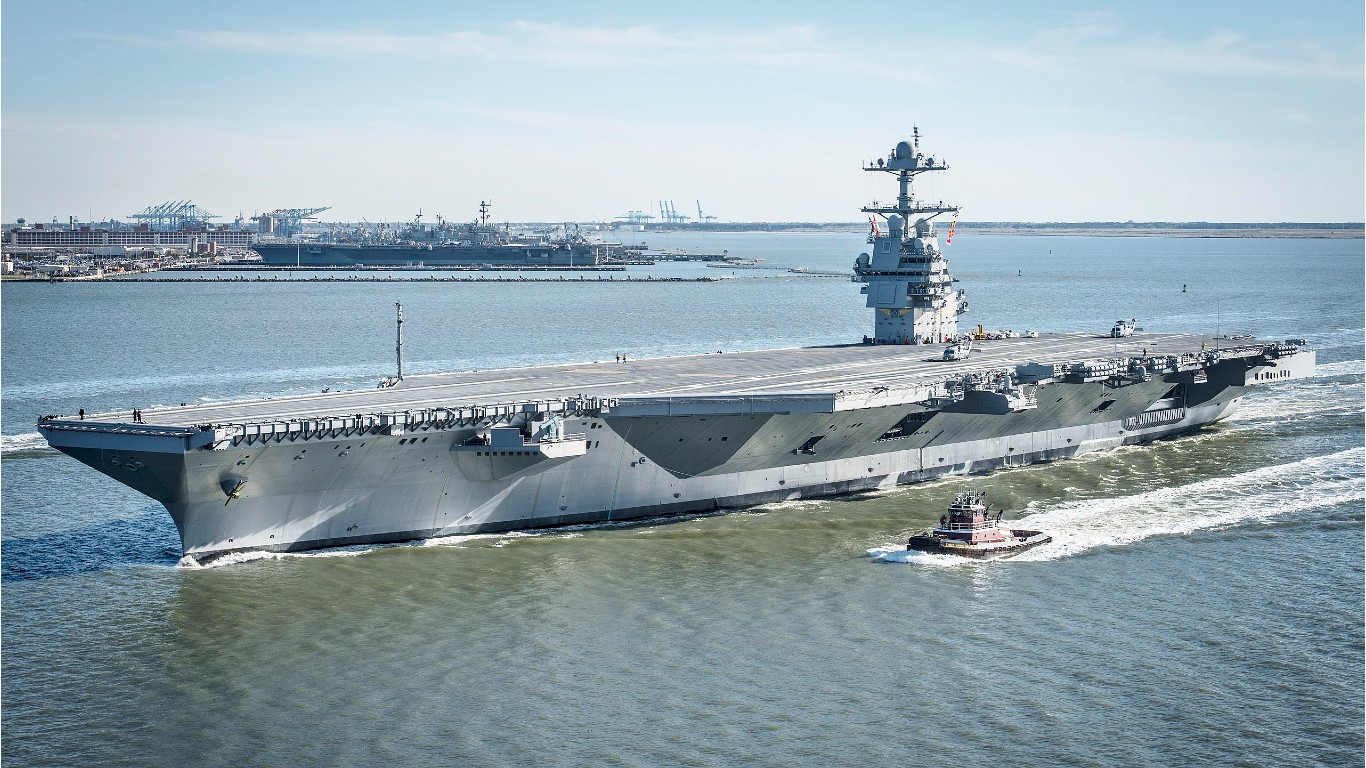
Costing nearly $16 billion, the USS Gerald R. Ford is the most expensive ship currently at sea and serves as the Navy’s newest aircraft carrier. The massive ship measures more than 1,100 feet long and can displace 100,000 long tonnes of water when fully loaded. Used as a standard measure for a ship’s size, displacement tonnage refers to the volume of water displaced when a ship is at sea under typical conditions. The carrier is capable of reaching speeds in excess of 34 miles per hour.
Here are the most expensive U.S. warships and submarines:
17. Harpers Ferry-class
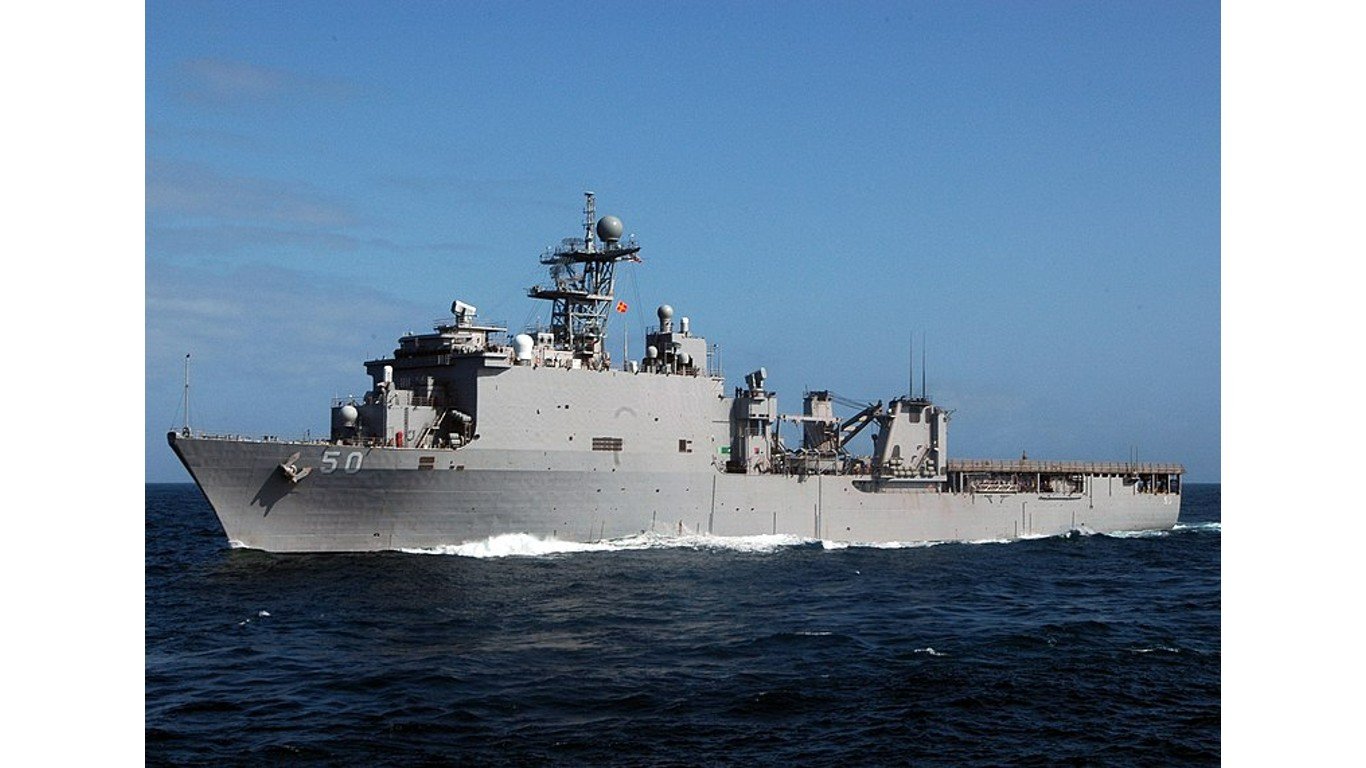
- Unit cost (inflation adjusted): $348.96 million
- Role: Dock landing ship
- Number of ships: 4
16. Independence-class
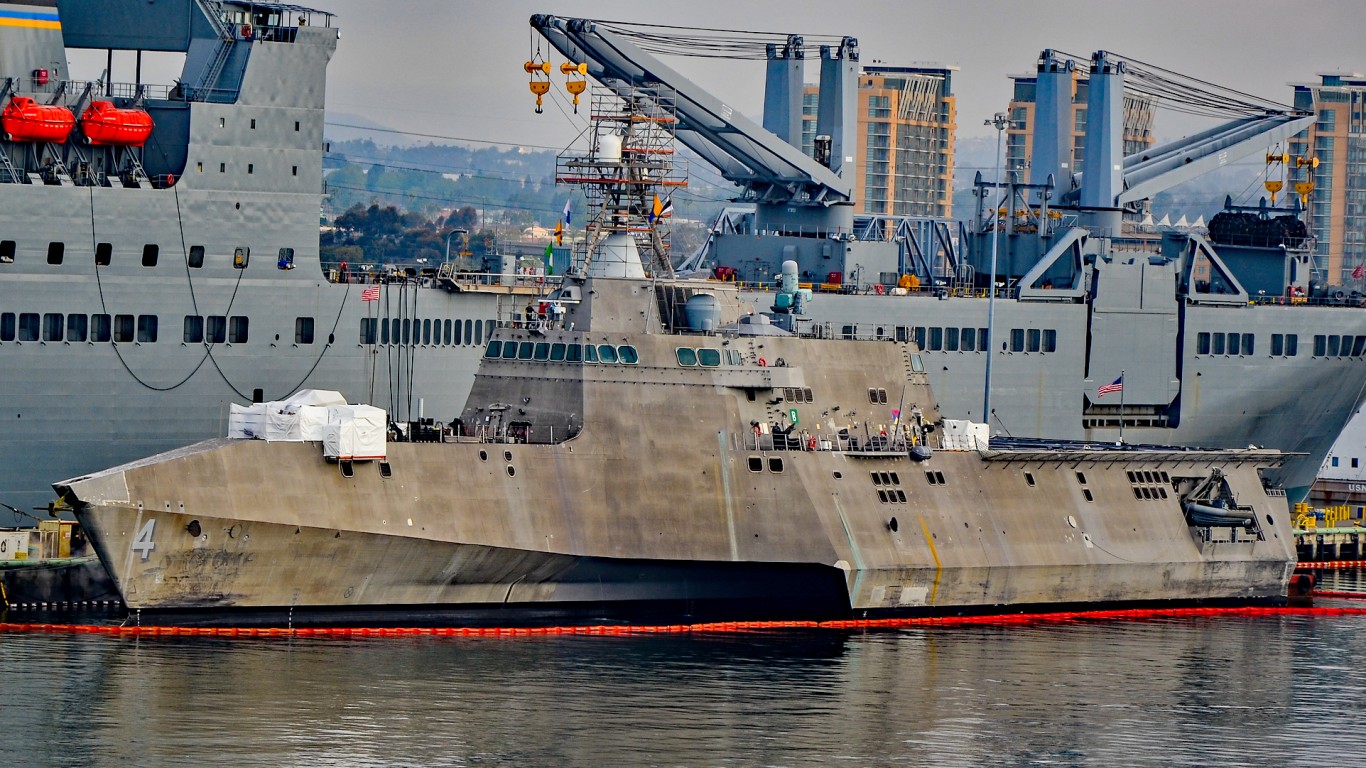
- Unit cost (inflation adjusted): $441.97 million
- Role: Corvette
- Number of ships: 12
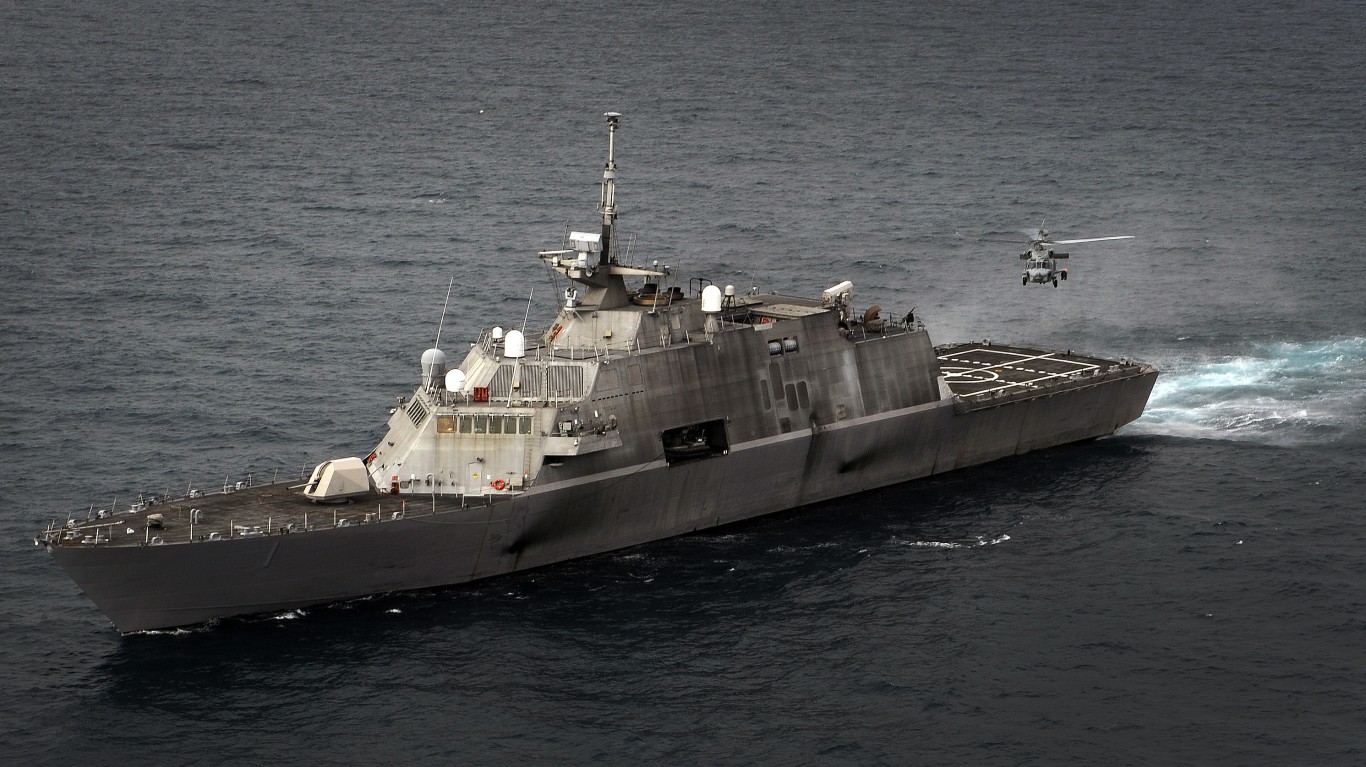
15. Freedom-class
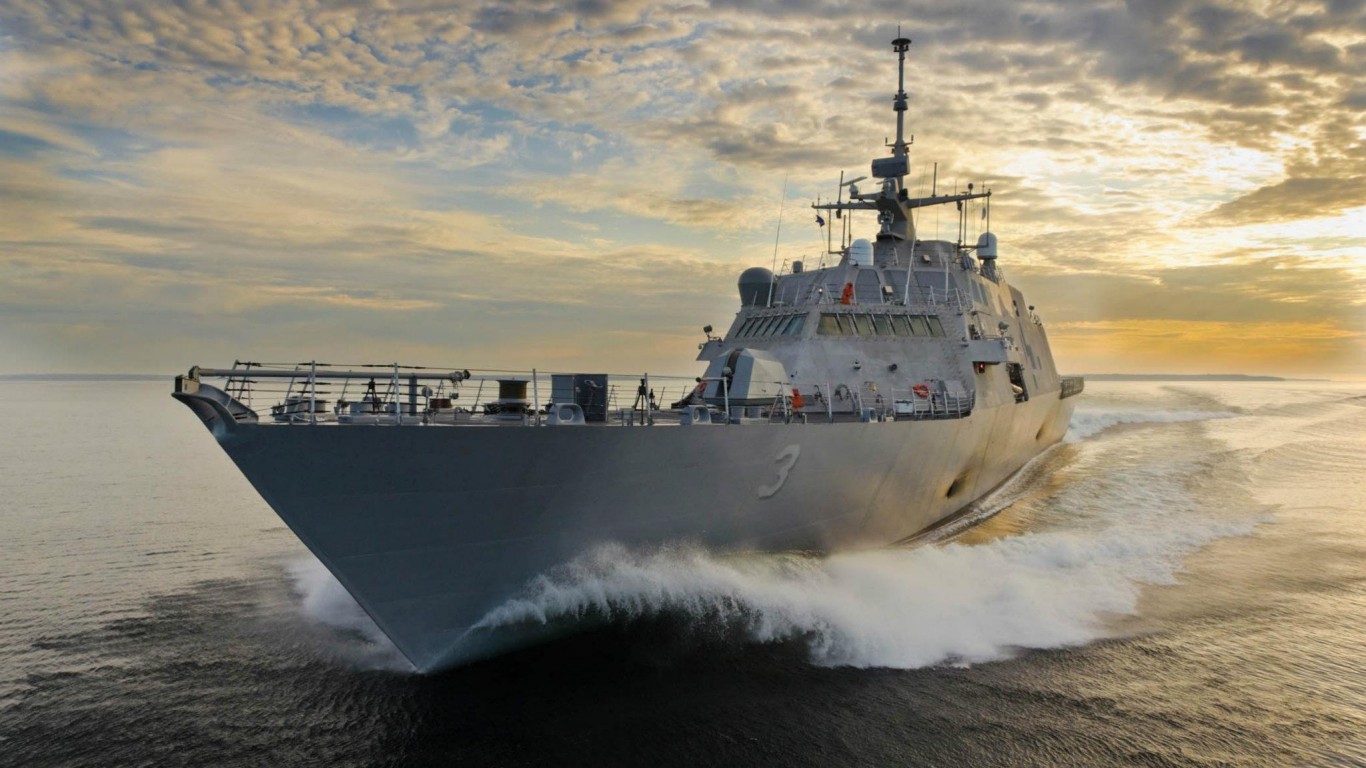
- Unit cost (inflation adjusted): $567.91 million
- Role: Littoral combat ship
- Number of ships: 9
14. Avenger-class
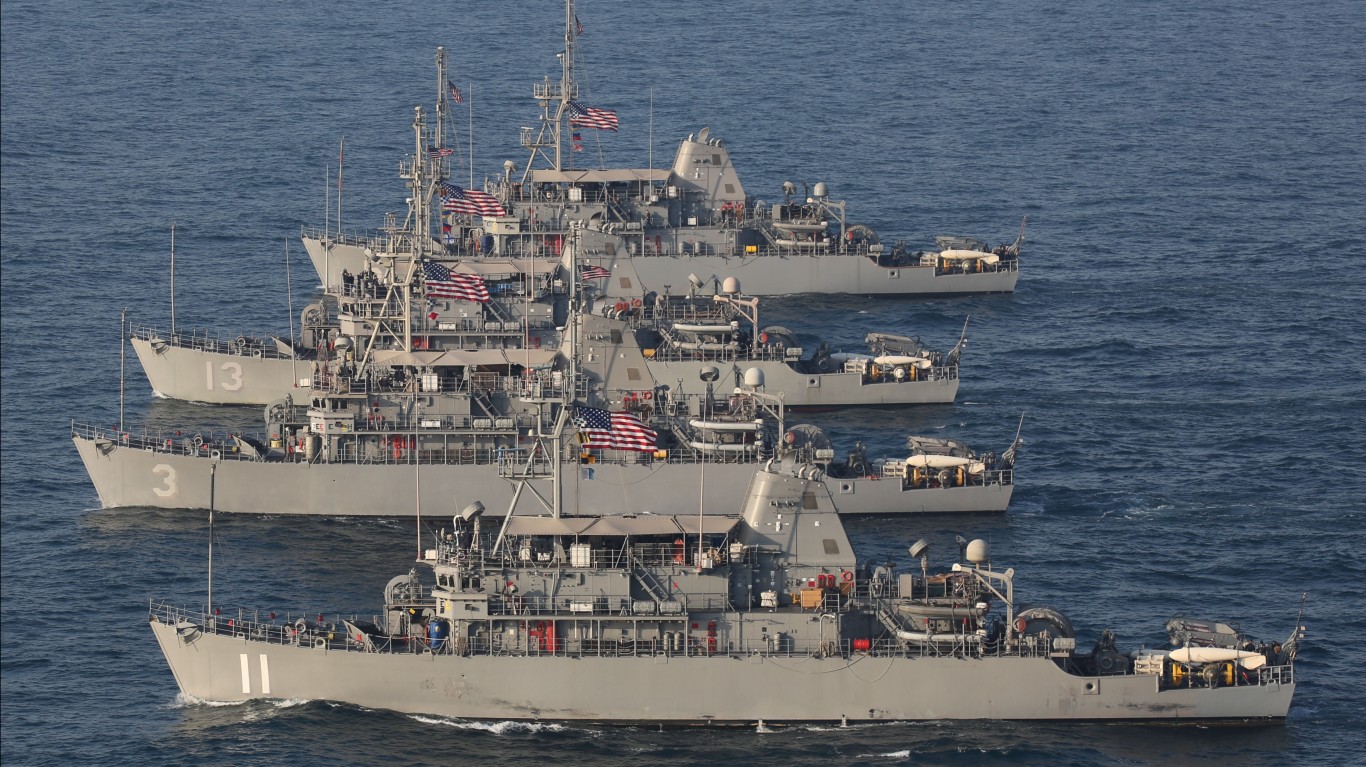
- Unit cost (inflation adjusted): $663.31 million
- Role: Mine countermeasures ship
- Number of ships: 8
13. Whidbey Island-class
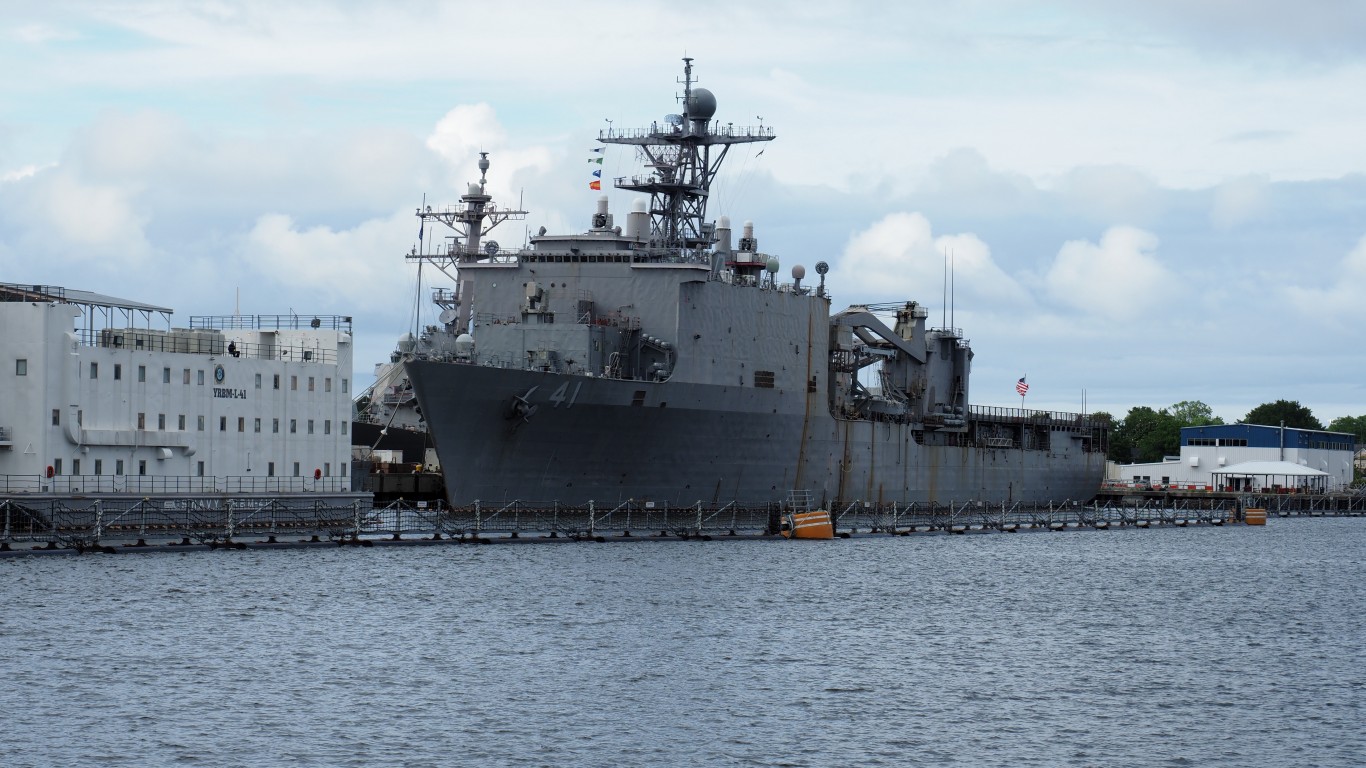
- Unit cost (inflation adjusted): $961.31 million
- Role: Dock landing ship
- Number of ships: 7
12. Ticonderoga-class
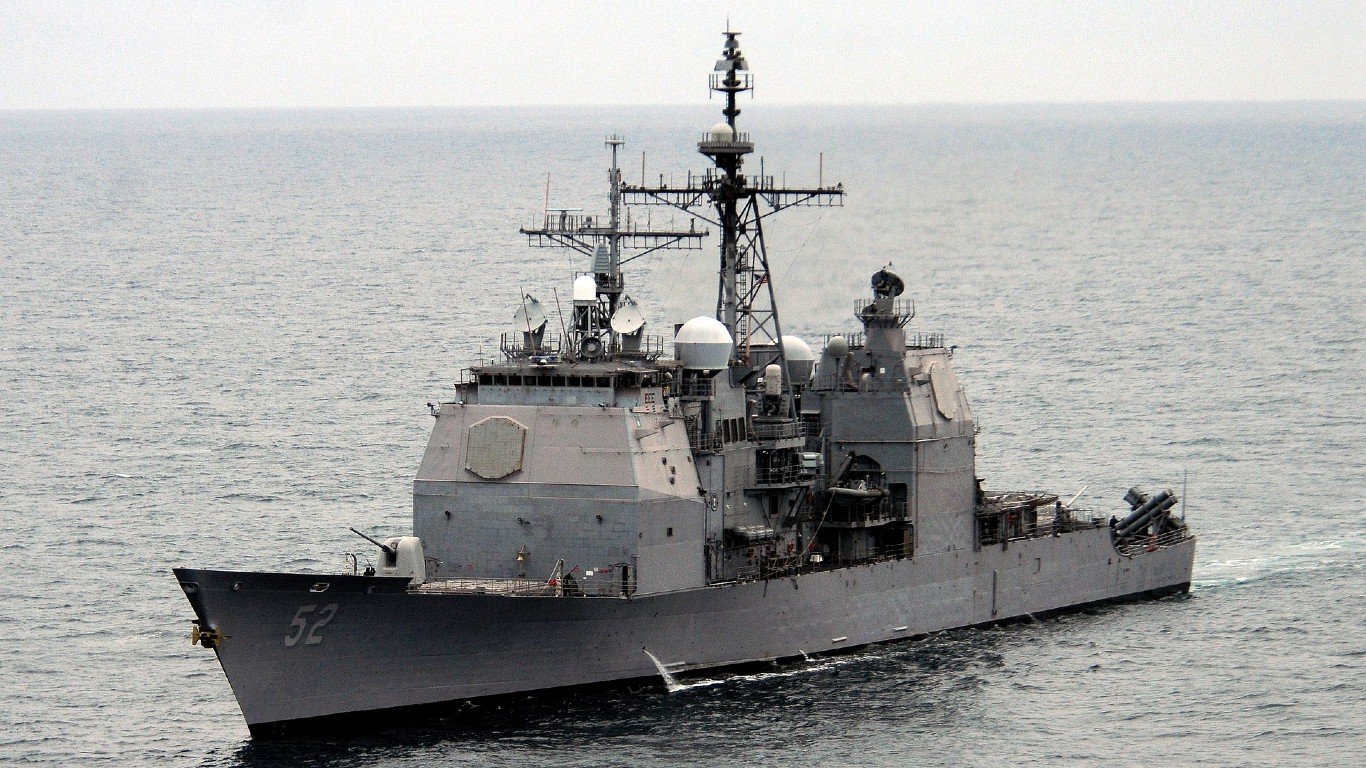
- Unit cost (inflation adjusted): $1.14 billion
- Role: Cruiser
- Number of ships: 22
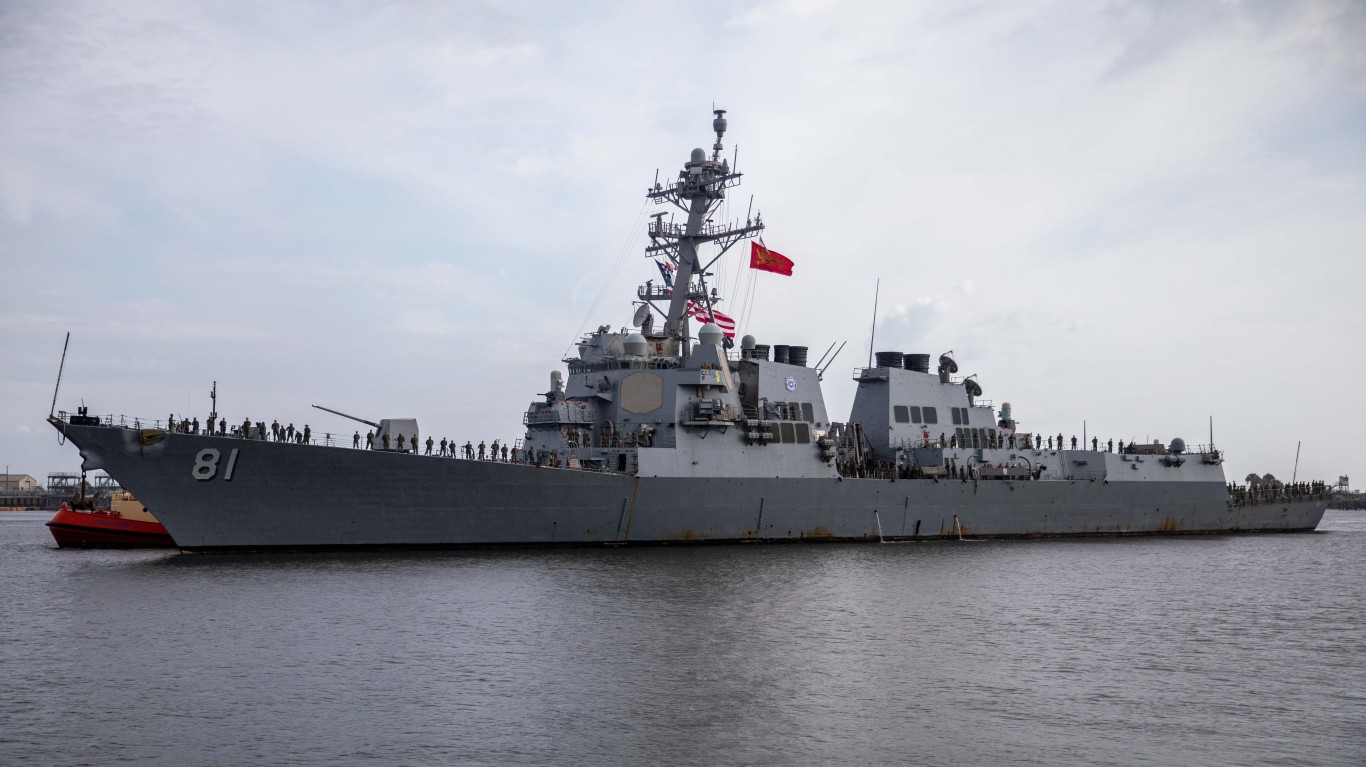
11. Arleigh Burke-class

- Unit cost (inflation adjusted): $1.83 billion
- Role: Guided missile destroyer
- Number of ships: 68
10. Los Angeles-class
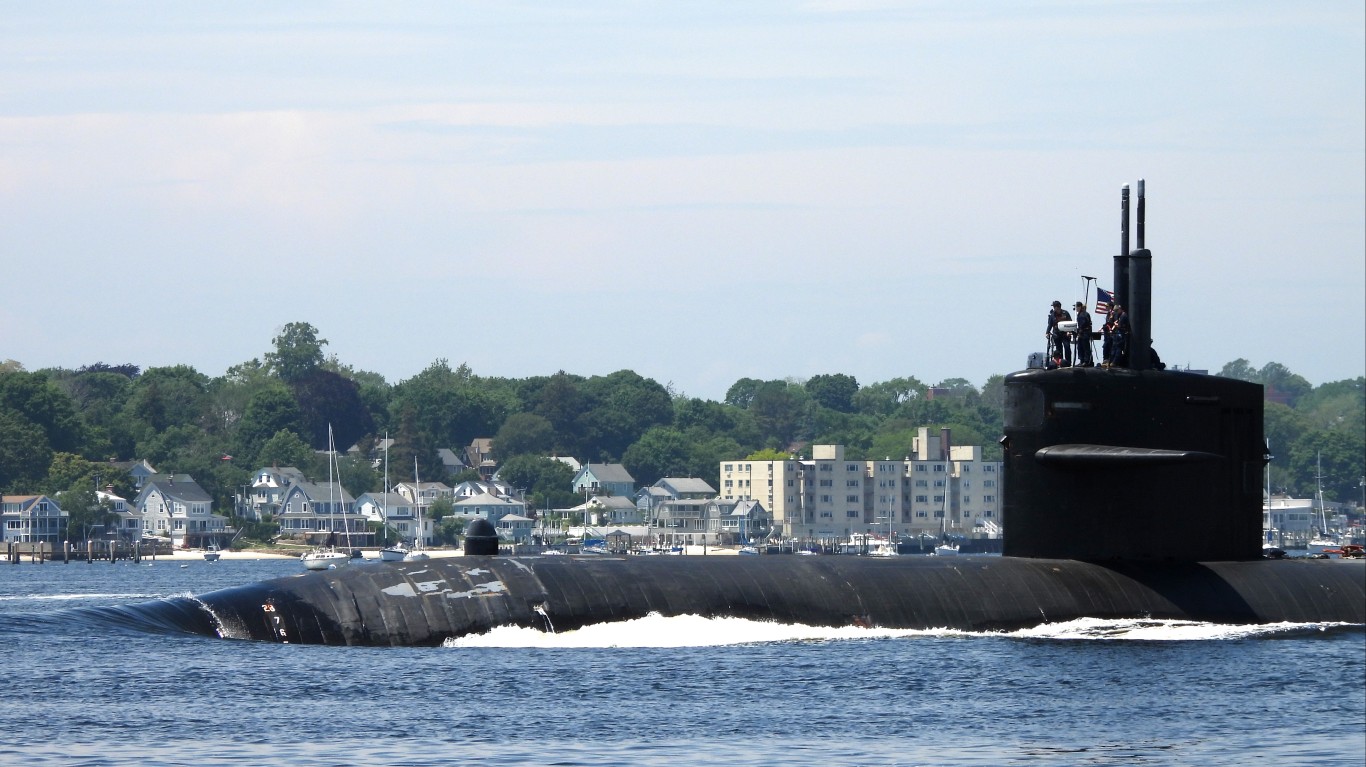
- Unit cost (inflation adjusted): $1.91 billion
- Role: Submarine
- Number of ships: 28
9. Wasp-class
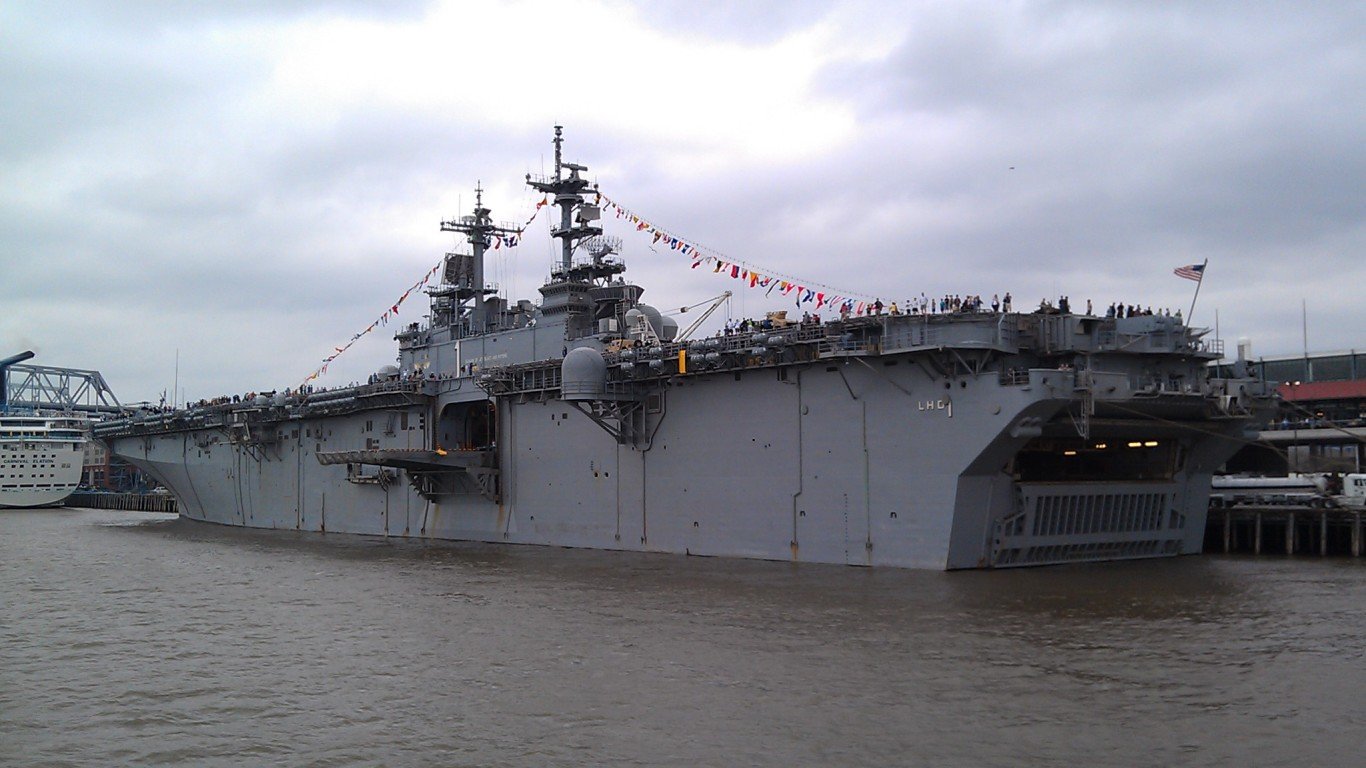
- Unit cost (inflation adjusted): $2.29 billion
- Role: Amphibious assault ship
- Number of ships: 7
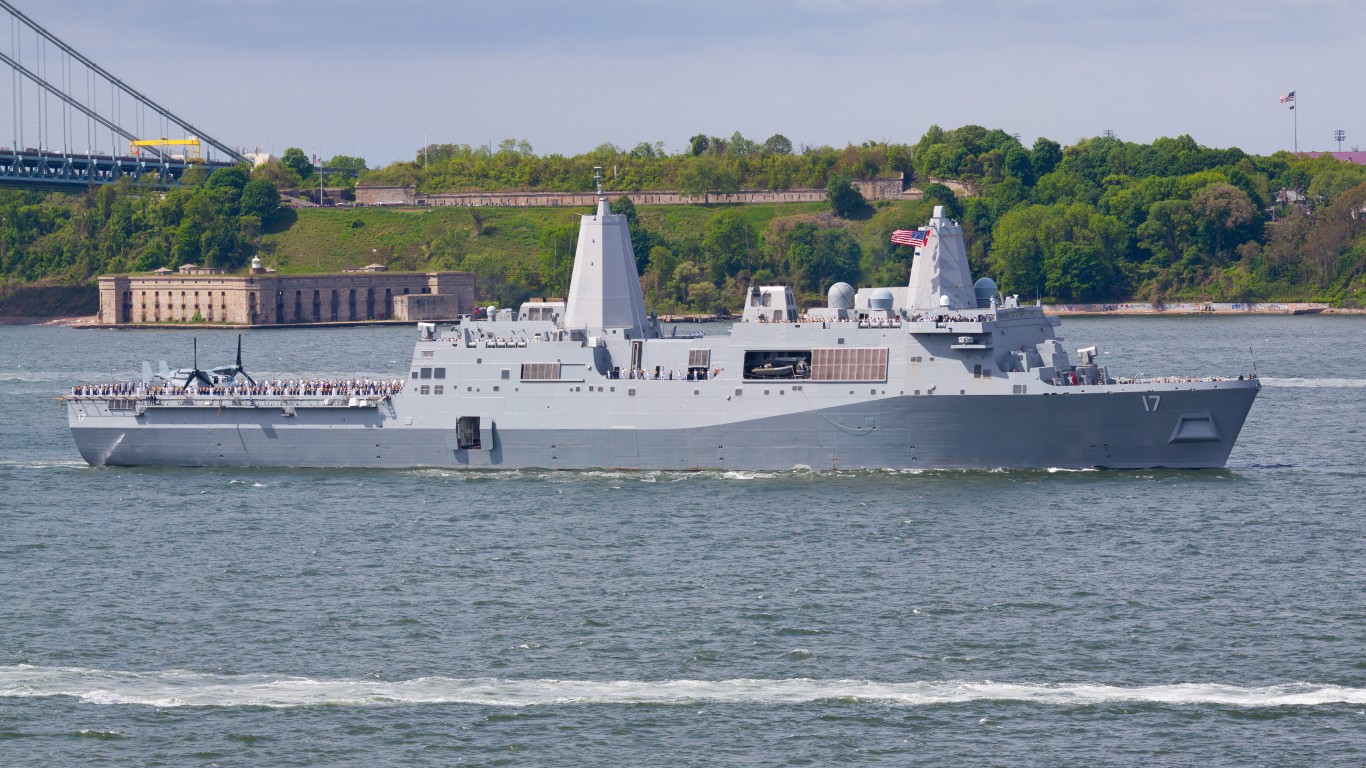
8. San Antonio-class
- Unit cost (inflation adjusted): $2.31 billion
- Role: Amphibious transport dock
- Number of ships: 11
7. Ohio-class
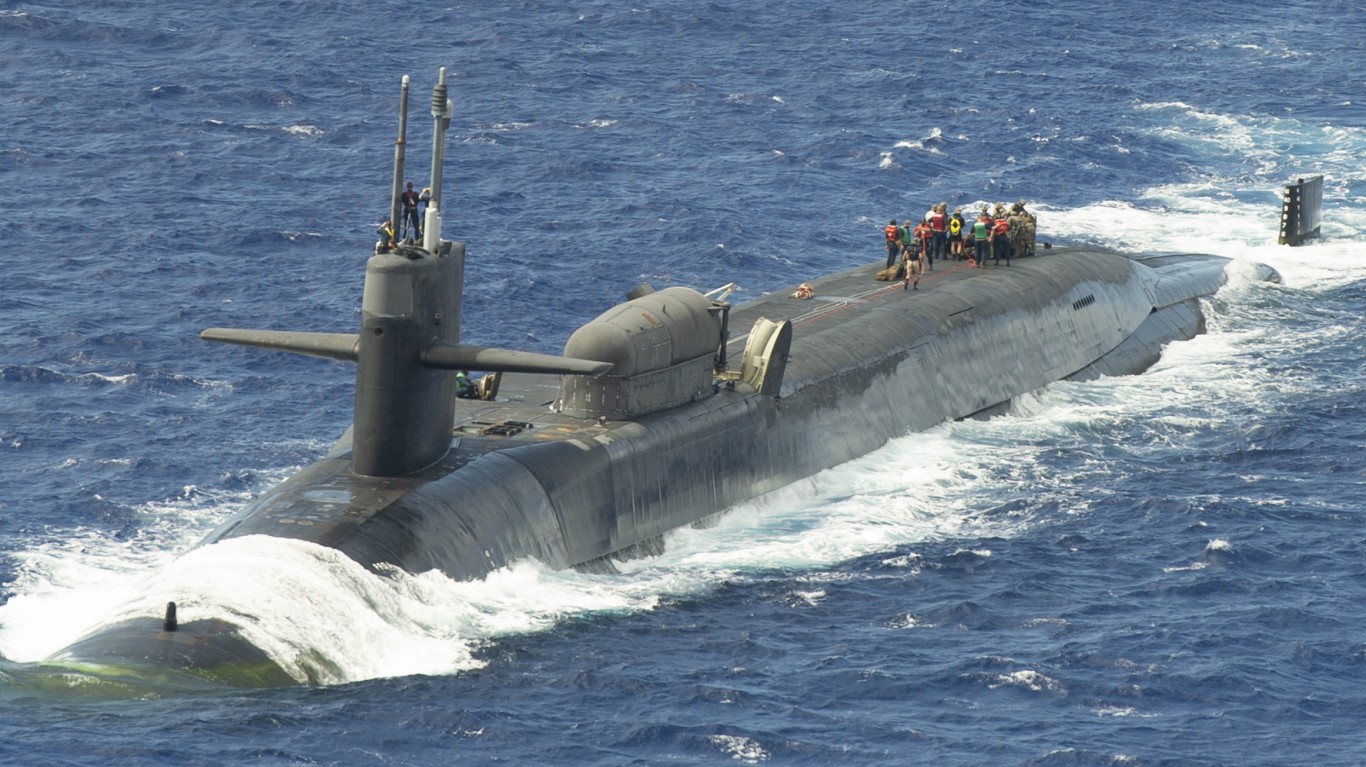
- Unit cost (inflation adjusted): $3.64 billion
- Role: Submarine
- Number of ships: 18
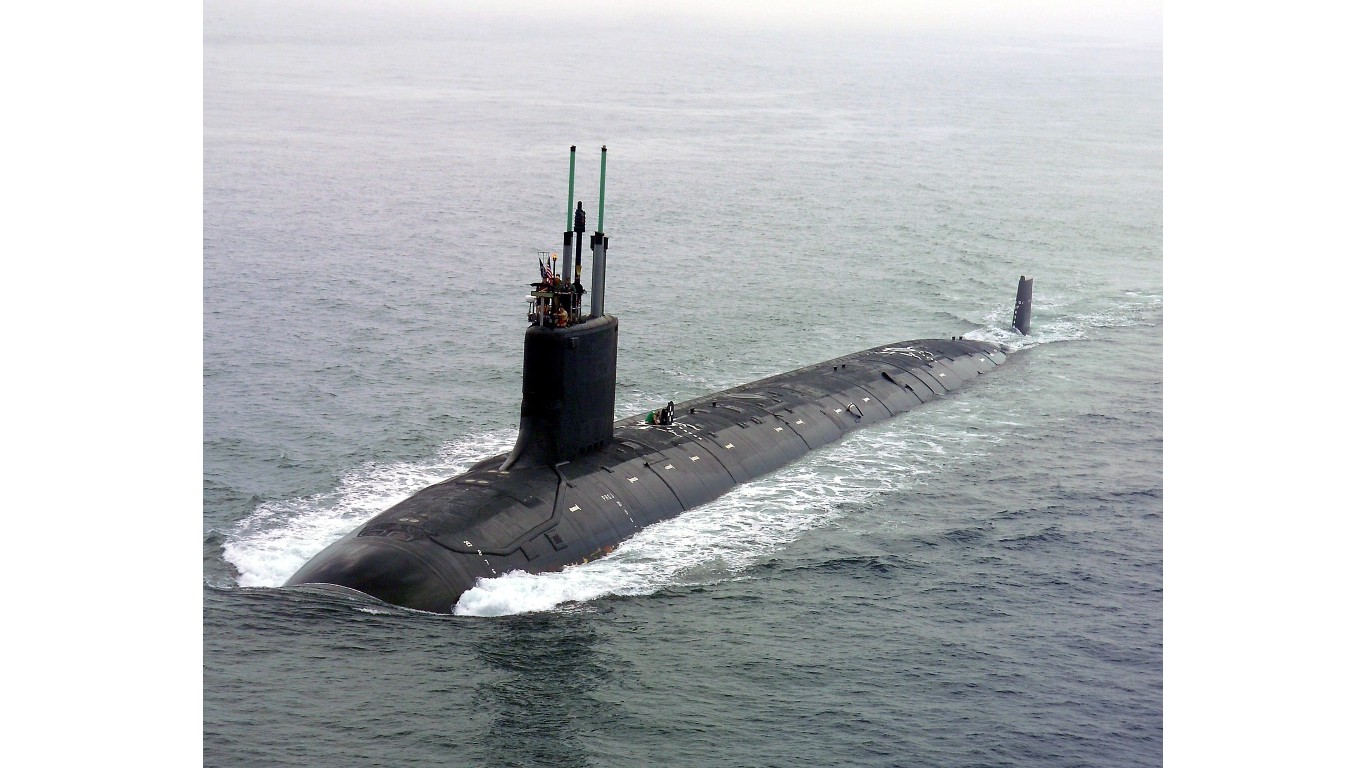
6. Virginia-class
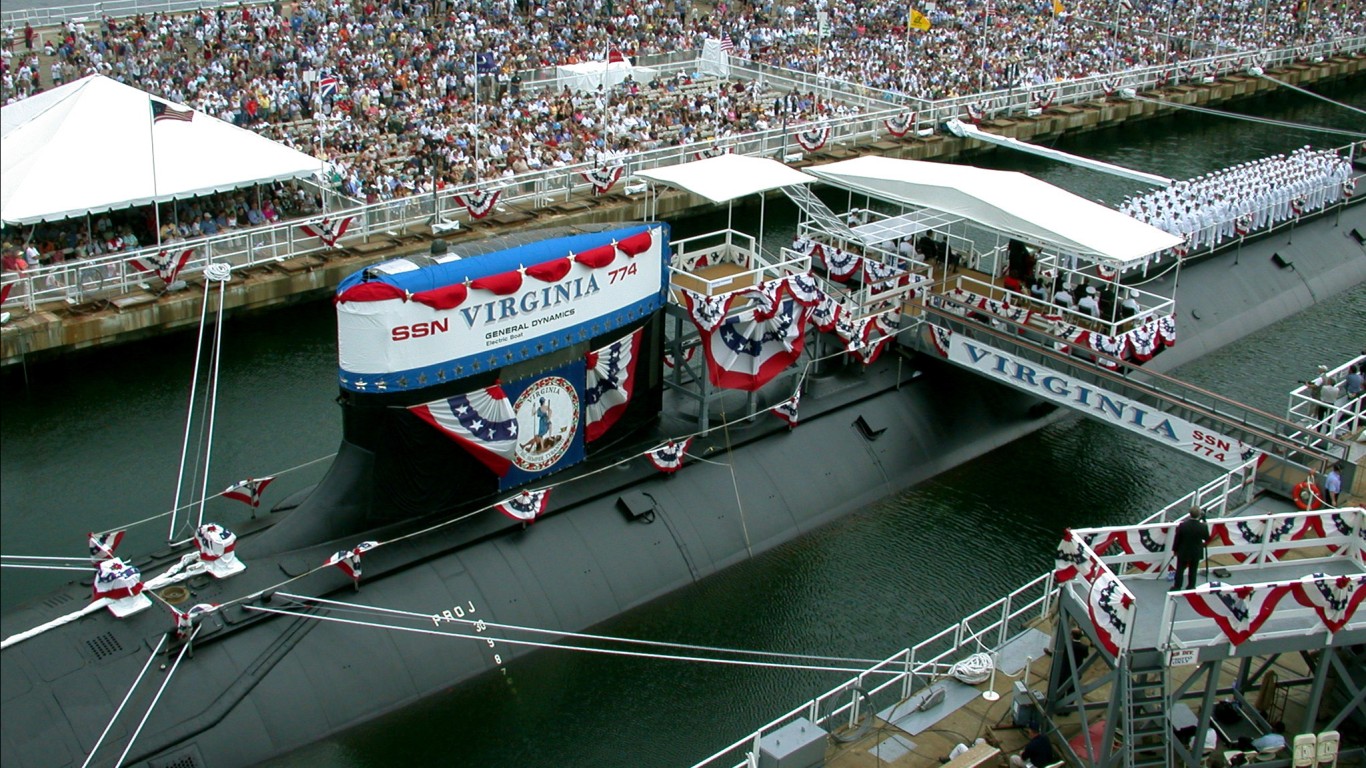
- Unit cost (inflation adjusted): $3.83 billion
- Role: Submarine
- Number of ships: 19
5. America-class
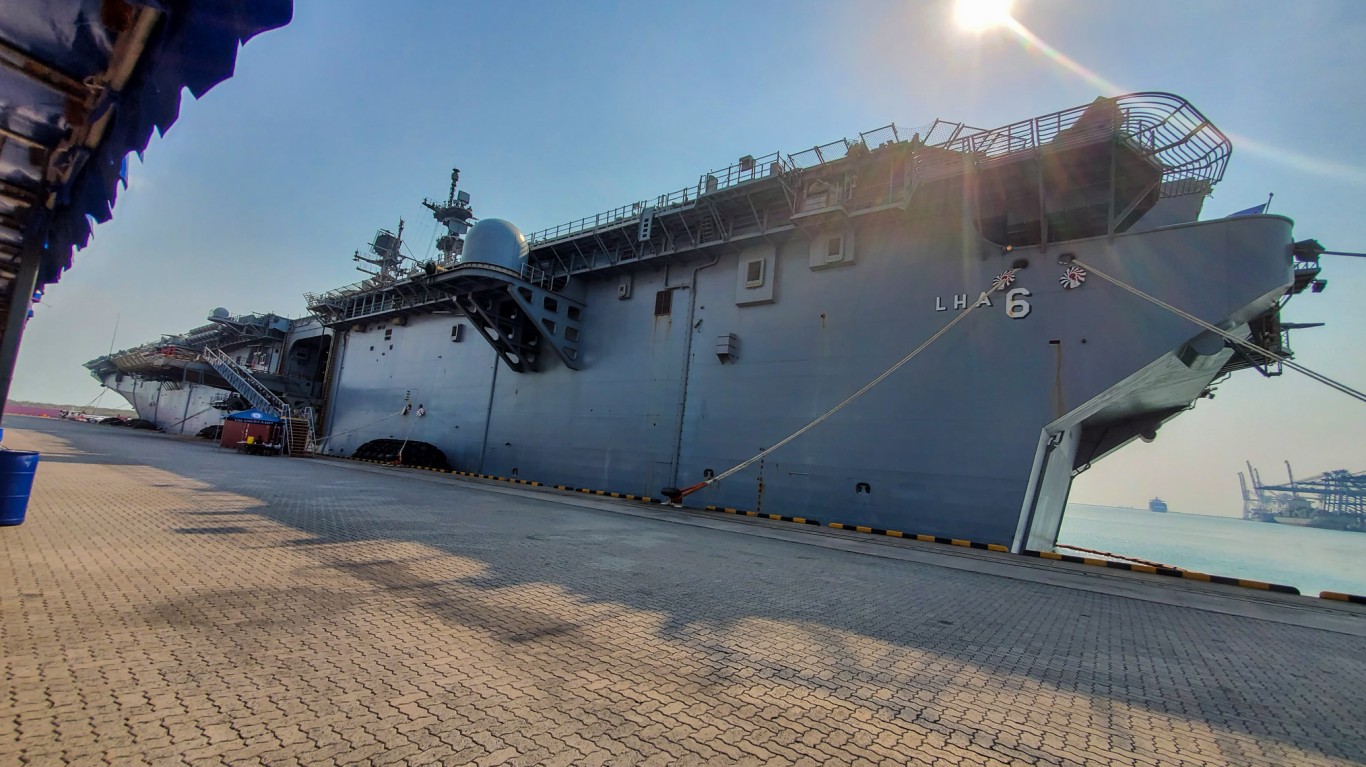
- Unit cost (inflation adjusted): $4.35 billion
- Role: Amphibious assault ship
- Number of ships: 2
4. Zumwalt-class
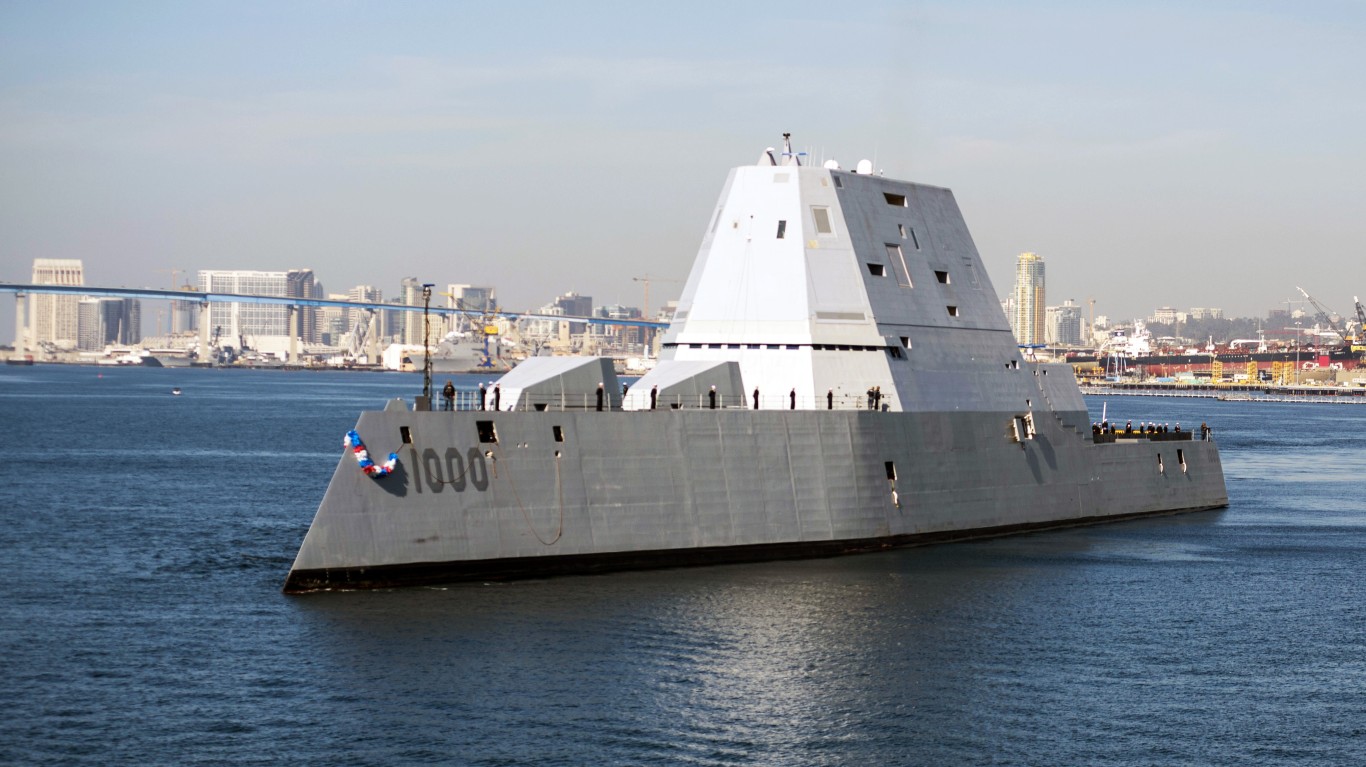
- Unit cost (inflation adjusted): $5.63 billion
- Role: Guided missile destroyer
- Number of ships: 2
3. Seawolf-class
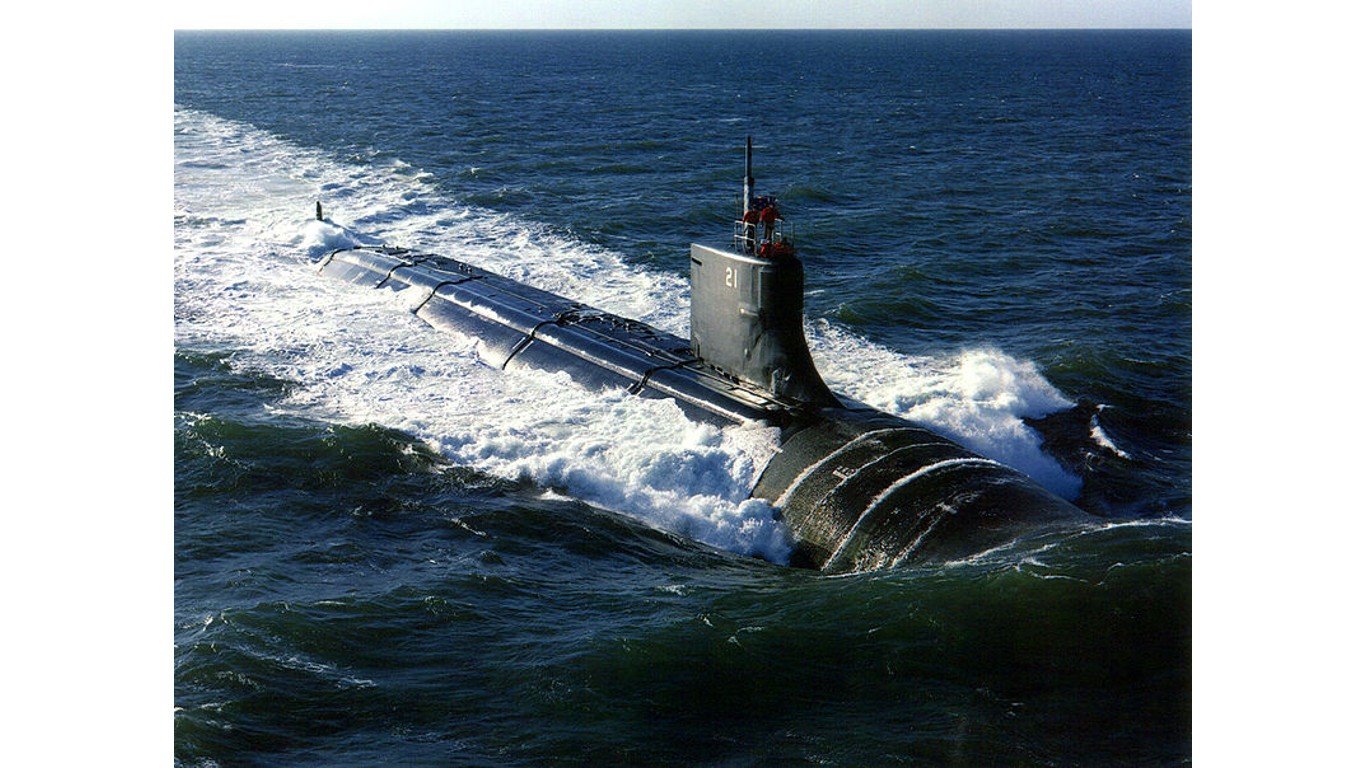
- Unit cost (inflation adjusted): $5.64 billion
- Role: Submarine
- Number of ships: 3
2. Nimitz-class
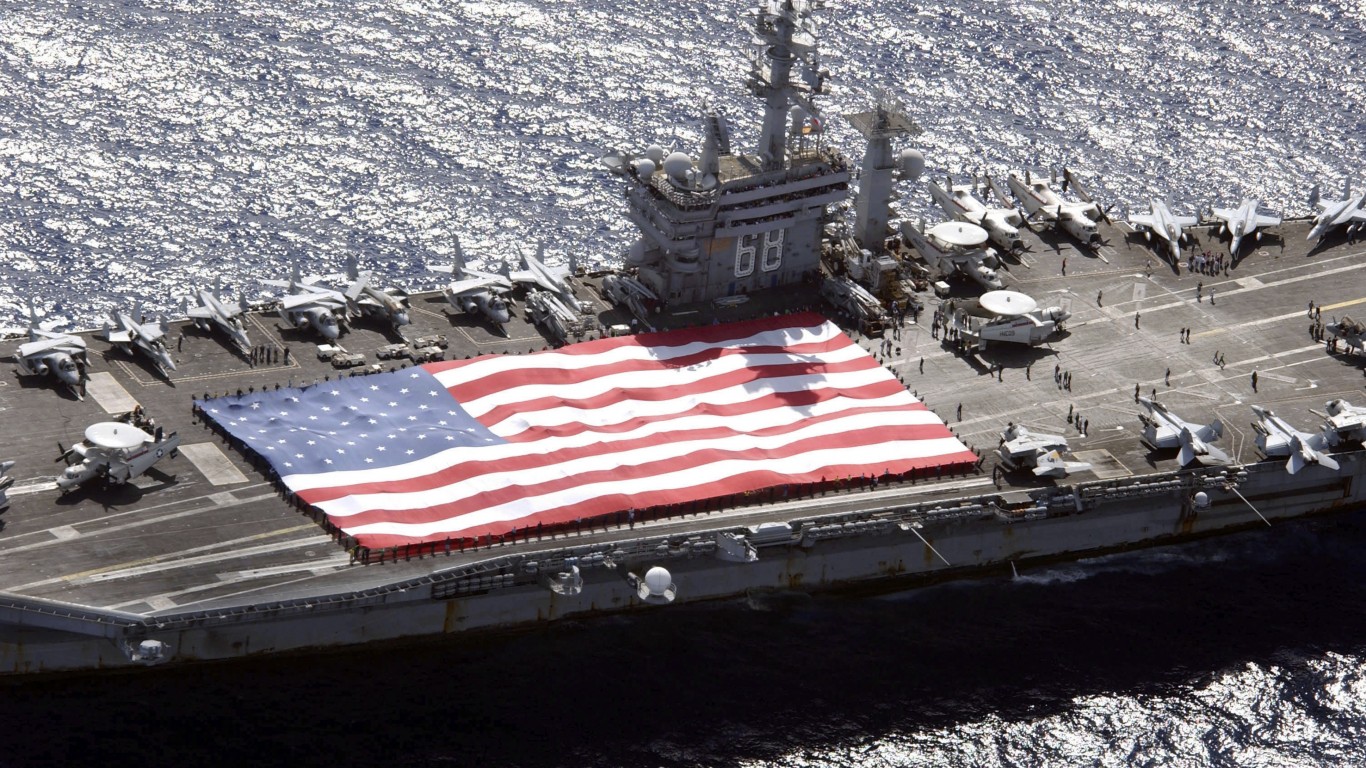
- Unit cost (inflation adjusted): $11.55 billion
- Role: Aircraft carrier
- Number of ships: 10
1. Ford-class
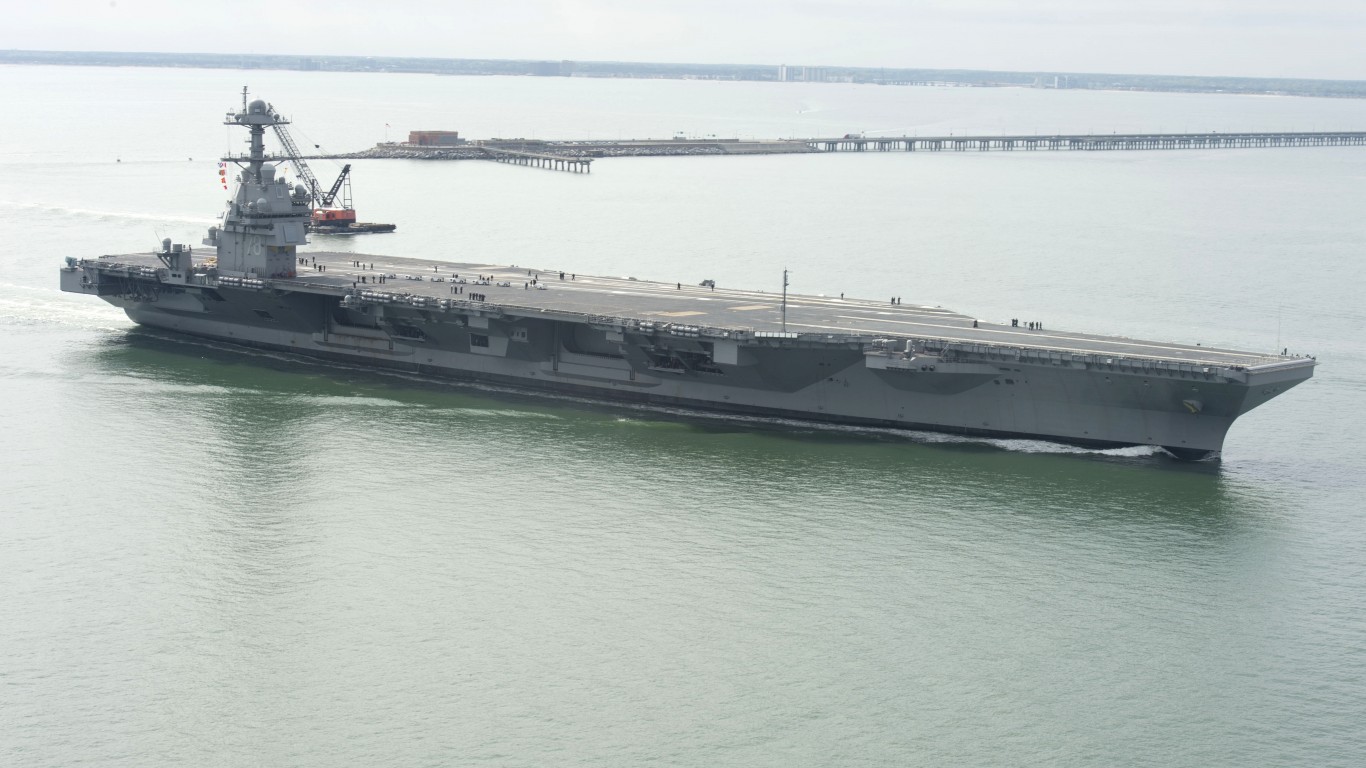
- Unit cost (inflation adjusted): $15.72 billion
- Role: Aircraft carrier
- Number of ships: 1
Contact [email protected] for any questions or corrections.