XRP is a digital currency and the native token of the Ripple network, a blockchain-based payment protocol designed to facilitate fast, low-cost cross-border transactions. Created by Ripple Labs in 2012, XRP serves as a bridge currency in the Ripple network, allowing for the seamless exchange of different fiat currencies and cryptocurrencies.
Unlike many other cryptocurrencies, XRP does not rely on traditional blockchain consensus mechanisms like Proof of Work or Proof of Stake. Instead, it utilizes a unique consensus protocol called the Ripple Protocol Consensus Algorithm (RPCA) to validate transactions, making it faster and more energy-efficient.
One of XRP's primary use cases is facilitating international money transfers and remittances, enabling financial institutions and payment providers to settle transactions quickly and at a lower cost compared to traditional banking systems. Ripple aims to revolutionize the global payments industry by offering greater efficiency, transparency, and liquidity through its network and XRP token.
Despite its utility and adoption by numerous financial institutions, XRP has faced regulatory challenges in some jurisdictions due to its association with Ripple Labs and concerns about its classification as a security. Nonetheless, XRP remains one of the largest cryptocurrencies by market capitalization and continues to play a significant role in the digital payments ecosystem.
CME Group, in collaboration with CF Benchmarks, introduced the CME Emerging Crypto Index on August 31, 2026, a benchmark designed specifically to exclude Bitcoin (CRYPTO: BTC) and Ethereum (CRYPTO: ETH). This index comprises ten carefully chosen cryptocurrencies: BNB (CRYPTO: BNB),…
In just 30 days, AI agents and online services processed over 8 million payments on the XRP Ledger, the network behind XRP (CRYPTO: XRP), through a payment system called x402. This remarkable increase makes XRP…
Ripple closed three major institutional deals in a single day, but signing contracts and actually needing XRP are two very different things. Only one of these partnerships puts the token to work,…
Cardano surged 11% while Bitcoin and Ethereum barely budged, making ADA the standout mover among major cryptocurrencies. But within three days, every gain vanished, leaving buyers who chased the spike nursing serious…
Ripple just landed a $35 billion hedge fund as a prime brokerage client, a deal that signals growing Wall Street credibility. But XRP is down nearly 10% on the week, and the reason why…
Cardano rewards holders with staking yields while XRP pays nothing, yet that passive income has done little to soften ADA's brutal price slide. Whether that yield becomes an advantage or a footnote depends on…
Banks are flooding into blockchain platforms, and both Chainlink and XRP keep getting named as the big winners. But a closer look at how each network actually handles fees tells a very different story…
The CFTC just gave Stellar the same regulatory label as XRP, but a shared classification and a real-world payroll partnership may not be enough to close the enormous gap between where XLM trades now…
Markus Thielen of 10x Research made two forecasts about a potential Bitcoin bottom during the summer of 2026, but Bitcoin (CRYPTO:BTC) never dipped to those levels. On June 24, he suggested that Bitcoin could…
October 2026 has seen around $59 million withdrawn from Grayscale’s Zcash ETF. Yet, amid this, Zcash (CRYPTO:ZEC) has been rising. The ETF, which trades under the ticker ZCSH, experienced outflows every day during the first…
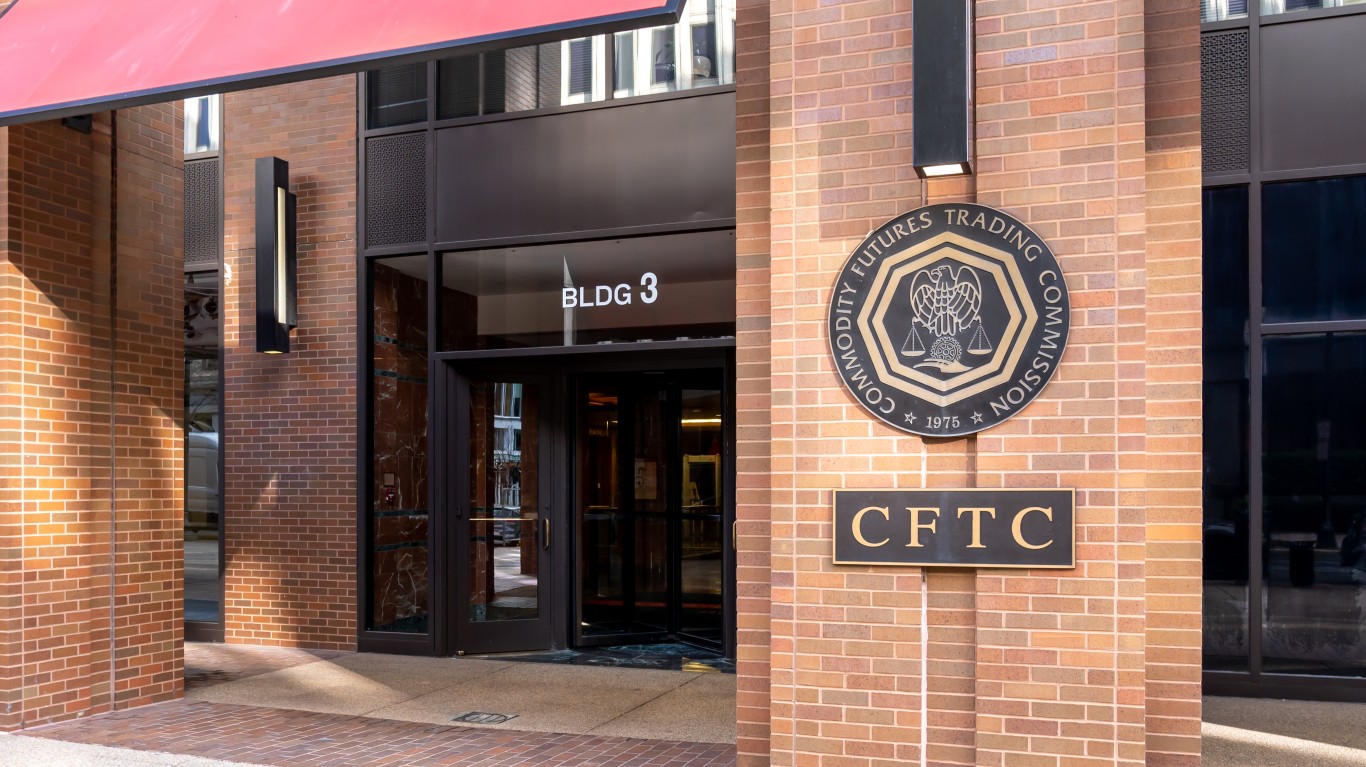
The CFTC just named XRP a digital commodity alongside Bitcoin and Ethereum, but that label carries a catch that every XRP holder needs to understand before assuming the security debate is finally settled.
Coins priced under a dollar feel like bargains, but that logic can quietly wreck a portfolio. Before you trade XRP for Dogecoin, Cardano, Stellar, or Hedera, there are a few uncomfortable truths about supply,…
 By Sam Daodu
· 3:18pm ET
By Sam Daodu
· 3:18pm ET