50 Cities That Got Over $100 Million From the Government
These 50 American cities got over $100 million in aid from the American Rescue Plan Act.

The federal government launched a $350 billion program to help cities, counties, territories, tribal governments and states recover from the effects of the COVID-19 pandemic. Part of the American Rescue Plan Act, the program is called the Coronavirus State and Local Fiscal Recovery Funds. Fifty cities got over $100 million. A total of over 4,000 places will receive some level of aid. The city that got the most money received almost $4.3 billion.
As the program was released, the Treasury Department listed its purposes:
Support urgent COVID-19 response efforts to continue to decrease spread of the virus and bring the pandemic under control
Replace lost revenue for eligible state, local, territorial, and Tribal governments to strengthen support for vital public services and help retain jobs
Support immediate economic stabilization for households and businesses
Address systemic public health and economic challenges that have contributed to the inequal impact of the pandemic
Among those it is meant to help are essential workers, small businesses, industries particularly hard hit and upgrades in infrastructure, including water, sewer and broadband systems.
The largest sum of money was earmarked for states and the District of Columbia at $193.5 billion. That is followed by counties at $65.1 billion, metropolitan cities at $45.6 billion and tribal governments at $20 billion.
According to an analysis by Route Fifty, the county that got the most was Los Angeles County, the largest in the nation by a population, with over 10 million people. It received $1,949,978,847. The largest receiving city by far was New York City, with a figure of $4,259,566,740, according to the same analysis. It was followed by the third-largest American city, Chicago, which received $1,886,591,388. Los Angeles, the second-largest American city by population received $1,278,900,928.
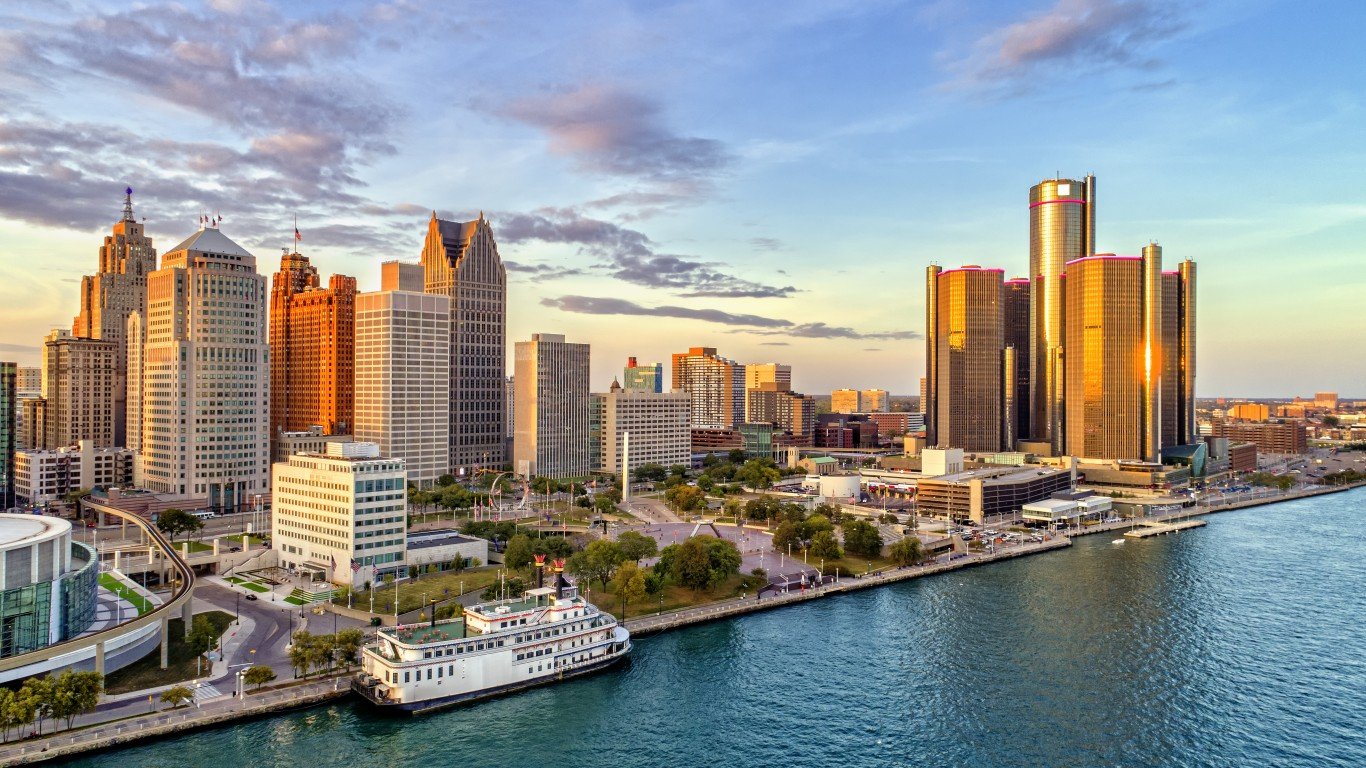
Other relatively small cities got more money than large ones. Detroit ranked fifth among cities with federal aid of $826 million. It is no longer one of the top 20 cities in America based on population. Baltimore, also not in the top 20, ranked seventh in aid at $525 million. Cleveland ranked eighth with an aide level of over $511 million.
The 50 Cities That Got Over $100 Million in Aid
| City | Allocation |
|---|---|
| New York | $4,259,566,740 |
| Chicago | $1,886,591,388 |
| Los Angeles | $1,278,900,928 |
| Philadelphia | $1,087,606,822 |
| Detroit | $826,675,290 |
| Houston | $607,769,139 |
| Baltimore | $525,891,651 |
| Cleveland | $511,721,590 |
| San Francisco | $453,586,783 |
| St Louis | $439,692,690 |
| Boston | $424,179,607 |
| Phoenix | $396,080,366 |
| Milwaukee | $394,226,649 |
| District of Columbia | $372,859,344 |
| Dallas | $355,426,891 |
| Pittsburgh | $335,070,222 |
| Buffalo | $331,356,932 |
| San Antonio | $326,919,408 |
| New Orleans | $311,742,151 |
| San Diego | $299,714,755 |
| Cincinnati | $279,590,123 |
| Minneapolis | $271,192,484 |
| Louisville | $239,362,213 |
| Indianapolis | $232,410,707 |
| Seattle | $232,341,627 |
| San Jose | $212,280,152 |
| Portland, Oregon | $207,895,373 |
| Rochester | $202,141,319 |
| Honolulu | $196,954,703 |
| Kansas City | $194,776,376 |
| Austin | $188,482,478 |
| Oakland | $188,081,700 |
| Columbus | $187,030,138 |
| Toledo | $180,948,591 |
| Newark | $176,667,606 |
| Fort Worth | $173,745,090 |
| Atlanta | $170,928,821 |
| Fresno | $170,808,029 |
| Denver | $166,796,658 |
| St Paul | $166,641,623 |
| Memphis | $161,061,490 |
| Jacksonville | $157,663,110 |
| El Paso | $154,345,135 |
| Akron | $145,337,626 |
| Charlotte | $141,618,325 |
| Birmingham | $141,272,354 |
| Jersey City | $139,971,935 |
| Dayton | $137,976,174 |
| Miami | $137,639,417 |
| Long Beach | $135,753,078 |
Click here to see which are America’s richest cities.
Contact [email protected] for any questions or corrections.
Douglas A. McIntyre is the co-founder, chief executive officer and editor in chief of 24/7 Wall St. and 24/7 Tempo. He has held these jobs since 2006.
McIntyre has written thousands of articles for 24/7 Wall St. He is an expert on corporate finance, the automotive industry, media companies and international finance. He has edited articles on national demographics, sports, personal income and travel.
His work has been quoted or mentioned in The New York Times, The Wall Street Journal, Los Angeles Times, The Washington Post, NBC News, Time, The New Yorker, HuffPost USA Today, Business Insider, Yahoo, AOL, MarketWatch, The Atlantic, Bloomberg, New York Post, Chicago Tribune, Forbes, The Guardian and many other major publications. McIntyre has been a guest on CNBC, the BBC and television and radio stations across the country.
A magna cum laude graduate of Harvard College, McIntyre also was president of The Harvard Advocate. Founded in 1866, the Advocate is the oldest college publication in the United States.
TheStreet.com, Comps.com and Edgar Online are some of the public companies for which McIntyre served on the board of directors. He was a Vicinity Corporation board member when the company was sold to Microsoft in 2002. He served on the audit committees of some of these companies.
McIntyre has been the CEO of FutureSource, a provider of trading terminals and news to commodities and futures traders. He was president of Switchboard, the online phone directory company. He served as chairman and CEO of On2 Technologies, the video compression company that provided video compression software for Adobe’s Flash. Google bought On2 in 2009.