Ford Will Be Crippled by End of EV Tax Credit
Elimination of the EV tax credit will hit Ford hard. It is more dependent on the tax credit because it loses money on each electric vehicle it sells.

Ford Motor Co. (NYSE: F | F Price Prediction) said its investment in electric vehicles (EVs) would reach $30 billion. However, new federal rules that will eliminate the EV tax credit, which is as much as $7,500 per vehicle, will hit the company hard. Industry experts say that Ford is more dependent on the tax credit to make money because it already posts a loss on each EV it sells. The same experts point out that it will be much less of a problem for industry leader Tesla Inc. (NASDAQ: TSLA).
One theory is that what is good for Tesla is bad for other EV makers, which are the legacy manufacturers. Ford’s stock is already down 7% in the past year, while the S&P 500 is 26% higher. Tesla’s stock is up 100% over the same period.
Can Ford Stop the Bleeding?
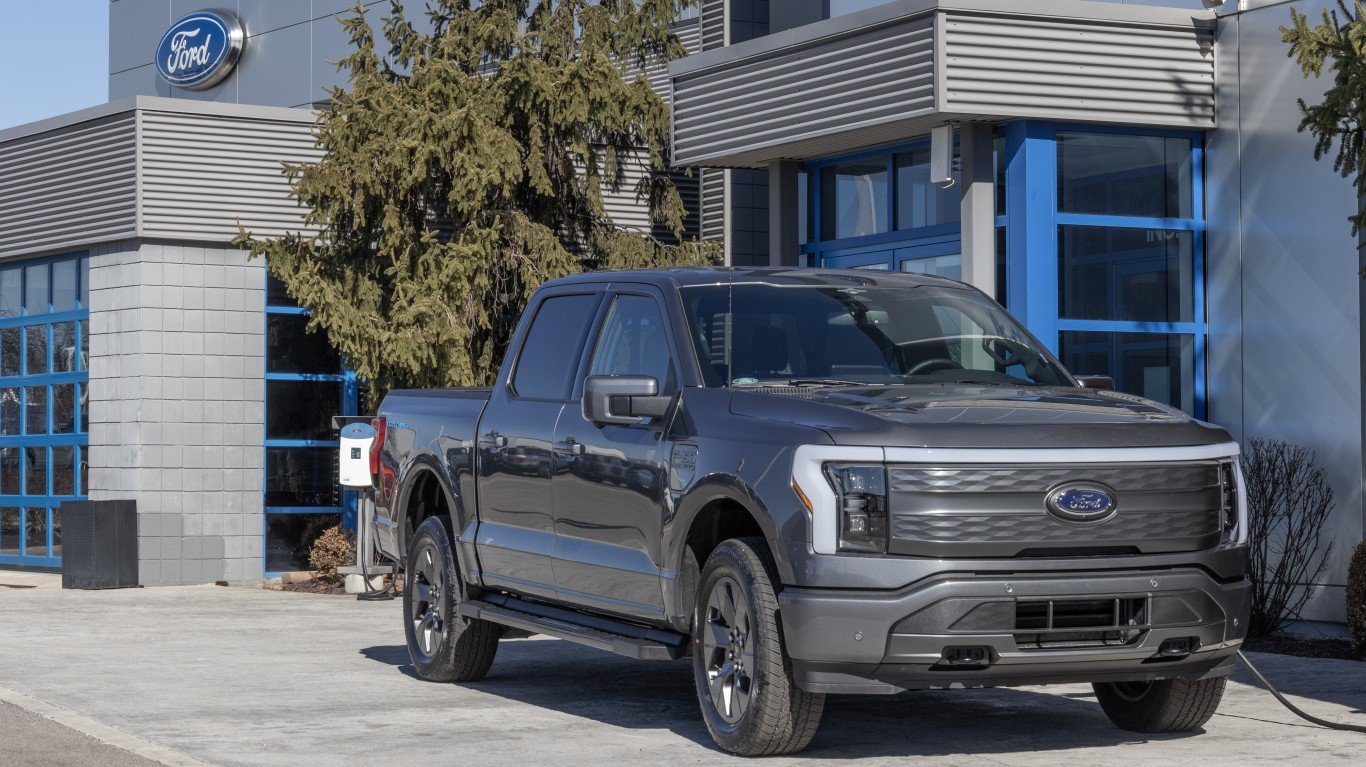
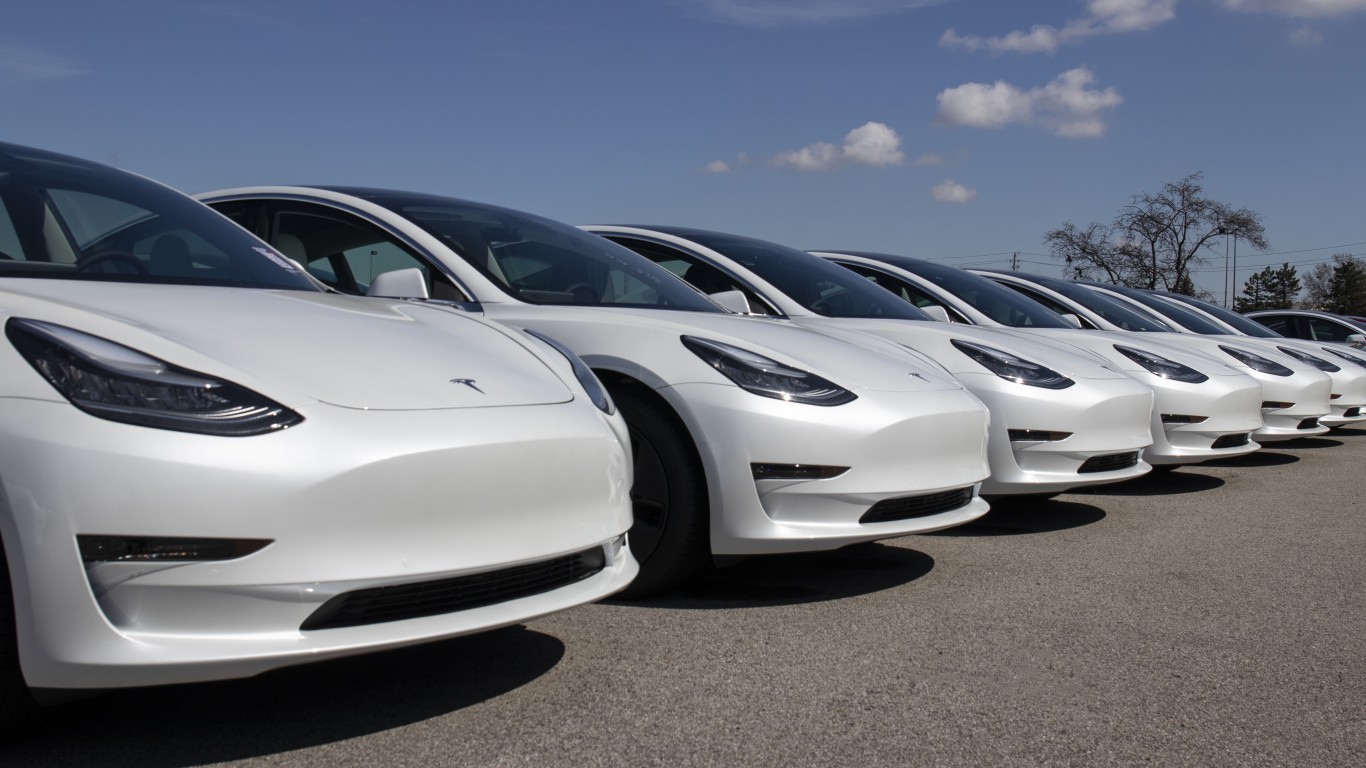
Earlier this year, analysts estimated that Ford lost $130,000 for each EV it sold. Tesla, which has positive margins, has about 50% of the U.S. EV market. Ford has about 9%, which is slightly lower than Hyundai/Kia and GM.
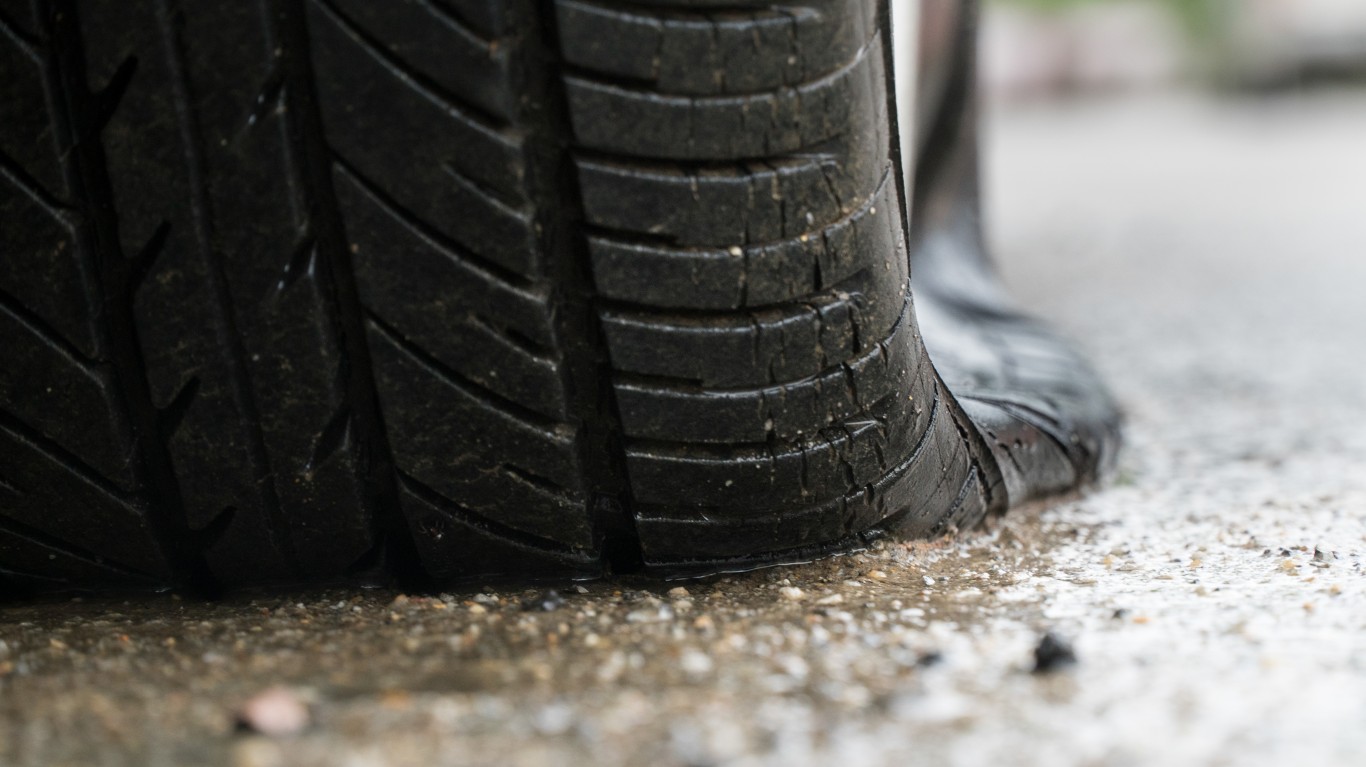
Ford also faces a market that is not growing very much. Adoption of EVs is hampered by concerns about range, number of chargers, cost to buy a new EV, and tire wear. The fact that the price of gasoline is at a relatively low $3 a gallon does not help.
Ford said in 2021 that it would invest $30 billion in its EV initiatives by 2025. It also said its annual EV production run rate would be 600,000 per year by 2023 and 2 million by 2026. Since then, it has considerably slowed its EV production and shut down some EV production facilities.
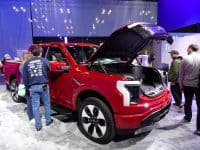
Ford has also started to offer aggressive incentives to sell its EVs. This is usually a sign of a lack of demand. It is offering 0% financing for 72 months and a free home charger to some buyers of its Mustang Mach-E. It is offering a similar deal on its EV flagship F-150 Lightning, which is named after the gasoline-powered F-150. The gasoline-powered version has been the bestselling vehicle in the United States for over four decades.
If analysts are right about the effect of the elimination of the $7,500 on legacy car companies, Ford could face hundreds of millions of more losses in its EV business.
Are Electric Cars Really Better for the Environment?
Contact [email protected] for any questions or corrections.
Douglas A. McIntyre is the co-founder, chief executive officer and editor in chief of 24/7 Wall St. and 24/7 Tempo. He has held these jobs since 2006.
McIntyre has written thousands of articles for 24/7 Wall St. He is an expert on corporate finance, the automotive industry, media companies and international finance. He has edited articles on national demographics, sports, personal income and travel.
His work has been quoted or mentioned in The New York Times, The Wall Street Journal, Los Angeles Times, The Washington Post, NBC News, Time, The New Yorker, HuffPost USA Today, Business Insider, Yahoo, AOL, MarketWatch, The Atlantic, Bloomberg, New York Post, Chicago Tribune, Forbes, The Guardian and many other major publications. McIntyre has been a guest on CNBC, the BBC and television and radio stations across the country.
A magna cum laude graduate of Harvard College, McIntyre also was president of The Harvard Advocate. Founded in 1866, the Advocate is the oldest college publication in the United States.
TheStreet.com, Comps.com and Edgar Online are some of the public companies for which McIntyre served on the board of directors. He was a Vicinity Corporation board member when the company was sold to Microsoft in 2002. He served on the audit committees of some of these companies.
McIntyre has been the CEO of FutureSource, a provider of trading terminals and news to commodities and futures traders. He was president of Switchboard, the online phone directory company. He served as chairman and CEO of On2 Technologies, the video compression company that provided video compression software for Adobe’s Flash. Google bought On2 in 2009.