What Percent of Your Investments Should Be Precious Metals?
Between IRAs, 401(k) accounts, real estate, and the wide universe of other opportunities, every allocation choice carries real trade-offs. One question that keeps surfacing, especially after the extraordinary run precious metals posted in 2025, is how much of a portfolio…


Deciding how to split up an investment portfolio is genuinely difficult. Between IRAs, 401(k) accounts, real estate, and the broad universe of other opportunities, every allocation choice carries real trade-offs. One question that keeps surfacing, especially after the extraordinary run precious metals posted in 2025, is how much of a portfolio should actually sit in gold, silver, and their peers.
A Redditor posting in r/Gold raised exactly that question, linking to a YouTube video that discusses gold accounting for roughly 40% of German investment allocations. That figure stands out for a reason: Germany’s collective memory of hyperinflation nearly a century ago shapes its relationship with hard assets in ways that may not translate directly to other countries or individual investors.
Investing in Precious Metals
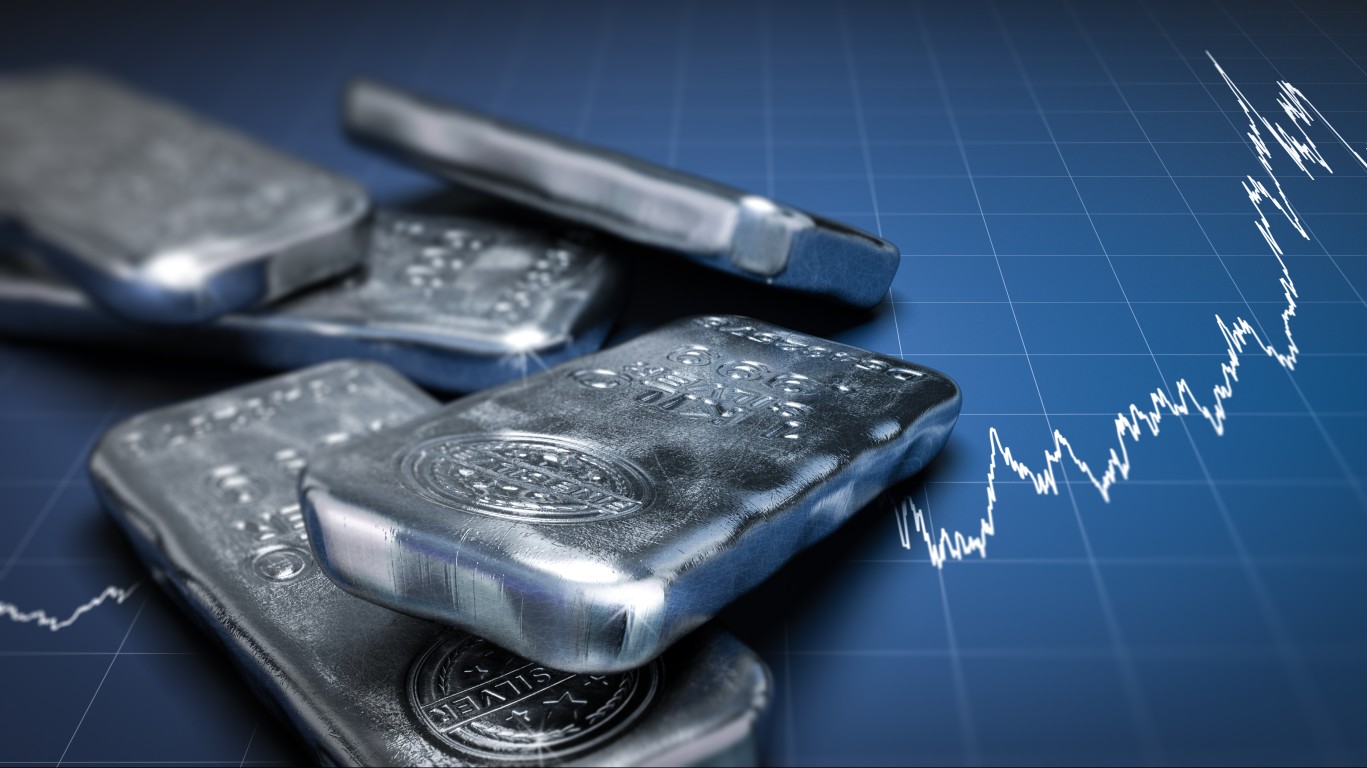
The case for holding some precious metals in a portfolio comes down to diversification. Gold and silver tend to move independently of stocks and bonds, which gives them genuine value as portfolio ballast during periods of market stress. That characteristic was on vivid display in 2025, when gold set 53 new all-time highs over the course of the year. The annual average price reached $3,431 per ounce, up 44% from 2024, while the full-year price gain from January 1 to December 31 clocked in at 65%, the sharpest annual rise since 1979. By late December 2025, gold was trading above $4,500 per ounce, and the metal hit an all-time record of approximately $5,597 per ounce on January 29, 2026. Since then, gold has pulled back and was trading around $4,009 per ounce as of mid-July 2026, illustrating the metal’s capacity for sharp swings in both directions. Silver posted its own historic performance, finishing 2025 up roughly 144% for the year, its sharpest annual gain since 1979.
Those moves were driven by a confluence of factors: geopolitical uncertainty, persistent inflation concerns, U.S. dollar weakness, and steady institutional demand. According to the World Gold Council’s full-year 2025 Gold Demand Trends report, total global gold demand topped 5,000 tonnes for the first time on record, with gold ETF holdings growing by 801 tonnes, the second-strongest year of ETF inflows on record. Central banks purchased 863 tonnes in 2025, which broke a three-year streak (2022 through 2024) of purchases exceeding 1,000 tonnes annually, yet still ranked as the fourth-largest annual expansion of central bank gold reserves on record and remained far above the 2010 to 2021 average of 473 tonnes. For investors watching from the sidelines, the performance raised a familiar question about allocation.
How Much To Own
Expert opinion on the right allocation spans a fairly wide range, but a clear mainstream consensus has emerged. Many financial advisors recommend dedicating somewhere between 5% and 15% of a total portfolio to precious metals, with major institutions on the more conservative end of that band. In a September 2025 commentary, Russ Koesterich of BlackRock’s Global Allocation team argued that a strategic allocation of 2% to 4% to gold is still warranted, noting that gold historically tends to outperform stocks when market volatility rises. UBS Wealth Management similarly suggests maintaining around 5% in gold as a hedge against risk. Rob Duncan of Global Impact Wealth Management takes a middle view, recommending a 3% to 5% allocation to gold, metals, or a diversified commodities position.
Some advisors are willing to go higher. Nate Byers, lead advisor and founder at Calculated Wealth, has argued that financial history supports a roughly 20% allocation to gold, though he cautions that gold can endure long stretches of flat or negative performance, making timing and patience essential. On the more aggressive end, some strategies for younger investors with high risk tolerance support allocations of 15% to 20%, blending gold, silver, and potentially platinum or palladium.
For most people, the video referenced in the original r/Gold post points toward a 5% to 20% window as a practical range. Translating that to real dollars: on a $100,000 portfolio, that represents between $5,000 and $20,000 committed to precious metals.
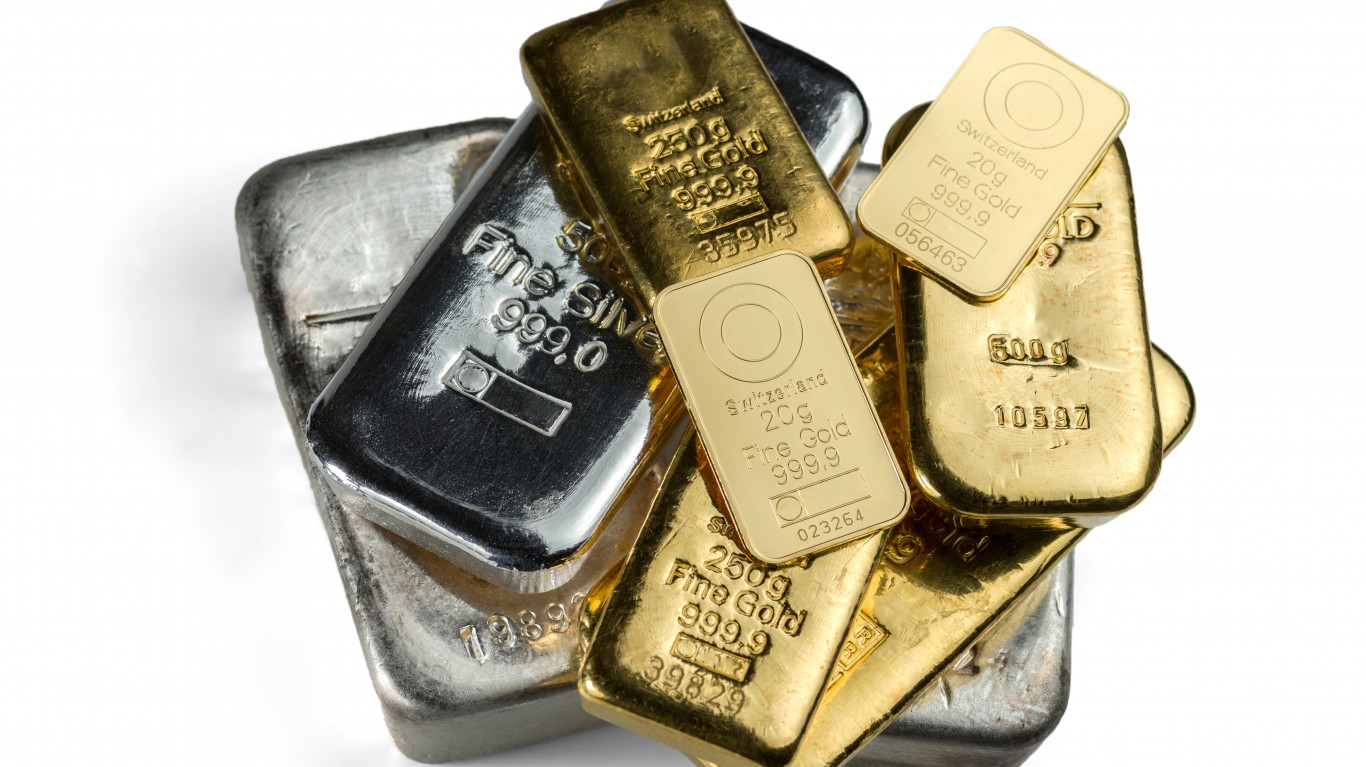
The choice of which metal matters too. Gold gets the most attention, but silver carries its own appeal. Silver’s lower price per ounce lowers the barrier to entry for investors who want physical exposure without a large upfront commitment. Silver also has significant industrial demand, particularly in electronics and renewable energy, which gives it a growth dimension that purely monetary metals lack. That said, silver is also more volatile than gold, so its higher potential return comes packaged with more pronounced price swings along the way.
Set the Right Expectations
Precious metals are a long-term hold, full stop. Anyone approaching gold or silver as a short-term trade is misusing the asset class. Prices move in both directions, sometimes sharply, and the 2025 surge is an exception rather than the norm. The pullback from the January 2026 record to roughly $4,000 in mid-2026 is a useful reminder of that reality. Over many years, gold has historically lagged equity returns in nominal terms, even as it has provided insurance value during crises and inflationary cycles.
There are also structural questions worth discussing with a qualified fiduciary financial advisor: whether precious metals should substitute for a bond allocation, how to hold them (physical bullion, ETFs, or mining stocks each carry different trade-offs), and how the IRS treats physical metals held in a self-directed IRA. A fiduciary can help map those decisions to a specific financial situation.
The ceiling that experts cite, around 20%, is a ceiling rather than a target. A more modest allocation in the 5% to 10% range preserves capital for assets that generate income, whether dividend-paying stocks, real estate investment trusts, or other cash-flowing holdings. The right number is personal and depends on age, risk tolerance, time horizon, and how the rest of the portfolio is constructed.
Editor’s note: This article was updated to reflect the World Gold Council’s confirmed full-year 2025 data, including gold’s 65% year-end price gain alongside the 44% annual average price increase, silver’s full-year gain of approximately 144%, and the correction that central bank gold purchases in 2025 came in at 863 tonnes, breaking the 2022-2024 streak of annual purchases above 1,000 tonnes. The BlackRock allocation guidance was updated to Russ Koesterich’s September 2025 commentary, which placed the strategic case for gold at 2% to 4%, and current gold price context of approximately $4,009 per ounce as of mid-July 2026 was added.
Contact [email protected] for any questions or corrections.
David Beren has been a Flywheel Publishing contributor since 2022. Writing for 24/7 Wall St. since 2023, David loves to write about topics of all shapes and sizes. As a technology expert, David focuses heavily on consumer electronics brands, automobiles, and general technology. He has previously written for LifeWire, formerly About.com. As a part-time freelance writer, David’s “day job” has been working on and leading social media for multiple Fortune 100 brands. David loves the flexibility of this field and its ability to reach customers exactly where they like to spend their time. Additionally, David previously published his own blog, TmoNews.com, which reached 3 million readers in its first year. In addition to freelance and social media work, David loves to spend time with his family and children and relive the glory days of video game consoles by playing any retro game console he can get his hands on.