The Single-Brand Apparel Retailer Stumbles as the Multi-Brand Portfolio Giant Surges 90%
Editor’s Note: A prior version of this article incorrectly referenced the prior CEO of J.Jill, as well as a quote from them in a 2024 earnings call, without clarifying the year. We have updated the post to correct these issues.…


Editor’s Note: A prior version of this article incorrectly referenced the prior CEO of J.Jill, as well as a quote from them in a 2024 earnings call, without clarifying the year. We have updated the post to correct these issues. Please reach out to [email protected] with any additional concerns.
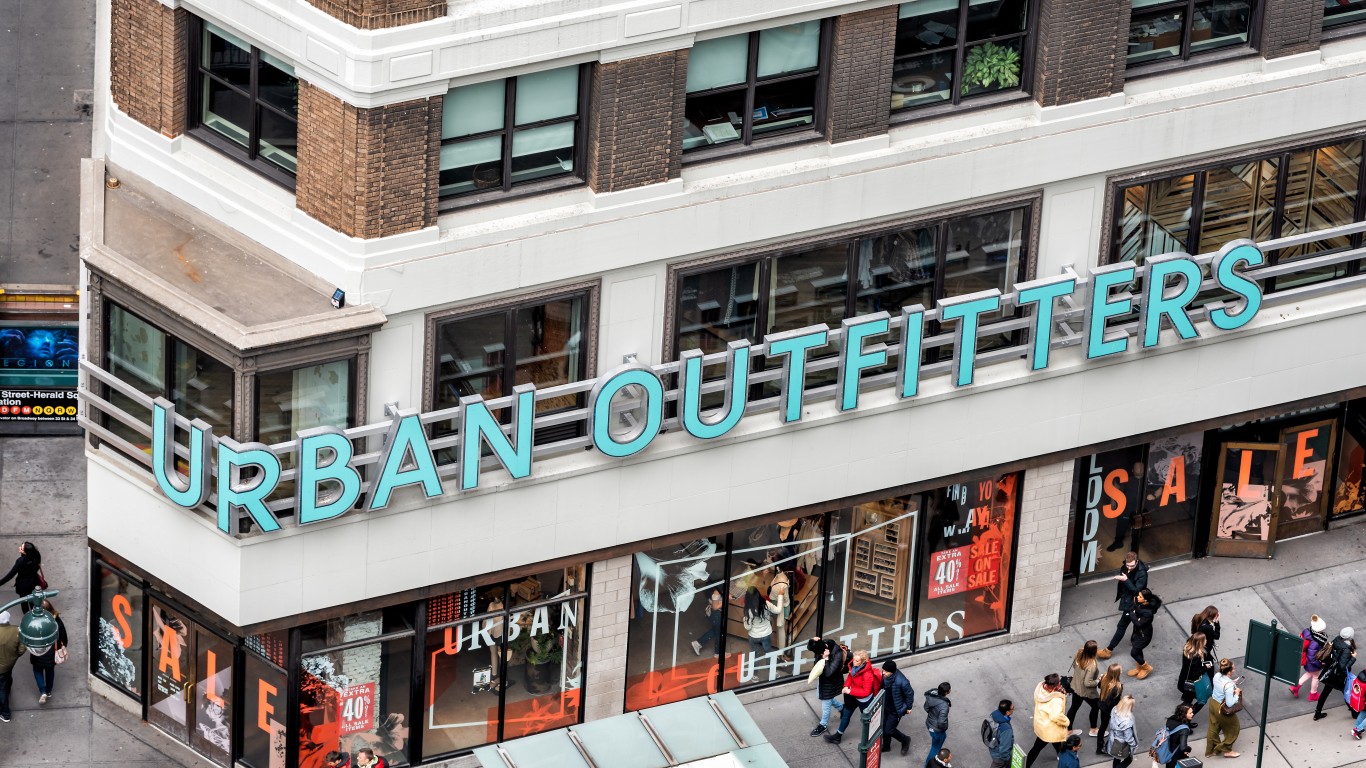
J.Jill (NYSE: JILL) and Urban Outfitters (NASDAQ: URBN | URBN Price Prediction) reported third-quarter results revealing two apparel retailers moving in opposite directions. J.Jill’s revenue slipped 0.5% while earnings dropped 25%. Urban Outfitters posted 12.3% revenue growth and earnings jumped 16.4%. Same sector, similar operating margins around 9.6%, but fundamentally different stories.
Full-Price Pressure Hits One. Margin Expansion Lifts the Other.
J.Jill struggled with what prior CEO Claire Spofford, in a Q3 2024 earnings call called “consumer distraction due to world events” that pressured full-price selling. Since then, new CEO Mary Ellen Coyne has stepped in to right the ship and get J. Jill back on track.
Bottoms performed well, driven by a Ponte Pant campaign that provided new styling ideas. That strength offset ongoing softness in dresses. CFO Mark Webb acknowledged: “We have not yet seen the return of the strong full-price customer we saw earlier this year.”
Urban Outfitters delivered the opposite result. Co-President Frank Conforti reported gross profit rate surged over 500 basis points, driven by “significantly improved initial margins as well as lower markdown rates at all brands.” Operating income soared 90% to $109 million. The company hit a record $1.3 billion in quarterly revenue.
Urban’s multi-brand portfolio showed strength across segments. Rental service Nuuly added $30 million in revenue and grew 86% year over year. All three core brands (Urban Outfitters, Anthropologie, Free People) posted retail comps up 6% with improved product margins.
| Metric | JILL | URBN |
| Gross Margin | 70.9% (down 60 bps) | 37.0% (up 500+ bps) |
| Revenue Growth | -0.5% | +12.3% |
| Earnings Growth | -25% | +16.4% |
Single-Brand Focus Versus Portfolio Diversification
J.Jill operates a single brand targeting women over 40. That focus creates vulnerability when the core customer pulls back. The company’s best customer cohort grew, but the overall file contracted.
Urban Outfitters spreads risk across four distinct brands serving different demographics and price points. When one brand softens, others compensate. Nuuly generates recurring subscription revenue and introduces younger customers to the brand portfolio. This diversification delivered resilience during the same quarter that challenged J.Jill.
J.Jill announced a $25 million share repurchase program, its first since going public in 2017. Urban Outfitters maintains significant insider ownership at 33.4%.
Freight Costs Will Ease. Customer Behavior Remains the Question.
J.Jill’s freight headwinds should moderate as Red Sea rerouting costs cycle through inventory. The real test is whether full-price customers return in spring 2025. August was soft, but Spofford noted “nice sequential improvement as we moved deeper into the quarter.”
Urban Outfitters needs to sustain margin gains while maintaining growth momentum. The 500-basis-point margin expansion creates tough comparisons ahead.
Why Urban Outfitters Looks More Compelling Right Now
Urban Outfitters offers more compelling retail exposure today. The portfolio structure provides downside protection that J.Jill’s single-brand model cannot match. Margin expansion at scale is harder to achieve than at smaller operations, making Urban’s 500-basis-point improvement more impressive.
J.Jill trades at a P/E of 6.44 with a 2.2% dividend yield, creating value appeal. Analysts see 27% upside to their $18 target. But that upside depends on the full-price customer returning, and management cannot control that timing. If promotional pressure persists through 2025, the valuation discount may be justified rather than opportunistic.
Urban Outfitters trades near analyst targets with limited upside at current levels, but operational momentum and diversified revenue streams make it the safer bet until J.Jill demonstrates it can reverse the earnings decline.
Contact [email protected] for any questions or corrections.
I write to invest, and I invest to spend more time with nature. Usually all at the same time. I'm a retired equities guy who saw a recession or four, and lives for what comes out of the other side of them.
I cover stocks across the board cause even though I feel like I've seen it all, there's always another way out there to make, and lose money. I want to help you do more of the former, and none of the latter. Making money with friends is my oxygen.
Let's go!