Silver’s Sharp Plunge: Bitcoin-Style Flash Crash or Healthy Pullback Before $100?
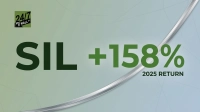
In 2025, silver surged to record highs, topping $80 per ounce and briefly reaching $84 before retreating. Starting the year around $29 per ounce, the metal has delivered gains of over 160%, outperforming gold, stocks, and most asset classes. This…

This post may contain links from our sponsors and affiliates, and Flywheel Publishing may receive compensation for actions taken through them.

In 2025, silver surged to record highs, topping $80 per ounce and briefly reaching $84 before retreating. Starting the year around $29 per ounce, the metal has delivered gains of over 160%, outperforming gold, stocks, and most asset classes.
This rally has drawn parallels to Bitcoin (CRYPTO:BTC), which earlier surged past $126,000 amid predictions of $200,000 or more, fueling a buying frenzy. However, Bitcoin suffered a flash crash on Oct. 10, triggered by leverage deleveraging and broader market stress, leading to over $19 billion in liquidations and a more than 30% drop from highs.
Silver followed a similar path, with traders eyeing momentum to carry it past $100 per ounce. The iShares Silver Trust (NYSEARCA:SLV), the largest silver ETF, closed at a high of $71.12 per share on Dec 26 while silver peaked at $83.62 — just before profit-taking and margin hikes sent it down over 11% to around $73 per ounce this morning. Investors now question if silver will mirror Bitcoin’s plunge.
Bitcoin’s Crash: Leverage and Speculation Exposed
Bitcoin’s flash crash stemmed from high leverage in a thin market, amplified by political shocks like tariff threats that created a risk-off environment. Over $19 billion in positions were liquidated in hours, driven by overleveraged traders and whale panic-selling near highs. Unlike prior cycles with retail dominance, 2025 saw institutional participation, yet its correlation with equities strengthened, exposing crypto to broader risk-off moves.
Bitcoin could face further downside if macroeconomic pressures persist, such as delayed rate cuts or trade tensions rising again. Its value relies heavily on sentiment and adoption expectations, lacking the tangible utility backing other assets and even other cryptocurrencies. While long-term potential exists from institutional and potential government interest, short-term volatility remains high without any physical demand to anchor it.
Will Silver Follow Suit?
Silver’s recent 11% drop echoes Bitcoin’s volatility, raising fears of a deeper correction. Profit-taking after record highs, margin hikes on the Comex Metals Exchange (CME), and year-end positioning contributed to the pullback. However, silver’s fundamentals differ markedly from Bitcoin’s speculative base.
Silver’s primary driver is industrial use, which accounts for over half of demand. Applications in solar panels, electric vehicles, electronics, and AI infrastructure continue growing. Solar alone consumes a significant share, with global installations pushing consumption higher despite efficiency improvements.
U.S. Federal Reserve rate cuts in 2025 enhanced silver’s appeal, as they made buying less risky in a rate-easing environment. That offered support for the rally alongside ETF inflows and central bank buying.
Supply-Demand Imbalance Supports Higher Prices
Most critical is silver’s structural deficit. The market has faced consecutive annual shortfalls, with 2025 estimates around 115 million to 120 million ounces unmet by mine production. Supply remains inelastic — silver is largely a byproduct of other mining — and recycling covers only a portion. Inventories in major vaults have shrunk, tightening physical availability.
Unlike Bitcoin, whose supply is algorithmic and based on perceptions of its value, silver has intrinsic industrial utility. This physical backing provides support that is absent in crypto, limiting downside risk even during dips.
Further pullbacks are possible — even likely — en route to higher levels, as volatility persists and the speculative froth surrounding the white metal unwinds. Yet the supply-demand imbalance favors sustained upside beyond current records.
Key Takeaway
The iShares Silver Trust offers investors the most efficient way to gain silver exposure. Backed by physical bullion held in vaults, it avoids the storage, insurance, and assay costs of owning coins or bars. As the largest silver ETF managed by BlackRock (NYSE:BLK | BLK Price Prediction), it provides liquidity and direct price tracking.
Surface parallels to Bitcoin’s crash may spark caution, but silver’s structural support — rooted in irreplaceable industrial demand and ongoing deficits — sets it apart. The 2025 run-up included more than a dash of irrational exuberance, yet silver’s underlying fundamentals point to further gains and higher highs ahead.
Contact [email protected] for any questions or corrections.
After two decades of patrolling the dark corners of suburbia as a police officer, Rich Duprey hung up his badge and gun to begin writing full time about stocks and investing. For the past 20 years, he’s been cruising the markets looking for companies to lock up as long-term holdings in a portfolio while writing extensively on the broad sectors of consumer goods, technology, and industrials. Because his experience isn’t from the typical financial analyst track, Rich is able to break down complex topics into understandable and useful action points for the average investor. His writings have appeared on The Motley Fool, InvestorPlace, Yahoo! Finance, Money Morning, and, of course, 24/7 Wall St. He has been featured in both U.S. and international publications, including MarketWatch, Financial Times, Forbes, Fast Company, and USA Today.