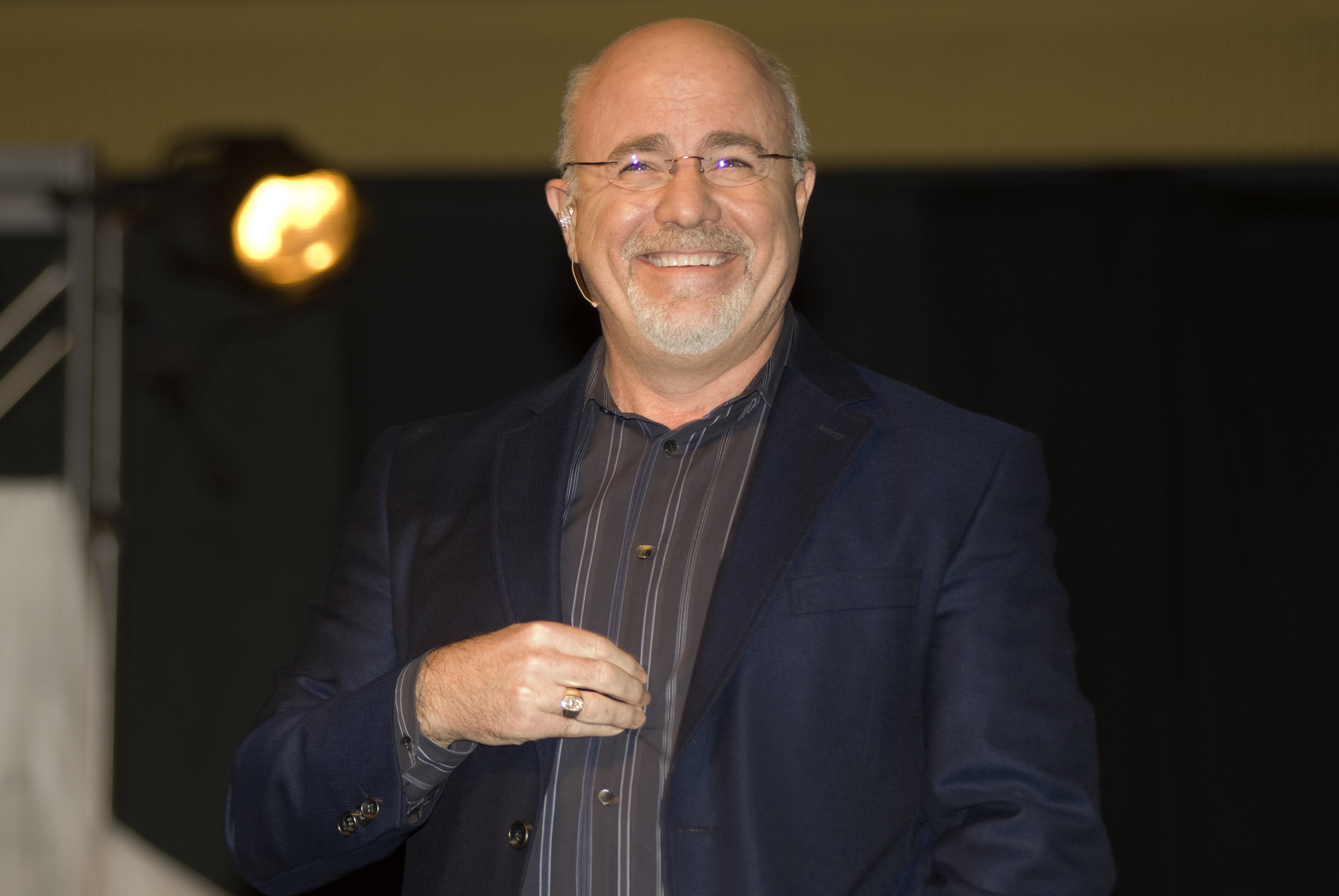
Here’s Why Dave Ramsey Thinks You Should Claim Social Security at 62
Is 62 the right age to claim Social Security? Dave Ramsey thinks so. The finance guru has made clear to podcast callers and on the Ramsey Solutions blog that 62 is the right age to claim. Here is why he…


Is 62 the right age to claim Social Security? Dave Ramsey thinks so. The finance guru has made his position clear to callers on his podcast, and the Ramsey Solutions blog lays out the same argument in writing.
That advice runs directly against the mainstream consensus. Most financial planners recommend delaying as long as personal circumstances allow. Two core arguments drive Ramsey’s position, and both deserve a close look before you decide when to file.
1. Ramsey believes you can invest the money and earn better returns
When a podcast caller asked Ramsey when to claim, he offered a counterintuitive answer: start at 62 and invest every check immediately. Route those Social Security payments into equity-focused mutual funds, he argued, and you can build more wealth over time than the guaranteed growth that comes from waiting.
That guaranteed growth is real and substantial. For each month you wait beyond 62, your benefit rises: first by avoiding the early-filing penalty that applies before your full retirement age (FRA), then through delayed retirement credits of roughly 8% per year for every month you push past FRA. Claiming at 62 with an FRA of 67 triggers a permanent 30% reduction in your monthly payment. In 2026, the maximum monthly benefit at age 62 is $2,969, compared to $4,152 at full retirement age and $5,181 at age 70. Those ceilings apply only to workers who earned at or above the taxable wage base for 35 years. The average retired worker collects about $2,083 per month.
Ramsey acknowledges those guaranteed increases but argues you can outperform them. As he wrote on the Ramsey Solutions blog: “You can do a much better job investing that money than the government ever could.”
2. Ramsey also believes you shouldn’t risk missing out on benefits
Ramsey’s second argument centers on mortality risk. Social Security stops paying when you die, so every month you delay is a bet on a longer life. Waiting and then dying before collecting a single check means leaving behind decades of payroll tax contributions with no personal return.
Even partial collection concerns him. Dying before a larger delayed benefit recoups the income you skipped is a genuine risk. Ramsey illustrates the point with the example of someone who claimed at 70 and died at 77 and a half. Using an FRA benefit of $1,050 as the baseline, delaying to 70 would have raised the monthly payment to $1,860, while claiming at 62 would have produced $1,500 (with an FRA of 67). The delayed filer received a bigger check each month, but collected for too few months to come out ahead in total.
Is Ramsey right?

Ramsey is correct that not everyone reaches the break-even point on a delayed claim. Actuarial calculations place that crossover at roughly age 78 to 78.5 for someone comparing a claim at 62 versus FRA. For a disciplined investor who puts every early check to work in diversified equities, the math can favor early claiming during a strong market run.
The counterarguments carry real weight, though. SSA actuarial data shows that men who reach 65 can expect to live roughly 17 to 18 more years on average, while women average closer to 19 to 20, placing typical lifespans well into the mid-to-upper 80s and comfortably past the break-even age. Investing Social Security income also demands genuine discipline and the stomach to absorb market downturns, while the benefit increase from delaying is guaranteed and inflation-adjusted. Working early filers face an additional complication: the 2026 earnings test withholds $1 in benefits for every $2 earned above $24,480 when you are under FRA. Those withheld amounts are not lost permanently. The SSA recalculates your benefit at full retirement age to credit you for the months it reduced your check, producing a higher monthly payment going forward. The short-term cash-flow hit is real, but the recalculation eventually offsets much of it.
There is also a structural risk worth factoring in. The 2026 Social Security Trustees Report projects that the OASI trust fund will be depleted in the fourth quarter of 2032, one quarter earlier than the prior year’s forecast. At that point, incoming payroll tax revenue would cover only about 78% of scheduled benefits unless Congress acts. The Bipartisan Policy Center attributes part of that accelerated timeline to the One Big Beautiful Bill Act, signed July 4, 2025, which reduced tax liability for Social Security beneficiaries and thereby lowered income tax revenues flowing into the program. That shortfall risk cuts both ways in the Ramsey debate: a smaller benefit locked in at 62 becomes harder to absorb if across-the-board cuts arrive a decade later.
Ultimately, your health, your savings, your investment discipline, and your household income all factor into the right claiming age. A financial advisor can help you model each scenario using your actual numbers. Your choice of claiming age affects every check you receive for the rest of your life, which makes that conversation worth having before you file.
Editor’s note: This version refines the life expectancy figures to reflect gender-differentiated SSA actuarial data (men average roughly 17 to 18 additional years past 65, women roughly 19 to 20), updates the description of the One Big Beautiful Bill Act’s effect on Social Security revenues to match the Bipartisan Policy Center’s published analysis, and confirms the 2026 OASI depletion timeline against the SSA Trustees Report.
Contact [email protected] for any questions or corrections.
Christy Bieber has been a personal finance and legal writer since 2008. She has a JD from UCLA School of Law and a BA in English, Media and Communications with a certification in business from the University of Rochester.
Christy has been published by a wide variety of sites, including WSJ Buy Side, Forbes, Kiplinger, Fox Business, Credit Karma, Insurify, and Annuity.org. In addition to writing for the web, she has also ghostwritten textbooks on business and law and served as a subject matter expert for course design.