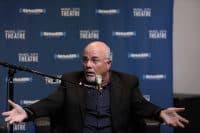
The Dave Ramsey Rule Most Americans Break, And Why It’s Costing Them
Dave Ramsey built an empire on one deceptively simple rule: live below your means. Spend less than you earn, save the difference, stay out of debt. Yet the personal savings rate sat at just 3.0% in July 2026, according to…


Dave Ramsey built an empire on one deceptively simple rule: live below your means.
Spend less than you earn, save the difference, stay out of debt. The logic is straightforward, the math is unambiguous, and yet Americans are violating it on a massive scale. According to the Bureau of Economic Analysis, the personal savings rate stood at 3.0% in July 2026, the most recent month on record. That is barely more than one-quarter of the 10% savings target Ramsey recommends. June’s reading hit a recent trough of just 2.7%, and while July offered a modest recovery, the broader trend remains deeply troubling.
Americans are breaking this rule at scale, and it’s costing them their financial futures.
The Spending Gap Is Growing
The pattern is unmistakable. Income is growing, but Americans are spending even faster, creating a dangerous gap between what they earn and what they set aside. Consumption has grown 8.6% while disposable income grew 6.3% year-over-year. Every dollar of income growth is being consumed and then some, leaving almost nothing for the financial cushion that protects against emergencies.
The consequences accumulate quietly. Absolute savings dollars have fallen 28.3% from their peak, eroding the foundation that builds long-term wealth. When spending consistently outpaces income growth by this margin, households are actively dismantling their financial security rather than reinforcing it.
Discretionary Spending and the Cost of Carrying a Balance
The discretionary spending surge reveals where the money is going. Recreational goods spending jumped 5.7%, outpacing overall income growth as Americans pour more dollars into non-essentials. That pattern is especially costly in the current borrowing environment.
The Federal Reserve, under chair Kevin Warsh, held its target range steady at 3.5% to 3.75% at its July 29, 2026 meeting, with three of twelve committee members dissenting in favor of an immediate rate hike to combat above-target inflation. The September 16 decision, expected later today, is shaping up to be even more consequential: futures markets are pricing a meaningful probability of a 25-basis-point increase, which would push borrowing costs higher at a moment when households are already strained. Credit cards that accrue interest already averaged 22.15% APR in the second quarter of 2026, per the Federal Reserve’s G.19 consumer credit release. Every discretionary purchase rolled onto a card and left unpaid compounds over time, turning a small indulgence into a long-term financial drag.
The political spotlight has found these rates. President Trump called for a one-year cap on credit card APRs at 10% in January 2026. Senators Josh Hawley and Bernie Sanders had already introduced bipartisan legislation in February 2025 to cap rates at 10% for five years, but it has stalled in Congress, and for the tens of millions of households currently carrying balances above 22%, any relief remains theoretical.
What the Numbers Actually Mean
The math is unforgiving. A household earning $75,000 that saves at a 3.0% rate sets aside roughly $2,250 annually. Following Ramsey’s 10% guideline would mean $7,500 instead. That gap, compounded over decades, translates into hundreds of thousands in lost wealth and fundamentally changes retirement prospects. At the June trough of 2.7%, that annual shortfall widened further to $5,475 per year for the same household.
Heads Up: Suze Orman Warns: Married Couples Who Do This Are Putting Their Finances at Risk
The fix demands an uncomfortable admission: most Americans are not broke because they earn too little. They are broke because they spend everything they earn and then borrow to spend more. Ramsey’s rule works precisely because it forces a margin between income and lifestyle. That margin is where wealth accumulates, where emergencies get absorbed, and where long-term security takes root. With the savings rate at just 3.0% as of July 2026, the consequences are not approaching. They are already here.
Up Next: Americans Who Retire Abroad Go to This Affordable Country the Most
Editor’s note: The personal savings rate has been updated to reflect July 2026 BEA data (3.0%), the most recent available, with June’s 2.7% trough noted for context. The credit card APR figure has been updated to 22.15% for accounts accruing interest, per the Federal Reserve G.19 Q2 2026 release. Context on the September 16, 2026 Fed rate decision has been added, reflecting market expectations of a possible hike on the day of publication.
Contact [email protected] for any questions or corrections.
I've been writing about stocks and personal finance for 20+ years. I believe all great companies are tech companies in the long run, and I invest accordingly.