Dave Ramsey Is Right About Why Americans Are Spending More and Feeling Worse
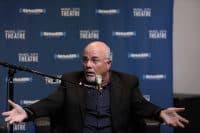
Dave Ramsey made a pointed observation on X and The Ramsey Show that cuts straight to the emotional engine behind most personal finance problems: “The human spirit was not created to attain peace, contentment, or fulfillment by gathering more stuff.”…


Dave Ramsey made a pointed observation on X and The Ramsey Show that cuts straight to the emotional engine behind most personal finance problems: “The human spirit was not created to attain peace, contentment, or fulfillment by gathering more stuff.” It sounds philosophical, but the data behind it is deeply practical.
The Numbers Confirm the Problem
Americans are spending more and saving less, even as incomes rise. The personal savings rate fell from 6.2% in the first quarter of 2024 to just 3.6% by the fourth quarter of 2025, while per capita disposable income climbed from $63,638 to $67,687 over the same period. More income, less saving. That gap is a behavior problem, not an income problem.
The slide has continued into 2026. By June, the personal savings rate had dropped further to just 2.7%, according to the Bureau of Economic Analysis, even as personal income edged up 0.2% for the month. Personal consumption expenditures represented 92.2% of disposable personal income in the fourth quarter of 2025, leaving fewer than four cents of every dollar for savings. Meanwhile, Americans spent $724.5 billion on recreational goods and $516.1 billion on furnishings in January 2026 alone. Those are categories that map almost perfectly to what Ramsey calls “gathering more stuff.”
Consumer sentiment tells a parallel and increasingly alarming story. The University of Michigan Consumer Sentiment Index registered 51.7 in August 2026, down roughly 6% from July and about 11% below where it stood a year earlier. That August decline ended two consecutive months of modest improvement and came after the index had plunged to an all-time record low of 44.8 in May before partially recovering to 49.5 in June. The ongoing Iran conflict has pushed gasoline prices above $4 a gallon nationwide and stoked fears of sustained inflation, squeezing household budgets already under pressure. People are spending at elevated levels while feeling worse about their financial lives than at almost any point on record. That is exactly the paradox Ramsey is describing.
Why Spending for Emotional Relief Creates a Debt Spiral
The mechanic is straightforward and worth understanding precisely. Emotional spending, buying things to relieve stress, reward yourself, or signal status, generates a short-term dopamine response and a long-term balance. When that purchase goes on a credit card at the current average rate of around 21%, the financial cost compounds every month. The emotional relief fades in days. The debt does not.
Consider a household earning $75,000 annually with $8,000 in credit card debt accumulated through discretionary purchases over two years. At a typical credit card rate, carrying that balance costs roughly $1,600 per year in interest alone. That is money that could fund an emergency account, accelerate debt payoff, or go into a retirement account. The “stuff” that created the balance is largely forgotten. The interest payment is not.
Ramsey’s prescription is structural: build an every-dollar budget, assign every dollar a purpose before the month starts, and eliminate non-essential spending until debt is cleared. The budget forces the spending decision to happen in advance, when you are calm and rational, rather than in the moment, when emotional triggers dominate. With core PCE inflation running upward from 125.502 to 128.394 over the past twelve months, the cost of emotional spending compounds against a backdrop of rising prices across nearly every category.
Teaching the Next Generation a Better Default
Ramsey extended the conversation to children, and this part of his message carries lasting financial implications. His position: give kids commissions for completing chores, not allowances. The logic is direct. Money comes from work. Work gets paid. Idleness does not.
The distinction matters because allowances teach children that money arrives on a schedule regardless of behavior. Commissions teach that money is a result of effort and output. A child who earns $5 for completing specific tasks and loses that $5 when tasks go undone has learned something a child receiving a weekly allowance has not: income is conditional. Internalized early, that lesson shapes how someone approaches a budget, a job, and a spending decision twenty years later.
A Practical Sequence for Breaking the Spending Cycle
Ramsey’s philosophy works best for people carrying consumer debt and living without a written budget. The practical sequence is specific:
- Write down every monthly expense and compare it to take-home income. If consumption exceeds 90% of income (which is the national average right now), identify the discretionary categories driving that number.
- Build a zero-based budget where every dollar of income is assigned before the month begins. Free tools like EveryDollar make this mechanical rather than motivational.
- Apply the commission model with children at home. Assign specific chores with specific dollar amounts. Pay only for completed work.
The core insight from Ramsey’s comment is this: financial stress in America is a behavioral problem. With unemployment holding at 4.1% and per capita income still growing, most households have the raw material for financial stability. The missing piece is a behavioral framework to convert income into security rather than consumption.
Editor’s note: This update revised the personal savings rate context to include the June 2026 BEA reading of 2.7%, updated the University of Michigan Consumer Sentiment figures to reflect the August 2026 final reading of 51.7 (down about 6% from July), and corrected the unemployment rate to 4.1% per the BLS August 2026 jobs report. Average credit card APR language was updated to reflect the current Federal Reserve figure of approximately 21%.
Contact [email protected] for any questions or corrections.
Joel South covers large-cap stocks, dividend investing, and major market trends, with a focus on earnings analysis, valuation, and turning complex data into actionable insights for investors.
He brings more than 15 years of experience as an investor and financial journalist, including 12 years at The Motley Fool, where he served as an investment analyst, Bureau Chief, and later led the Fool.com investing news desk. He has also co-hosted an investing podcast and appeared across TV and radio discussing market trends.