




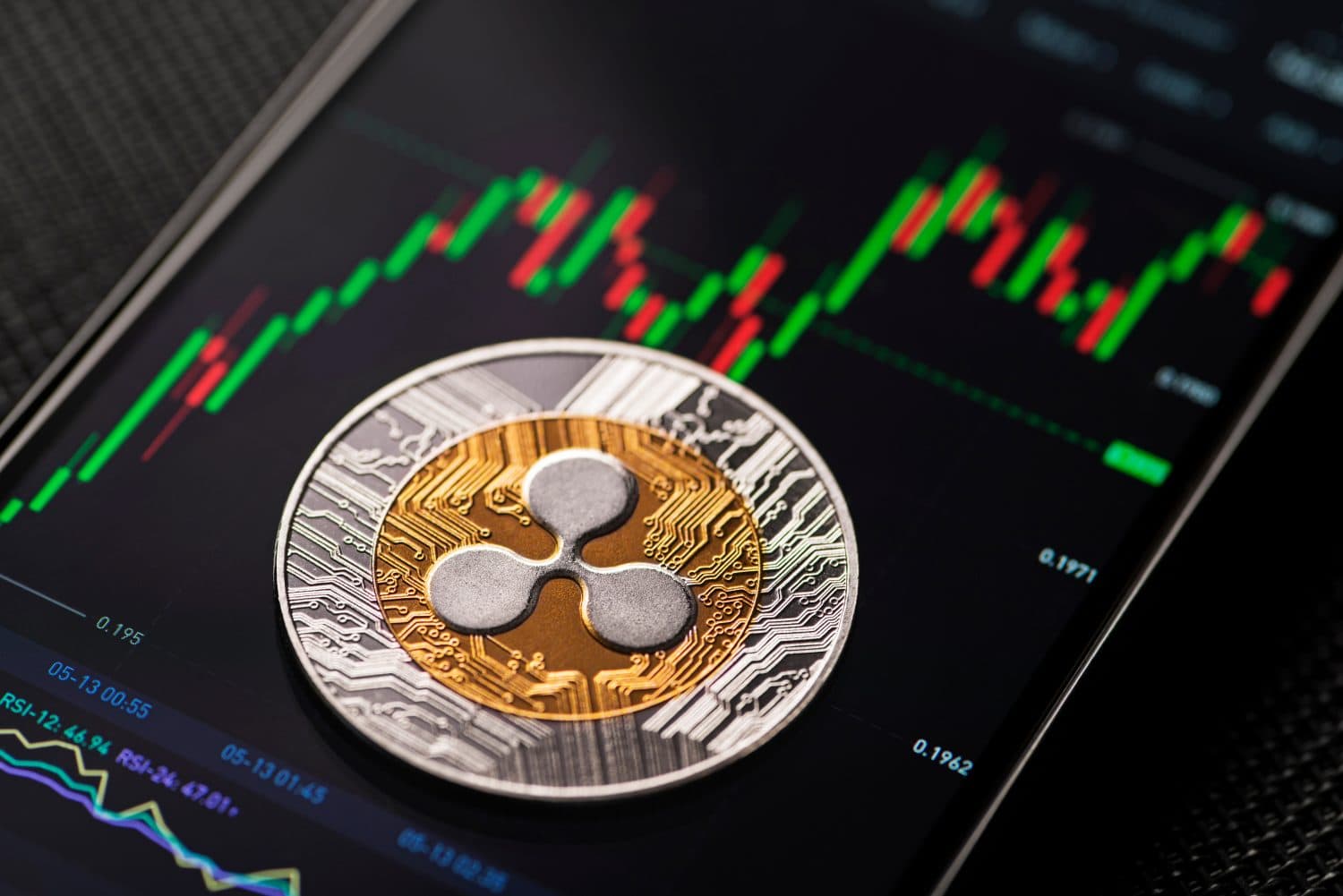
XRP (CRYPTO: XRP) is trading at $1.4731 on Monday, up 2.6% from where it traded a week ago.
Overall, the token trades 19.6% below its January 1 price and 59% from where it traded during July. Looking across the broader crypto space, Bitcoin (CYPTO: BTC) is trading at $68,674 after declining 2.3% for the week, while Ethereum fell 6.5% to $1,967. Put another way, XRP has outperformed the rest of the crypto space the past week.
The most dramatic action came yesterday. On Sunday, XRP spiked to $1.6705 before a sudden drop to $1.4439, with volume of 241.84 million XRP. Bitcoin experienced similar volatility, with Thursday, marking a major selloff that pushed prices down 4.7% to $65,840 before recovering.
Let’s dive into a couple of the biggest stories this past week
Ripple’s Partnership Blitz Meets Market Skepticism
Ripple announced three significant partnerships during the week, yet XRP declined on each announcement.
On February 11, the company secured a deal with Aviva Investors to tokenize traditional fund structures on the XRP Ledger. XRP dropped 1% that day. The prior day brought news of a partnership with UAE digital bank Zand for stablecoin solutions, yet the token fell 2%. On February 9, Ripple partnered with Figment to expand custody services into Ethereum and Solana staking, enabling banks to offer crypto services without building their own infrastructure.
This reveals a disconnect between institutional adoption and token price appreciation. This institutional infrastructure buildout mirrors trends we explored in today’s Daily Profit newsletter, where we examined how companies like Nvidia (NASDAQ:NVDA | NVDA Price Prediction) and AMD (NASDAQ:AMD) are positioning for AI infrastructure dominance while traditional software stocks face disruption fears—a similar dynamic of infrastructure investment outpacing immediate returns.
CEO Brad Garlinghouse doubled down on XRP’s centrality, stating “XRP Is The North Star” after disclosing $4 billion in acquisitions during 2025. He indicated potential for additional deals in the second half of 2026. But the market’s response suggests investors question whether Ripple’s expansion as a custody and tokenization infrastructure provider necessarily translates to XRP demand. The token’s utility in these partnerships remains indirect.
Crypto’s Speculative Era Faces Structural Shift
Galaxy CEO Mike Novogratz provided context for the broader malaise, arguing that crypto is headed for “much lower returns” as the speculative era gives way to real-world asset tokenization.
That thesis aligns with what we’re seeing across institutional crypto infrastructure. Morgan Stanley (NYSE:MS) is hiring lead engineers for its 2026 tokenization strategy and introducing native Bitcoin, Ethereum, and Solana trading on E*Trade. FedEx (NYSE:FDX) joined the Hedera Council alongside Alphabet (NASDAQ:GOOGL) and IBM (NYSE:IBM), pushing blockchain deeper into supply chain infrastructure.
Broadridge (NYSE:BR)’s distributed ledger repo platform saw 508% year-over-year growth in January, processing $7.3 trillion in monthly volume.
These developments validate the infrastructure thesis but complicate the investment case for tokens like XRP. If institutions are building on public blockchains primarily for settlement efficiency and tokenization rather than speculative positioning, the explosive returns of prior cycles may not repeat. XRP holders are betting that payment corridor adoption and stablecoin infrastructure will drive sustained demand.
The coming year will test whether the token can hold support at current levels or if the drift lower continues as institutional adoption proceeds without corresponding price momentum.
Contact [email protected] for any questions or corrections.










 Top Gaining Stocks
 Top Losing Stocks