Larry Fink Told Jim Cramer Oil Could Be Cut in Half — Here Are 5 Stocks That Would Explode Higher
On the April 14 episode of Mad Money, BlackRock CEO Larry Fink told Jim Cramer something critical: Oil could be cut in half if the Iran war resolves favorably. Fink told the BBC that “I could paint a scenario where…


On the April 14 episode of Mad Money, BlackRock CEO Larry Fink told Jim Cramer something critical: Oil could be cut in half if the Iran war resolves favorably. Fink told the BBC that “I could paint a scenario where I could see, a year from now, oil at $40 a barrel.” With Brend crude sitting at $94.41 per barrel as of April 15, a move to $40 would represent a collapse of roughly 58%. Even with a softer scenario that sees oil return to its 12-month low would be transformative for a specific set of stocks.
The five companies below carry fuel as a major operating cost. When oil falls, their margins expand, guidance resets higher, and the market reprices them fast. Here is how each benefits, ranked by potential impact.
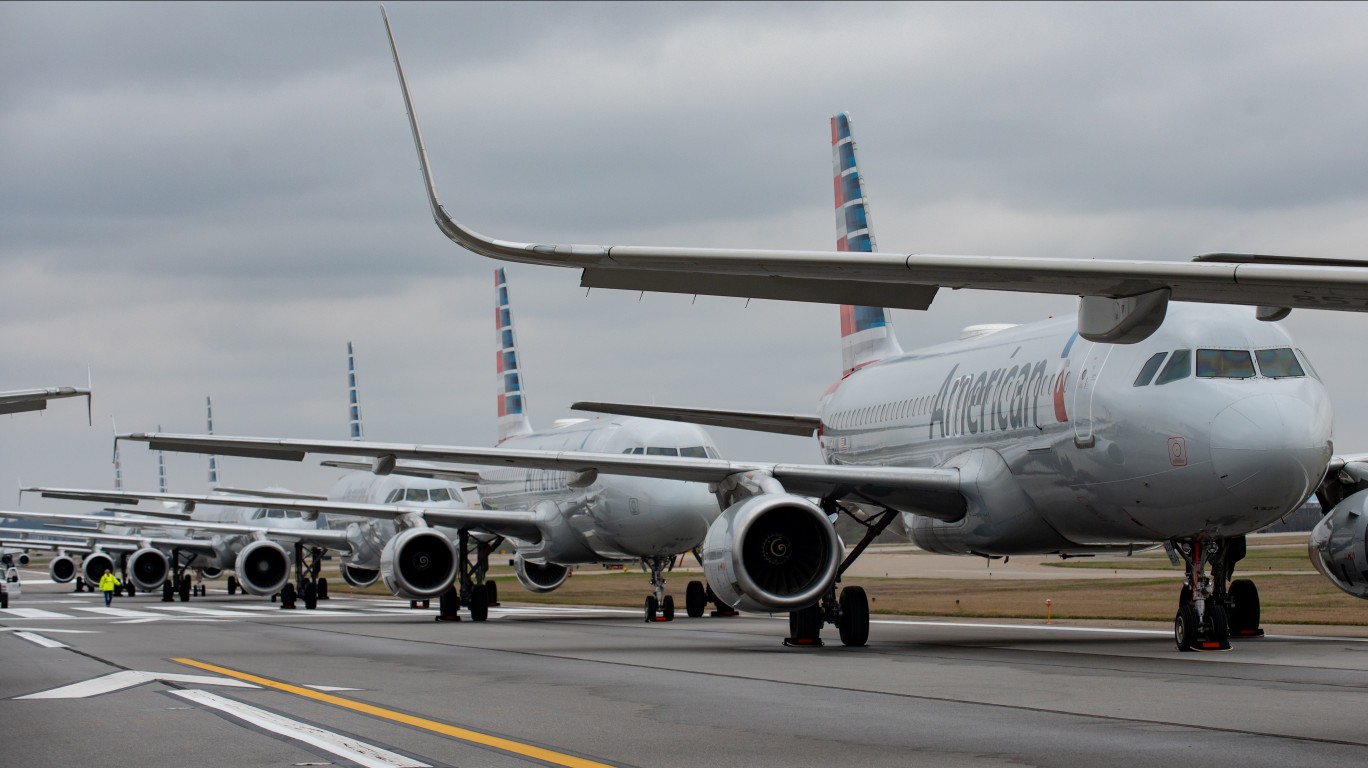
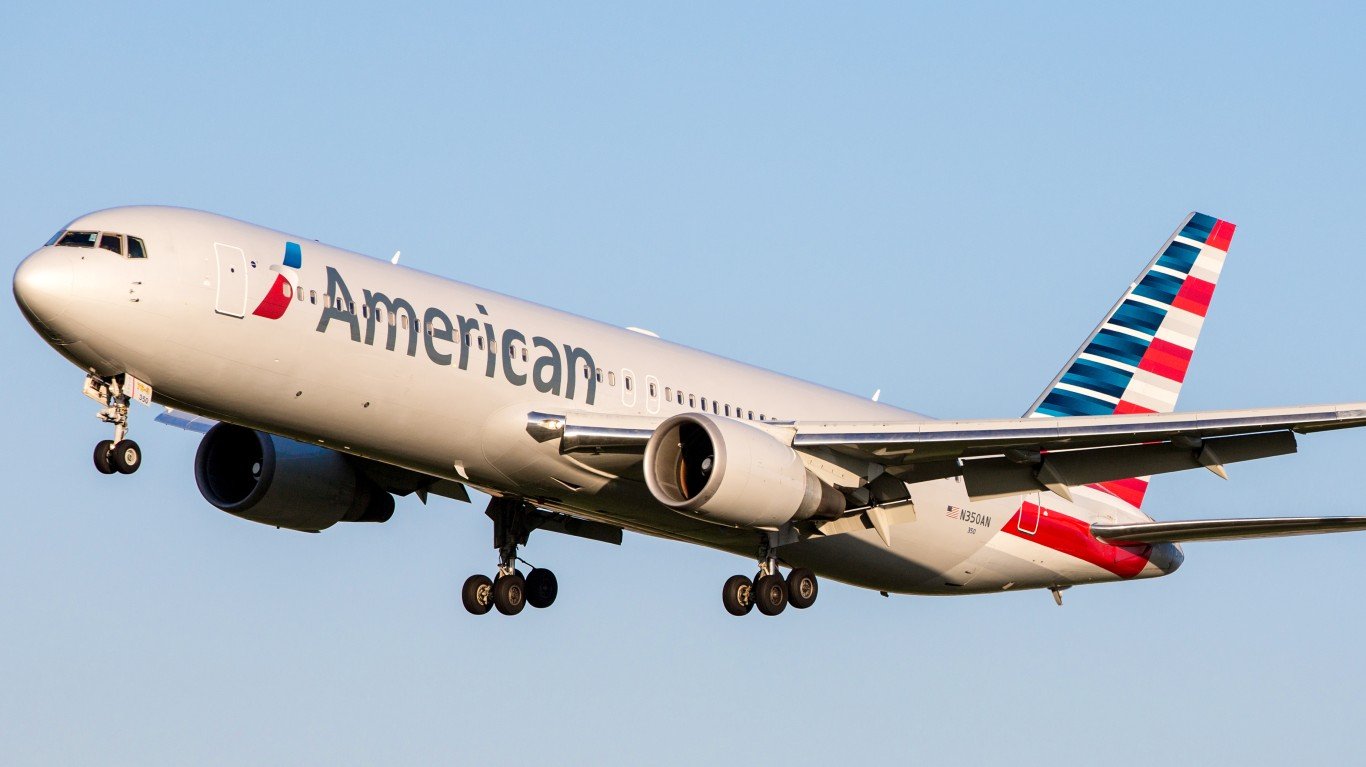
1. American Airlines (NASDAQ:AAL | AAL Price Prediction)
American Airlines is the most financially leveraged airline in the U.S. Right now, that leverage works against it. Total debt stands at $36.5 billion with negative stockholders’ equity of ($3.73 billion), meaning every dollar of fuel cost relief flows almost directly to the bottom line and debt reduction. Q4 2025 earnings told the story: record revenue of $14.0 billion, yet adjusted EPS of only $0.16, missing the $0.35 consensus estimate by 54%.
The culprit was surging operating costs. In Q2 2025, when fuel prices fell 15% year-over-year, American posted adjusted EPS of $0.95. That illustrates the sensitivity. Management guided FY2026 adjusted EPS of $1.70 to $2.70 assuming normalized fuel. A Fink-style oil collapse would make that guidance look conservative. The stock trades at $12.13 with a 52-week low of $8.96 and analyst consensus target of $14.86. Negative equity and high debt mean any demand shock alongside fuel relief could still pressure the stock. But on pure fuel-cost-relief basis, no airline is more levered to the upside.
2. Delta Air Lines (NYSE:DAL)
Delta Air Lines is the best-run airline in the country. Q1 2026 results prove it can generate earnings even in a brutal fuel environment. Adjusted EPS rose 44% year-over-year to $0.64 despite adjusted fuel expense of $2.59 billion, up 8% year-over-year, which management called the “defining headwind.” CEO Ed Bastian said: “While the recent fuel spike is currently impacting earnings, I’m confident this environment ultimately reinforces Delta’s leadership and accelerates long-term earnings power.” Delta guided Q2 2026 all-in fuel at approximately $4.30 per gallon, with fuel costs projected to increase by roughly $2.0 billion year-over-year. If oil halves, that $2 billion headwind becomes a tailwind.
Delta’s Monroe Energy refinery adds another layer, with a $300 million expected benefit in Q2 2026. Pre-fuel-spike FY2026 guidance was adjusted EPS of $6.50 to $7.50 with free cash flow of $3.0 to $4.0 billion. Analysts have a consensus target of $79.41 against a current price of $71.70, with 25 Buy or Strong Buy ratings versus just one Hold. Delta ranks second because its diversified revenue streams (premium, loyalty, MRO) already provide a cushion that limits pure upside shock from fuel relief.
3. United Airlines (NASDAQ:UAL)
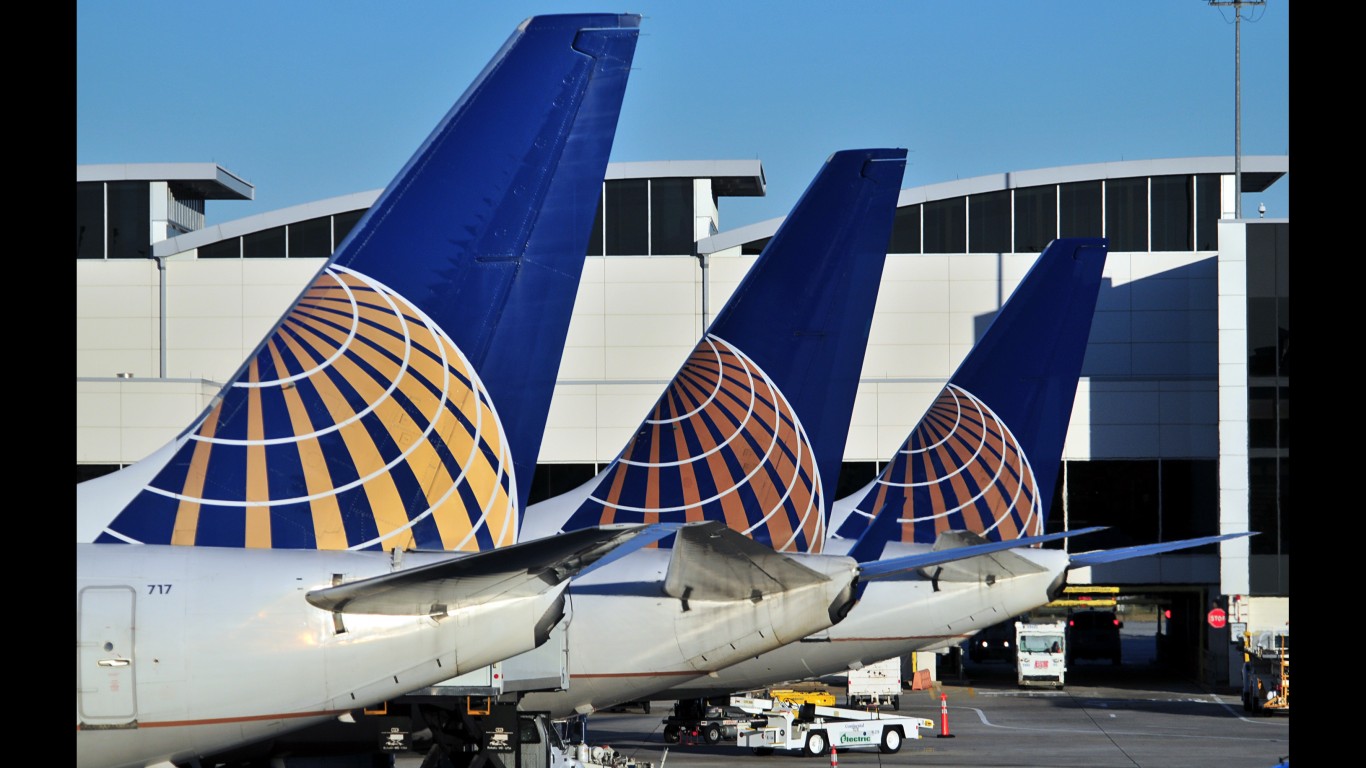
United Airlines enters this environment with record financials and aggressive growth plans. FY2025 revenue hit $59.07 billion (a record), adjusted net income reached $3.49 billion (a record), and free cash flow came in at $2.71 billion. Management guided FY2026 adjusted EPS of $12.00 to $14.00. In Q3 2025, when average fuel price fell 5.1% year-over-year to $2.43 per gallon, United used the cost relief to expand capacity and margins simultaneously.
The company plans more than 100 narrowbody and approximately 20 Boeing 787 widebody deliveries in 2026, meaning a fuel price collapse would dramatically improve those economics. United trades at $97.20 against an analyst target of $130.17, with 24 buy or strong buy ratings. The stock is down 15% year-to-date, making the setup attractive if the oil thesis plays out.
4. FedEx (NYSE:FDX)
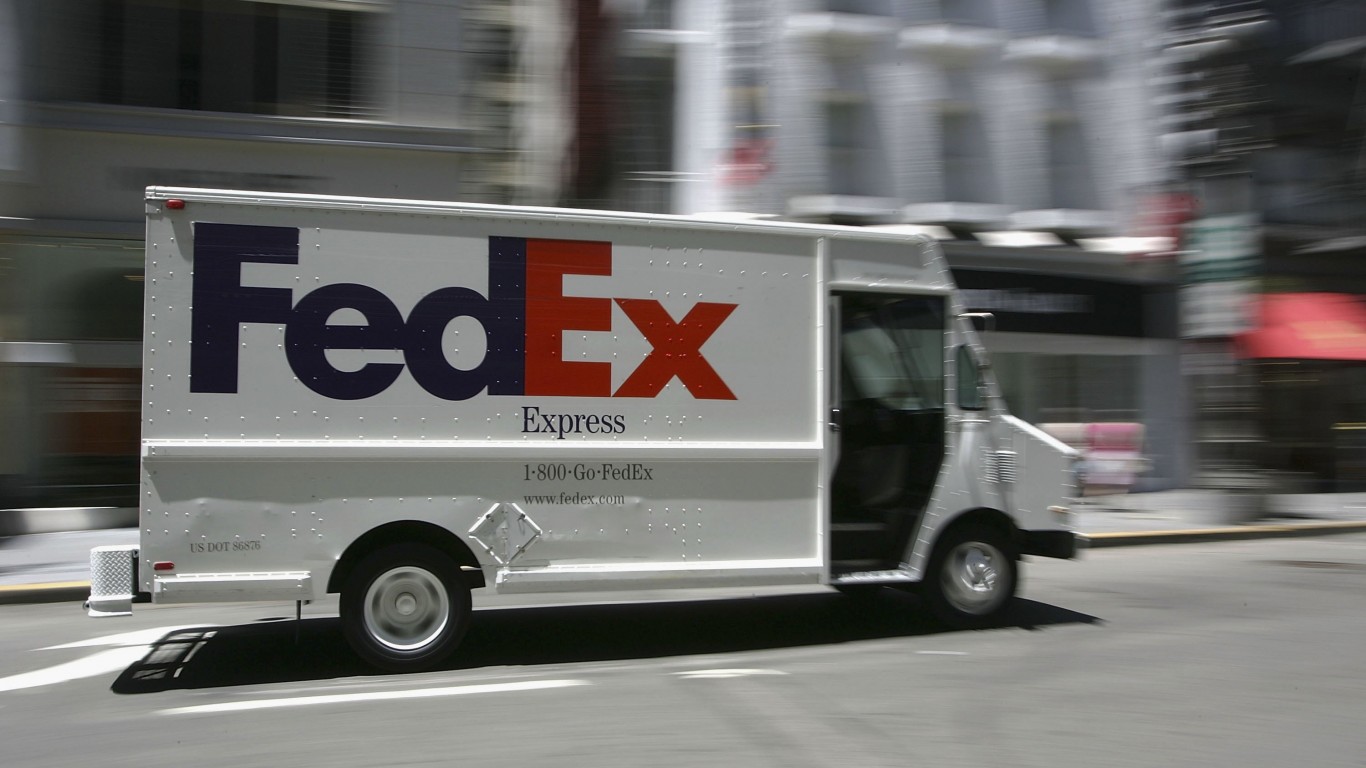
FedEx operates one of the largest commercial air fleets in the world through FedEx Express, making jet fuel a core input cost. The most recent quarter showed adjusted EPS of $5.25, beating the $4.13 estimate by approximately 27%, on revenue of $24.0 billion, up 8% year-over-year. Management raised full-year guidance to revenue growth of 6% to 7% and adjusted EPS of $16.05 to $16.85, but explicitly noted that guidance assumes “current economic outlook and fuel prices with no additional adverse economic, geopolitical, or trade developments.” That language is the tell: guidance is capped by fuel assumptions.
If oil drops to $57 or lower, FedEx’s cost structure improves materially and guidance becomes conservative. The company trades at a trailing P/E of 20x and forward P/E of 17x against an analyst target of $403.07 versus a current price of $370.14. The upcoming FedEx Freight spin-off planned for June 1, 2026 adds a catalyst layer independent of fuel.
5. Amazon (NASDAQ:AMZN)
Amazon ranks fifth not because the fuel impact is small in dollar terms, but because fuel is a smaller percentage of its massive cost base relative to airlines. Amazon operates Amazon Air (a cargo fleet), a last-mile delivery network used by nearly 100 million customers with items growing approximately 70% year-over-year, and third-party logistics infrastructure spanning the globe. FY2025 revenue reached $716.92 billion with operating income of $79.98 billion. Lower fuel reduces fulfillment costs across every layer.
Amazon also benefits indirectly: Cheaper shipping economics improve margins for third-party sellers who account for a large share of gross merchandise volume. The stock trades at a forward P/E of 30x against an analyst target of $281.18 versus a current price of $249.02, with 49 Buy ratings and zero Sell ratings. AWS and advertising carry the earnings story now, but fuel relief would be a meaningful margin tailwind across the North America segment, which generated $127.08 billion in revenue in Q4 2025.
Conclusion
The common thread across all five names is straightforward: Fuel is a cost they cannot fully control, and at more than $94 per barrel, Brent crude is at the 100th percentile of its 12-month range, it has almost nowhere to go but down if the geopolitical environment shifts. Fink’s scenario has historical precedent: oil traded at $55.44 as recently as December 16, 2025, just four months ago. The key uncertainty is timing: the Iran conflict’s resolution is binary and unpredictable, and Cramer noted his charitable trust is selling into the current overbought rally rather than adding new positions. But for investors who believe Fink’s bull case has real probability, these five stocks offer the clearest exposure to a world where oil is cut in half.
Contact [email protected] for any questions or corrections.
Joel South covers large-cap stocks, dividend investing, and major market trends, with a focus on earnings analysis, valuation, and turning complex data into actionable insights for investors.
He brings more than 15 years of experience as an investor and financial journalist, including 12 years at The Motley Fool, where he served as an investment analyst, Bureau Chief, and later led the Fool.com investing news desk. He has also co-hosted an investing podcast and appeared across TV and radio discussing market trends.