If You Want to Beat the Market, Start With These 3 Stocks
Investors are watching the stock market closely this year. The S&P 500 has gained roughly 11% through mid-September, but the gains have not been evenly distributed. For those navigating economic uncertainty, focusing on businesses with massive infrastructure investments and clear…


Investors are watching the stock market closely this year. The S&P 500 has gained roughly 11% through mid-September, but the gains have not been evenly distributed. Significant sector dispersion means that simply owning the index is no guarantee of strong returns. For those navigating economic uncertainty, focusing on businesses with massive infrastructure investments and clear competitive moats offers a more deliberate path through the noise.
Megacap earnings power is doing most of the heavy lifting for the broader market in 2026, with Wall Street analysts pegging a full-year gain target near 12%. Building a portfolio designed to consistently outperform means choosing companies with durable fundamentals and real manufacturing or technological advantages. The three businesses below have demonstrated exactly that so far this year.
Eli Lilly
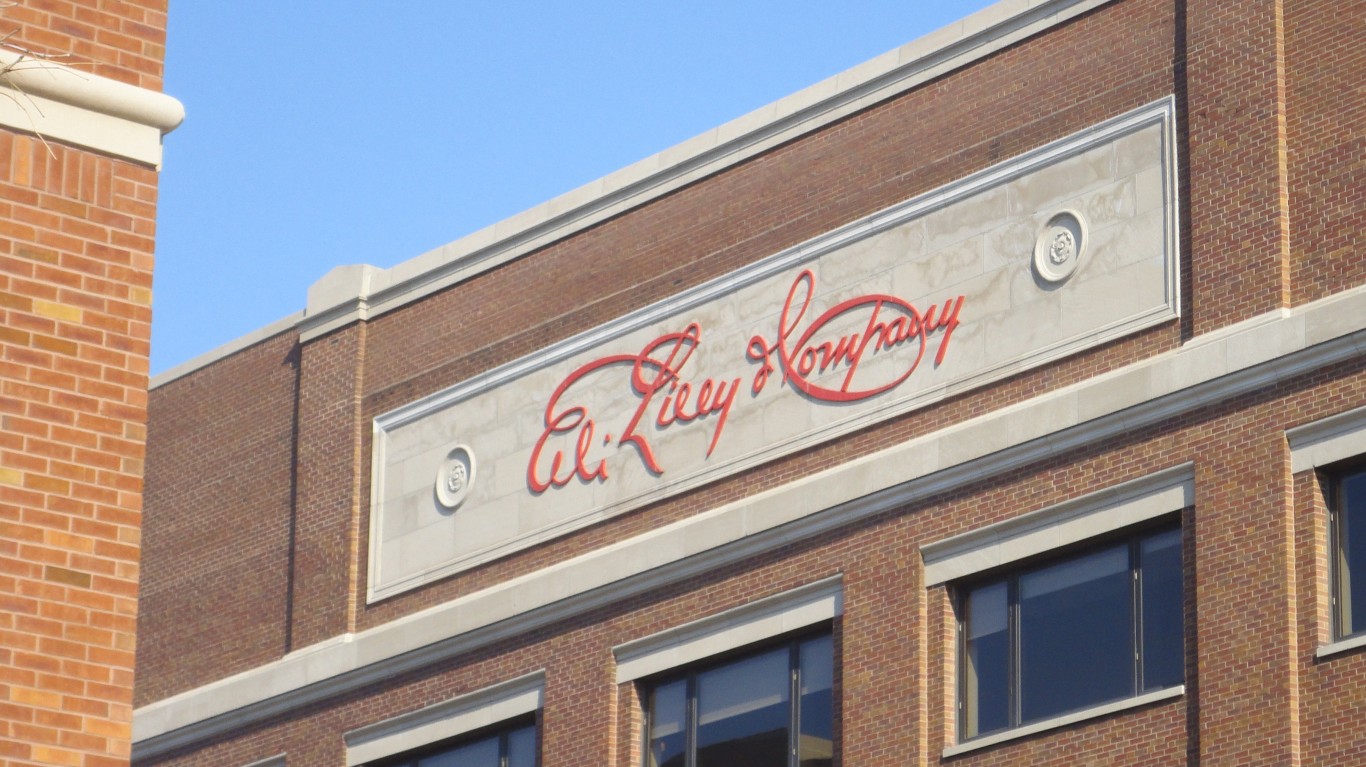
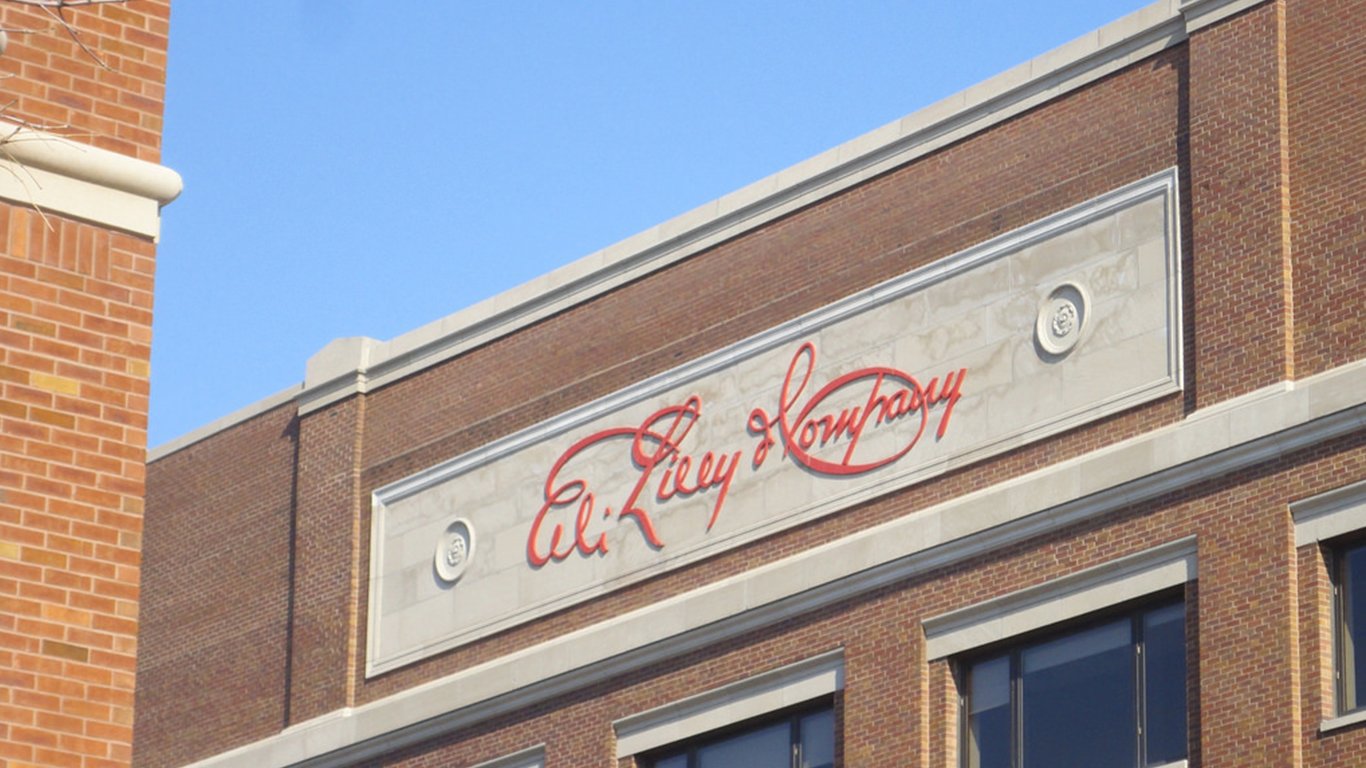
One of the most compelling healthcare stories in the market right now belongs to Eli Lilly (NYSE:LLY | LLY Price Prediction | LLY Price Prediction). The company reported first-quarter 2026 revenue of $19.8 billion, a 56% jump driven by a 65% increase in volume. Within that total, Mounjaro generated $8.7 billion and Zepbound added $4.2 billion, representing year-over-year gains of 125% and 80%, respectively. Lilly also posted non-GAAP EPS of $8.55, well above analyst expectations, and raised its full-year 2026 revenue guidance by $2 billion to a range of $82 billion to $85 billion.
The momentum only accelerated from there. Second-quarter 2026 revenue climbed 48% to $23.0 billion, with Mounjaro and Zepbound together generating $14.9 billion and adding $6.3 billion in growth compared with the same period a year earlier. Management raised full-year guidance again, this time to a range of $85 billion to $87 billion, reflecting both the strength of its core incretin franchise and the early commercial traction of Foundayo, its newly launched oral GLP-1 pill for weight management. Foundayo’s total prescriptions doubled in the final month of the second quarter, with nearly one in four new patients coming from outside the traditional injectable market.
Lilly’s growth story extends well beyond its current lineup. The company announced an additional $4.5 billion investment in its Indiana manufacturing sites to meet global demand, and the pipeline drug Omvoh showed four-year durable clearance in ulcerative colitis trials. The stock trades within range of its 52-week high of $1,133, and with management continuing to scale manufacturing and raise full-year targets, Lilly remains a high-conviction name for the second half of 2026.
Chevron Corporation
Chevron (NYSE:CVX) has proven itself a cash-flow powerhouse in the current environment. While crude oil price swings often dominate short-term sentiment, Chevron has stayed focused on production volume. The company averaged approximately 3.86 million barrels of oil equivalent per day in the first quarter of 2026, with worldwide production rising 15% year over year. U.S. output surged 24% and exceeded 2 million barrels per day for the third consecutive quarter, fueled by the integration of legacy Hess assets and continued Permian Basin growth.
By the second quarter, Chevron extended that record-setting run. Worldwide production rose 20% year over year to a new quarterly production record, with net oil-equivalent output up 382,000 barrels per day from the prior-year period. The Hess integration also delivered $1.5 billion in annual run-rate synergies ahead of schedule, exceeding the initial target by 50%. Separately, Chevron signed a 20-year power purchase agreement with Microsoft to supply 2.67 gigawatts of behind-the-meter power for a West Texas data center, marking an early and significant step into the AI infrastructure energy market.
Chevron’s commitment to shareholder returns remains a defining characteristic. The company raised its quarterly dividend to $1.78 per share, marking 39 consecutive years of annual dividend increases and cementing its Dividend Aristocrat status. The company has now achieved $3 billion in annual run-rate structural cost reductions as part of a program targeting $3 billion to $4 billion in savings by year-end. In the first quarter alone, Chevron returned $6 billion in cash to shareholders through $2.5 billion in repurchases and $3.5 billion in dividends. Its limited Middle East footprint, representing less than 5% of total production, provides a meaningful buffer against regional supply disruptions, making it a reliable anchor for any market-beating portfolio.
Alphabet
Tech giant Alphabet (NASDAQ:GOOGL | GOOGL Price Prediction) has firmly put to rest concerns that it arrived late to the AI race. Google Cloud revenue surged 63% in the first quarter of 2026 to $20 billion, with a backlog of committed cloud sales already secured at that point. By the second quarter, Cloud growth had accelerated to 82%, with revenue reaching $24.8 billion and Cloud operating income more than tripling to $8.8 billion. The Cloud operating margin expanded from 20.7% to 35.6% in a single year, a rare combination of faster growth and rapidly widening profitability for a capital-intensive infrastructure business. The Cloud backlog also swelled to $514 billion by the end of Q2, up more than $50 billion from the prior quarter.
Total company revenue reached $109.9 billion in the first quarter, up 22% year over year, and then jumped to $119.8 billion in the second quarter, up 24%. Search revenue climbed 17% to $63.3 billion in Q2, reflecting strong AI-driven query expansion, while Google Services overall grew 15% to $94.5 billion. Beyond search and cloud, Alphabet continues to broaden its AI presence. The $32 billion acquisition of cybersecurity firm Wiz, closed in early 2026, is now integrated within Google Cloud, strengthening its enterprise security offerings. Subsidiary Isomorphic Labs secured a $2.1 billion funding round to deploy AlphaFold for drug discovery, creating high-value synergies in biotech.
Alphabet updated its full-year 2026 capital expenditure guidance after the second quarter to a range of $195 billion to $205 billion, up from the $180 billion to $190 billion range it had communicated after the first quarter. Management expects 2027 capital spending to increase further, signaling long-term conviction in its AI infrastructure lead. Quarterly capital expenditures more than doubled year over year to $44.9 billion in Q2, a pace that turned free cash flow negative for the first time in the company’s history. For investors with patience, the combination of dominant search economics, accelerating cloud growth, a deepening AI moat, and a $514 billion forward backlog provides a compelling multi-year growth thesis.
Editor’s note: This update incorporates Eli Lilly’s second-quarter 2026 results, including 48% revenue growth to $23.0 billion and a raised full-year guidance range of $85 billion to $87 billion, as well as Foundayo’s early commercial traction. Chevron’s second-quarter worldwide production record (up 20% year over year) and its newly signed 20-year power agreement with Microsoft are also added. Alphabet’s Google Cloud backlog figure has been updated to $514 billion as of Q2 2026, and the full-year capital expenditure guidance has been corrected to the current range of $195 billion to $205 billion, raised after the company reported second-quarter results in July.
Contact [email protected] for any questions or corrections.
Vandita Jadeja is a financial publisher with over a decade of experience writing about financial topics, including investment, savings, retirement, insurance and banking. Vandita is a Chartered Accountant who loves to debunk financial concepts for readers.
Her work has appeared on sites that include The Motley Fool, InvestorPlace, and Benzinga. She covers investing and focuses on stock picks and price prediction for 24/7 Wall St.
When not looking for the next stock investment opportunity, she can be found traveling, reading, chasing sunsets and enjoying her iced latte.