Mark Zuckerberg Just Told 8,000 Employees Their Layoffs Are a Line Item in His $145 Billion AI Bill
On Meta’s Q1 2026 earnings call, CFO Susan Li said the quiet part out loud. “We recently shared internally that we plan to reduce the size of our employee base in May. We believe a leaner operating model will allow…

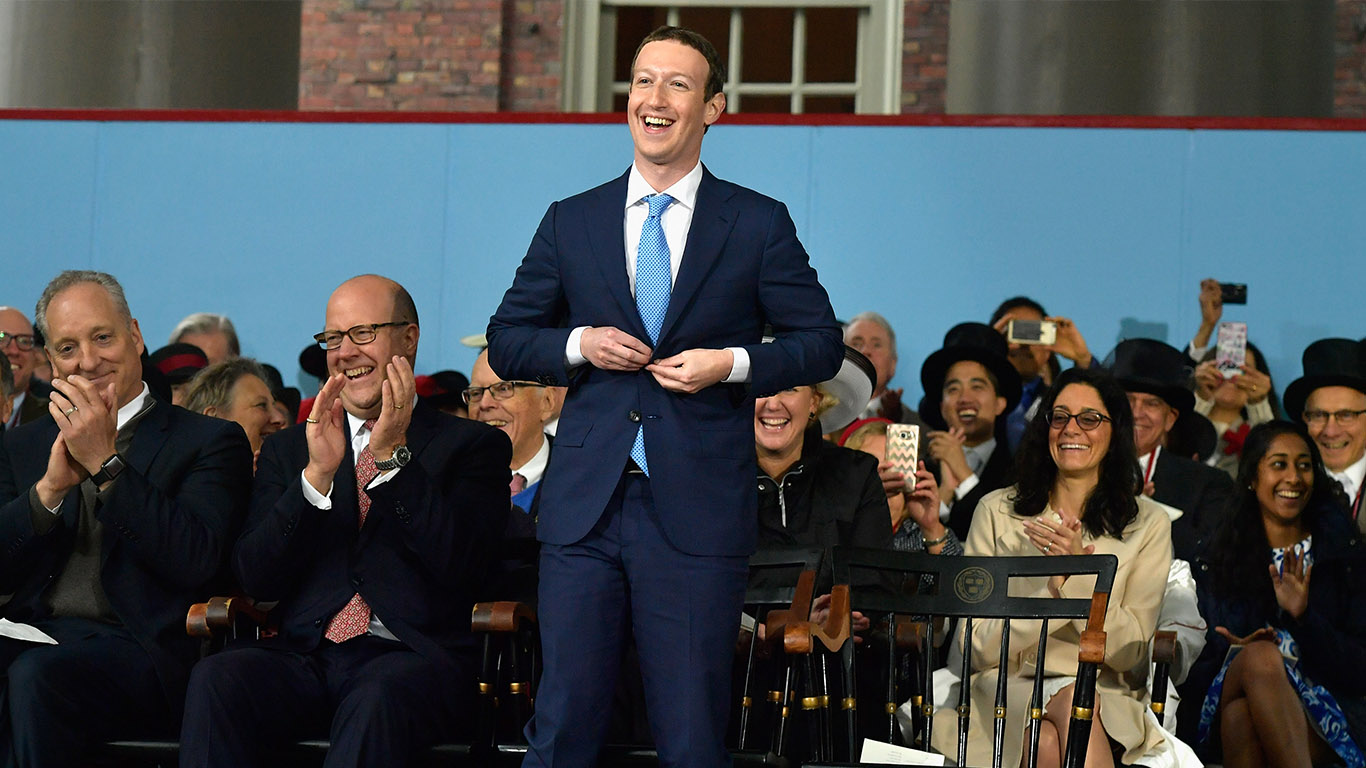
On Meta’s Q1 2026 earnings call, CFO Susan Li said the quiet part out loud. “We recently shared internally that we plan to reduce the size of our employee base in May. We believe a leaner operating model will allow us to move more quickly while also helping to offset the substantial investments we are making.” That is roughly 8,000 jobs framed, in management’s own words, as an offset to capital expenditure.
Meta (NASDAQ:META | META Price Prediction) raised its 2026 capex guidance to $125 billion to $145 billion, citing higher component pricing and additional data center costs. The company added a $107 billion step-up in contractual commitments in a single quarter for cloud and infrastructure deals. Meta ended Q1 with 77,900 employees, down 1% from Q4 2025, before the May reduction brought that figure down further.
The 8,000 cuts are only part of the story. Beyond the job eliminations, Meta canceled plans to fill 6,000 open roles and redirected roughly 7,000 other employees into newly created AI-focused teams, including Applied AI Engineering and Agent Transformation Accelerator. Taken together, the restructuring touches nearly a quarter of the company’s pre-cut workforce and marks the largest companywide round of reductions since Zuckerberg’s 2022 to 2023 “Year of Efficiency” campaign, which eliminated roughly 21,000 positions.
The Math Behind the Memo
Mark Zuckerberg’s framing is unusually candid. “We are seeing more and more examples where one or two people are building something in a week that would have previously taken dozens of people months.” He paired that with a seemingly counterintuitive note: “People will be more important in the future, not less.” On the day the May layoffs began, Zuckerberg also told employees in a separate memo that the cuts are necessary because “success isn’t a given” in the fiercely competitive AI landscape.
Meta’s AI capex is estimated at four to five times what the company spends on total human compensation. Even if Meta replaced its entire workforce with AI, payroll savings would amount to roughly $27 billion, a fraction of the $145 billion infrastructure spend. The binding constraint on growth is now GPUs and the electricity to run them, not talent. That logic explains why Zuckerberg simultaneously slashes headcount and redirects thousands of survivors into AI-native roles rather than simply letting them go.
The capex also funds Meta Superintelligence Labs, the division led by Chief AI Officer Alexandr Wang, who moved to Meta after the company acquired a 49% stake in his data-annotation firm Scale AI for more than $14 billion. The lab debuted its first model, Muse Spark, in April 2026, a closed-source system that now powers the Meta AI chatbot and signals a strategic shift away from the open-source model releases that previously defined Meta’s AI identity.
The Hyperscaler Reallocation
Meta is not alone in this trade. Amazon (NASDAQ:AMZN) spent $43.2 billion in cash capex in Q1 alongside roughly 30,000 employee reductions over the prior five months. Microsoft (NASDAQ:MSFT) booked $34.9 billion in Q1 capex and signed an incremental $250 billion Azure commitment from OpenAI. Alphabet (NASDAQ:GOOGL) raised its 2026 capex range to $180 billion to $190 billion and signaled that 2027 will bring further increases.
Together, the four hyperscalers are projected to spend up to $725 billion on capex in 2026, a 77% increase year over year. The human cost is running alongside that surge: April 2026 job cut announcements hit 83,387, with AI cited for 21,490 of them. A Goldman Sachs survey estimated that AI-driven layoffs equate to more than 16,000 payroll cuts per month in 2026.
What Shareholders Should Read Into It
Meta’s Q1 still delivered $56.3 billion in revenue, up 33% year over year, with a 41% operating margin and EPS of $10.44. The market has broadly rewarded the spend, as the stock has moved substantially higher since the Year of Efficiency playbook first proved out in 2023.
The structural beneficiary sits one layer below the apps. NVIDIA (NASDAQ:NVDA) carries a 29x trailing P/E and a 65% operating margin through early 2026, with its TTM stock return running at roughly 26% as earnings growth has progressively absorbed what was once a much steeper valuation premium. When a CEO tells 8,000 employees their jobs are a line item in an AI budget, he is telling shareholders where the puck is going. The hyperscalers have stopped optimizing for headcount and started optimizing for compute share. The human cost is being booked as the savings line that funds it.
Editor’s note: This update adds post-publication context on the full scope of Meta’s May 2026 restructuring, including the cancellation of 6,000 open roles and the redirection of 7,000 employees into AI-focused teams, as well as background on Meta Superintelligence Labs and its Muse Spark model. NVIDIA’s trailing P/E has been corrected from 43x to 29x and its one-year stock return updated from 80.72% to roughly 26%, reflecting current data.
Contact [email protected] for any questions or corrections.
Don Lair writes about options income, dividend strategy, and the kind of boring-but-durable investing that actually funds retirement. He's the founder of FITools.com, an independent contributor to 24/7 Wall St., and a former writer for The Motley Fool.