





Bitcoin’s (CRYPTO: BTC) biggest holders just made their largest move in 13 years. In the 30 days ending April 20, wallets holding at least 1,000 BTC quietly bought 270,000 BTC, roughly $23 billion, while most retail investors were panic-selling or staying on the sidelines.
At the same time, the amount of Bitcoin held on exchanges dropped to a seven-year low, meaning less Bitcoin is available to buy or sell than at almost any point in the last decade. That combination has preceded every major Bitcoin recovery of the last decade, even if the timing between accumulation and recovery has rarely been quick.
What Is a Bottom Signal?

A bottom signal is any data point, on-chain or otherwise, that suggests a price is near its lowest point before recovering. For Bitcoin, whale accumulation is one of the most-watched bottom signals, because large holders have historically bought more during fear-driven sell-offs and have been proven right in the past.
While whale accumulation reduces the supply of Bitcoin available for sale, it doesn’t by itself push the price higher. To sustain any form of price recovery, Bitcoin needs retail and institutional demand to return alongside the bottom signal.
Has This Happened Before?

Every major Bitcoin recovery has started with large holders buying while everyone else was selling. The pattern goes back over a decade and has held in every cycle, though the timing between accumulation and price recovery has never been immediate.
2015
Bitcoin spent most of 2015 below $300, and most investors had written it off. Whale addresses grew by 18% that year as large holders quietly built positions in silence. Nobody noticed until 2017, when Bitcoin climbed from $1,000 to nearly $20,000—a 1,900% gain that started with whales buying while retail stayed away.
2018–2019
After Bitcoin crashed from $20,000 to $3,200 in 2018, whale addresses grew steadily throughout the bear market floor. The price didn’t respond immediately; it took months of accumulation before Bitcoin moved.
When it did, it rallied approximately 330% from $3,200 to roughly $13,800 by mid-2019. The lesson from this cycle is that early accumulation doesn’t mean immediate recovery.
2020
When Bitcoin crashed to $3,800 in March 2020, whale wallets absorbed supply quickly during one of the sharpest fear events in crypto history. What followed was a 1,700% rally over 18 months, taking Bitcoin from $3,800 to nearly $69,000. The whales who bought during the peak panic did so at the best prices of the entire cycle.
2022
Whale addresses continued to grow throughout 2022 despite the FTX collapse wiping out billions in market value. Bitcoin fell from roughly $17,700 in June to around $15,700 in November before the floor finally held. Although accumulation occurred early and consistently, confirming the bottom required patience that most retail investors lacked.
Why Are Whales Buying Bitcoin Right Now?
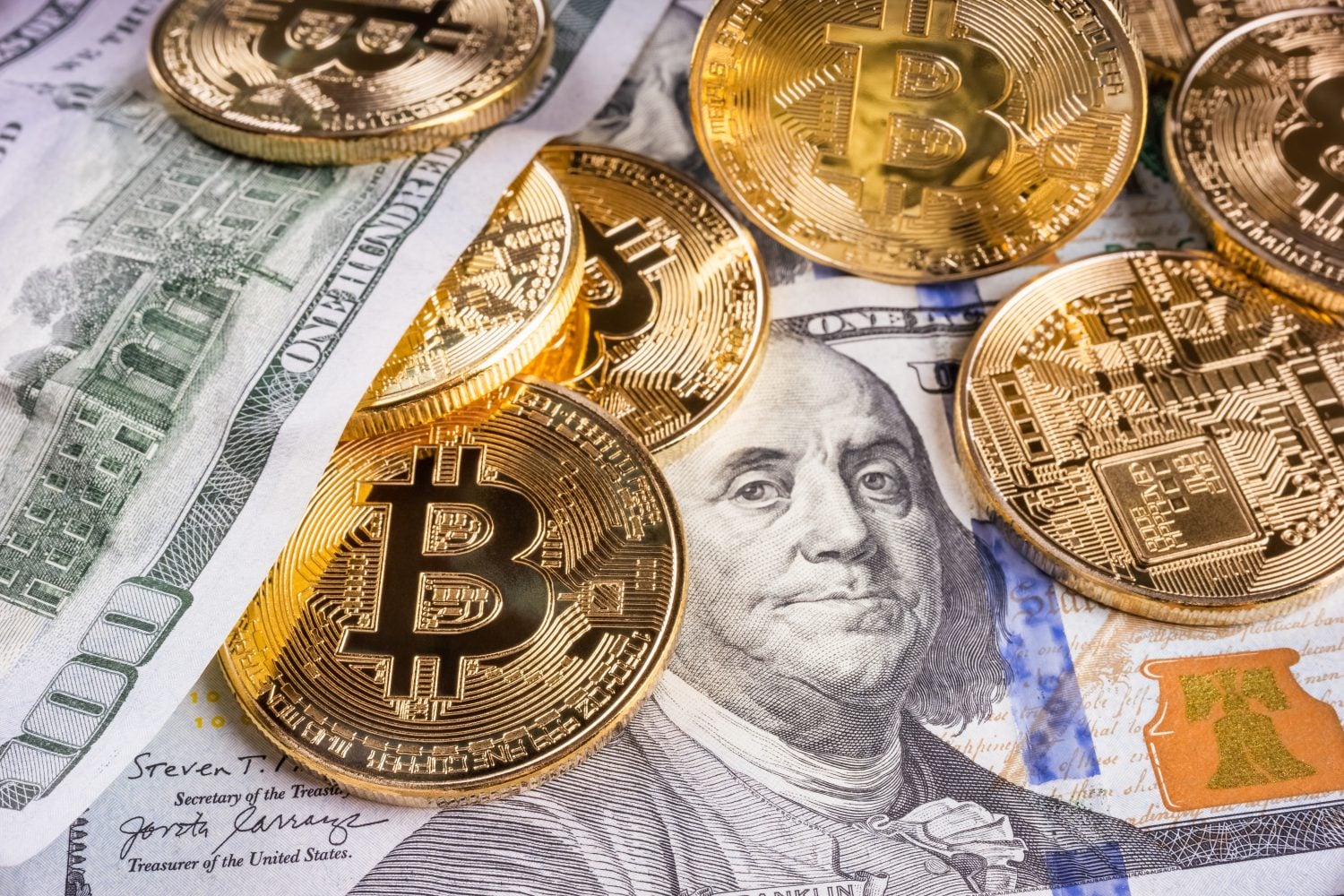
Several specific conditions made April look attractive to large holders, and understanding those reasons could reflect more about where the Bitcoin price might go next.
Bitcoin Is Trading at a 37% Discount From Its ATH
When Bitcoin hit $126,000 in October 2025, it was pricing in a near-perfect scenario. By the time accumulation hit full pace in April, Bitcoin was trading at $76,279—38% below its all-time high of $126K set on October 6, 2025.
For a buyer with a two- to three-year horizon, a 38% discount on an asset they believe will reach new highs is a solid opportunity. The thinking behind the accumulation is simple: buying here looks good compared to where Bitcoin will trade by 2027 or 2028.
Exchange Reserves Are at a Seven-Year Low
When Bitcoin leaves an exchange, it usually means the owner plans to hold it rather than sell it. Exchange reserves dropped to 2.21 million BTC, or 5.88% of the circulating supply—the lowest in seven years. Every coin whales buy and move off exchanges shrinks the available sell-side supply.
When the supply shrinks, and demand eventually returns, the price usually responds faster and more sharply than it would with normal liquidity. The seven-year low in exchange reserves means the market is structurally tighter than it has been at almost any point in the last decade.
ETF Inflows Are Running Alongside Whale Buying
This is the factor that makes the current whale accumulation different from every previous cycle. Large institutional buyers now have a direct route into Bitcoin through ETFs, and they bought heavily during the same window.
On April 10 alone, BlackRock’s IBIT recorded $269.3 million in net inflows and Fidelity’s FBTC took in $53.3 million, pushing total spot Bitcoin ETF net inflows to $358.1 million—the highest single-day figure since early March.
When whales and ETFs are buying at the same time, there’s not much Bitcoin left—and most retail investors haven’t started buying.
Fear Was Historically High
The Fear and Greed Index was below 25 for more than 60 consecutive days before its recent bounce, which was the longest such streak on record. Historically, buying during fear periods proves more effective than buying during greed phases, and whales know this pattern better than anyone.
When retail investors panic-sell, large holders absorb that supply at prices they’re willing to hold for years. The 59-day extreme fear streak made April one of the highest-fear environments in Bitcoin’s history, and historically, the highest-fear periods have marked the best long-term entry points.
Could the Whales Be Wrong?
In 2018, whales accumulated heavily between $6,000 and $10,000, only to watch the price fall to $3,200 before the floor held. They weren’t wrong about the direction—they were just early, and sometimes being too early can be costly.
However, we think the current whale accumulation is a genuine bottom signal because the supporting data is stronger than at the false bottoms in 2018 and 2022. Exchange reserves at a seven-year low, ETF inflows absorbing supply at an institutional scale, and a Fear and Greed streak that broke records all point to the worst of the selling being done.
That said, some analysts still warn that the bear market could drag into Q3 2026, and we wouldn’t be surprised if that happens. But 2,028 whale wallets don’t collectively spend $23 billion on Bitcoin without a reason. Until that changes, the weight of the evidence points toward a floor forming.
Contact [email protected] for any questions or corrections.













 Top Gaining Stocks
 Top Losing Stocks