Forget Interest Rate Cuts. Here’s Why the Fed May Actually Hike Rates No Matter Who’s Chair
For months, Wall Street has been obsessed with one question: how many times will the Federal Reserve cut interest rates this year? Two cuts? Three? Maybe more if the economy weakens? Investors have hung on every speech from Federal Reserve…


For months, Wall Street has been obsessed with one question: how many times will the Federal Reserve cut interest rates this year? Two cuts? Three? Maybe more if the economy weakens? Investors have hung on every speech from Federal Reserve Chair Jerome Powell looking for clues.
But this morning’s inflation report may have flipped the entire conversation on its head.
The Bureau of Labor Statistics reported that the Consumer Price Index rose 0.6% in April after climbing 0.9% in March. Year-over-year inflation accelerated to 3.8% — the highest level since May 2023. Instead of cooling, inflation is heating back up again. And suddenly, the possibility of another Fed rate hike no longer looks far-fetched.
That matters because markets had been preparing for easier monetary policy. Instead, investors may need to prepare for tighter financial conditions all over again.
The Market Expected Cuts — Now It’s Pricing in Hikes
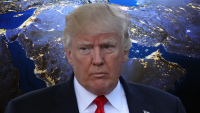
President Donald Trump has repeatedly criticized Powell for moving too slowly on interest rates. Trump argued the Fed waited too long to cut borrowing costs even as economic growth slowed in parts of the economy.
To be fair, the Fed has already cut rates several times from peak levels reached during the inflation fight of 2022 through 2024. But those cuts were measured, not aggressive. The federal funds rate has remained unchanged through several consecutive meetings as policymakers waited for inflation to cool further. Now that patience may prove justified.
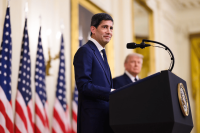
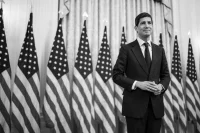
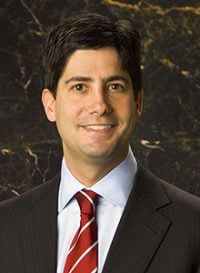
Trump’s expected Fed chair nominee, Kevin Warsh, has been viewed as someone more willing to push through faster rate cuts to support growth. Surprisingly, that option may already be disappearing. If inflation keeps accelerating, the next Fed move may not be downward at all.
Here’s what prediction market Kalshi data shows:
| Probability of Fed Rate Hike | Odds |
| Before 2027 | 27% |
| Before July 2027 | 41% |
| Before 2028 | 77% |
A month ago, Kalshi markets implied only an 18.2% probability of a rate hike occurring in 2026. That is a sharp repricing in a very short period of time. Investors are beginning to think the Fed may have underestimated inflation again.
Energy Prices Are Driving Inflation Higher
Let’s look at what the numbers actually tell us. According to the Bureau of Labor Statistics CPI release issued this morning, energy prices rose 3.8% in April alone and accounted for roughly 40% of the increase in the all-items index. Gasoline, diesel, jet fuel, and electricity costs all moved higher.
That is not a small detail. Energy acts like a tax on the entire economy.
When fuel costs rise:
- Shipping costs increase
- Airline ticket prices climb
- Manufacturing expenses expand
- Grocery transportation costs rise
- Utility bills consume more household income
Regardless of how you look at it, higher energy prices eventually flow through nearly every corner of the economy.
The Iran conflict is playing a major role here. Supply disruptions and fears surrounding shipping routes in the Middle East have kept upward pressure on crude oil prices for months. Brent crude remains elevated as traders price in the risk of wider regional instability.
Peace negotiations had briefly raised hopes that tensions would cool. That said, those talks have largely broken down, and markets are increasingly preparing for renewed hostilities. If the situation escalates again, energy inflation could accelerate even further.
And that creates a serious problem for the Federal Reserve.
Why a Rate Hike May Not Solve the Problem
Traditionally, the Fed raises interest rates to slow demand. Higher borrowing costs reduce spending on homes, cars, and business investment. Slower demand usually cools inflation.
But energy-driven inflation is harder to control. The Fed cannot pump more oil. It cannot reopen disrupted shipping lanes. It cannot end geopolitical conflicts. In short, monetary policy has limited power against supply shocks.
Granted, higher rates could still strengthen the U.S. dollar and reduce some consumer demand. But if oil shortages worsen because of geopolitical tensions, energy prices may keep climbing regardless of Fed action.
That leaves policymakers trapped between two risks:
- Keep rates steady and allow inflation to reaccelerate
- Raise rates and risk slowing economic growth further
Neither option is painless.
Key Takeaway
For investors, the important shift is psychological as much as economic. Markets spent most of the past year assuming rate cuts were inevitable. This morning’s CPI report challenged that assumption directly.
Inflation rose 0.6% in April after a 0.9% increase in March. The all-items index climbed 3.8% year over year, according to the Bureau of Labor Statistics. Energy prices accounted for 40% of the increase. Meanwhile, Kalshi prediction markets now assign a 27% probability and climbing of another Fed rate hike before 2028.
When all is said and done, the Fed may have less flexibility than investors hoped. And if energy prices continue climbing because of renewed Iran tensions, rate cuts could move from “delayed” to “off the table” altogether.
Contact [email protected] for any questions or corrections.
After two decades of patrolling the dark corners of suburbia as a police officer, Rich Duprey hung up his badge and gun to begin writing full time about stocks and investing. For the past 20 years, he’s been cruising the markets looking for companies to lock up as long-term holdings in a portfolio while writing extensively on the broad sectors of consumer goods, technology, and industrials. Because his experience isn’t from the typical financial analyst track, Rich is able to break down complex topics into understandable and useful action points for the average investor. His writings have appeared on The Motley Fool, InvestorPlace, Yahoo! Finance, Money Morning, and, of course, 24/7 Wall St. He has been featured in both U.S. and international publications, including MarketWatch, Financial Times, Forbes, Fast Company, and USA Today.