Buffett Said the Dow Would Hit 1,000,000. Is He Being Too Conservative?
The Oracle of Omaha’s wildest market call has a surprisingly boring math problem behind it In September 2017, the most famous investor in the world stood up at a party for Forbes magazine’s 100th birthday and predicted the Dow Jones…

The Oracle of Omaha’s wildest market call has a surprisingly boring math problem behind it
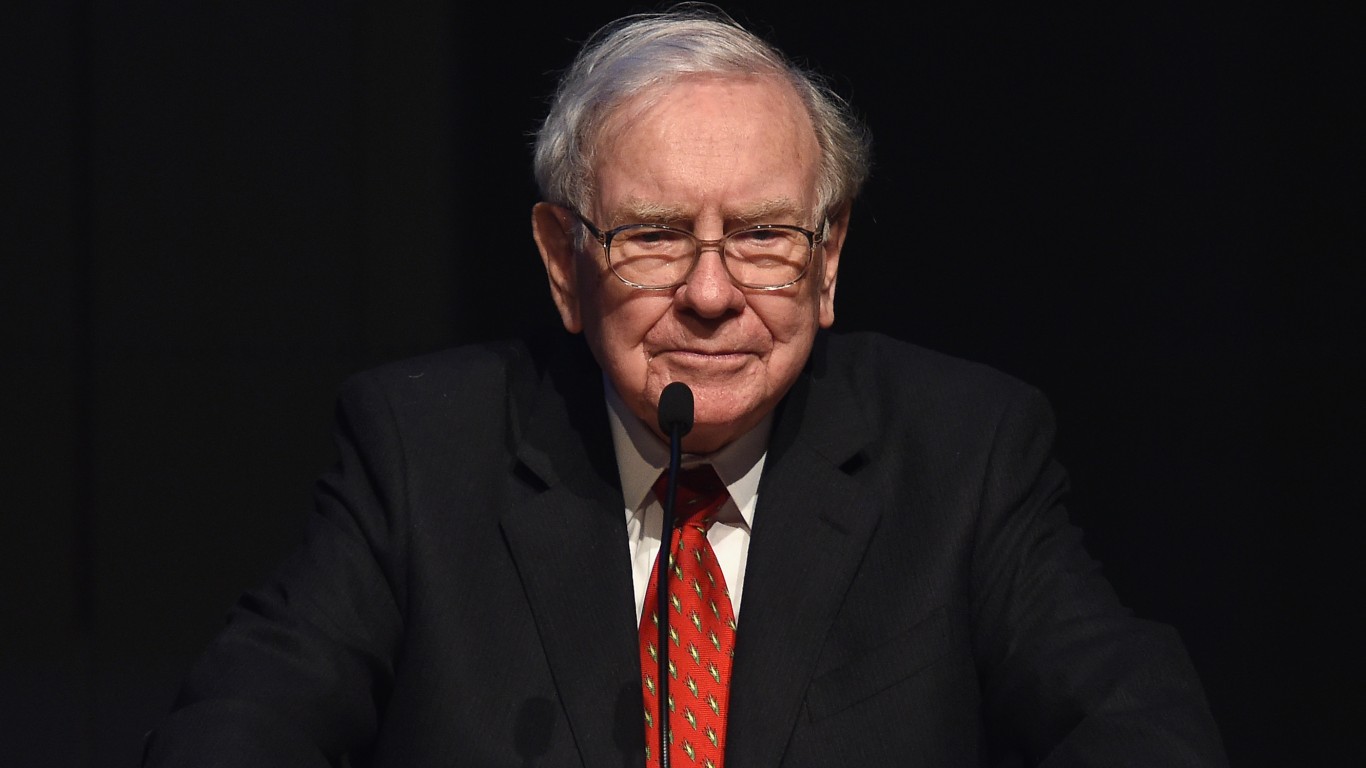
In September 2017, the most famous investor in the world stood up at a party for Forbes magazine’s 100th birthday and predicted the Dow Jones Industrial Average would hit a million points.
The room reacted the way you might expect. A million. One hundred years out. From a starting point of about 22,000.
Eight and a half years later, the Dow has more than doubled, and the man who made the prediction has officially walked away from the desk where he built his empire. Looked at from here, Warren Buffett’s million-point call does not look crazy. It looks like he aimed low.
The night of the prediction
Buffett was 87 years old when he made the call on Tuesday, Sept. 19, 2017. The Dow closed that day at 22,370.80. He was speaking at a black-tie event in New York commemorating Forbes magazine’s 100th anniversary, sitting on the cover of an issue that featured “100 of the world’s greatest living business minds.”
“Whenever I hear people talk pessimistically about this country, I think they’re out of their mind,” Buffett said, as reported by Reuters. He pointed out that the Dow had been at 81 a century earlier. The climb to 22,370 amounted to a roughly 280-times return. Getting to a million from there would require only a 45-times return. Over 100 years. With the United States doing more or less what the United States has done for the last 100 years.
Buffett also acknowledged he would not be around to take a victory lap. “When I hear talking about making it to 100, I get excited,” he said. “I’m 87.”
The math is the boring part
To get from 22,370 to 1,000,000 over 100 years, the Dow needs to compound at roughly 3.9% a year. That number was calculated at the time by Mario Gabelli, the value investor and CEO of Gabelli Asset Management, who tweeted that night, “one million in one hundred years …has Buffett turned bearish?”
Gabelli told CNBC he was “just having some fun” with numbers. He was also making a point. The Dow’s compound annual growth rate from the beginning of the 20th century through 2017 was about 5.5%. So to hit the million target Buffett laid out, the index does not need to perform like itself. It needs to perform meaningfully worse than itself.
This is the part of the prediction nobody clapped for at the Forbes party. The reason a million sounds insane is not that the percentage is high. It is that the human brain is bad at long compounding. A 4% return for 100 years sounds tame. A 280-times return sounds preposterous. They are the same statement.
The faster version
In early 2024, at the Barron’s annual investing roundtable, Gabelli offered his own timeline. “The Dow will be the equivalent of 1 million in 40 years, and it was under 1,000 40 years ago. So, invest long term.”
That call requires about 8.8% a year. According to Morningstar, that is above most long-term capital market forecasts but slightly below what U.S. large-cap stocks actually delivered over the prior 40 years. The math is more aggressive than Buffett’s. The history is on its side.
What the Dow has actually done since
Since Buffett’s prediction in September 2017, the Dow has run faster than either pace. It closed at 50,115.67 on Friday, Feb. 6, 2026, the first time it had ever crossed 50,000.
That is a 124% gain in about eight and a half years, an annualized rate above 9%. More than double the pace Buffett’s 100-year prediction actually requires. If the Dow were to continue at that rate, the million-point target would arrive long before Buffett’s grandchildren collect on the bet.
The exit
On Dec. 31, 2025, Buffett stepped down as CEO of Berkshire Hathaway after 60 years in the job. He is 95. He remains chairman, but day-to-day decisions now belong to his successor, Greg Abel.
Five weeks later, the Dow he once said would hit a million crossed 50,000.
The Oracle of Omaha will not be in the office for the next big round number. The math he left behind says it will arrive on schedule, and probably ahead of it.
Contact [email protected] for any questions or corrections.
Don Lair writes about options income, dividend strategy, and the kind of boring-but-durable investing that actually funds retirement. He's the founder of FITools.com, an independent contributor to 24/7 Wall St., and a former writer for The Motley Fool.