Will Goldman Sachs, Markel, or SanDisk Be the Next Big Stock Split?
Wall Street has rediscovered the stock split. KLA (NASDAQ: KLAC | KLAC Price Prediction) announced a 10-for-1 forward stock split in May 2026, alongside its fiscal Q3 earnings beat and paired with a roughly 21% dividend hike, with shares trading…

This post may contain links from our sponsors and affiliates, and Flywheel Publishing may receive compensation for actions taken through them.

Wall Street has rediscovered the stock split. KLA (NASDAQ: KLAC | KLAC Price Prediction) announced a 10-for-1 forward stock split in May 2026, alongside its fiscal Q3 earnings beat and paired with a roughly 21% dividend hike, with shares trading around the $1,800 range. Earlier this year, Booking Holdings (NASDAQ: BKNG) completed an announced 25-to-1 split, bringing its share price from over $4,000 down to roughly $155.
Which high-priced names could be next? Here we rank three of the most-watched candidates from least likely to most likely to split. None has announced anything. This reflects conditions that typically precede a split: extreme nominal share prices, strong momentum, and retail demand.
3. Goldman Sachs (Least Likely)
Goldman Sachs Group (NYSE: GS) trades around $929, with a market cap near $274 billion. Shares are up 51.7% over the past year and 5.7% year to date. Q4 FY25 EPS came in at $14.01 versus the $11.76 estimate. Full-year EPS was $51.32 on $58.28 billion in revenue, with earnings growth of 27% year over year. CEO David Solomon sees “momentum to accelerate in 2026, activating a flywheel of activity.”

Big banks rarely embrace retail optics. Goldman has never split its stock since going public in 1999. The share price is the lowest of this trio, well below levels that typically force a split. Insider activity in April and May was dominated by routine RSU vesting at prices like $937.81, with zero discretionary buying. A forward PE near 16x suggests no need for a cosmetic move.


2. Markel
Markel Group (NYSE: MKL) carries the highest nominal share price near $1,860. By share price alone, it is the most obvious split candidate. Q4 FY25 EPS of $48.75 crushed the $25.73 estimate, combined ratio improved to 92.9% from 95.5%. CEO Tom Gayner said, “In 2025, the Markel Group delivered meaningful progress. Operating income was $3.2 billion.”
Structurally, Markel is the least split-friendly name here. Called the “Baby Berkshire,” its culture mirrors Berkshire Hathaway’s opposition to splits. Shares are down 13.5% year to date and 3.0% over the past year. Analyst coverage is thin, with no Buy ratings. A beta of 0.67 and forward PE of 12x describe a stock that does not need a retail push.


1. SanDisk (Most Likely)
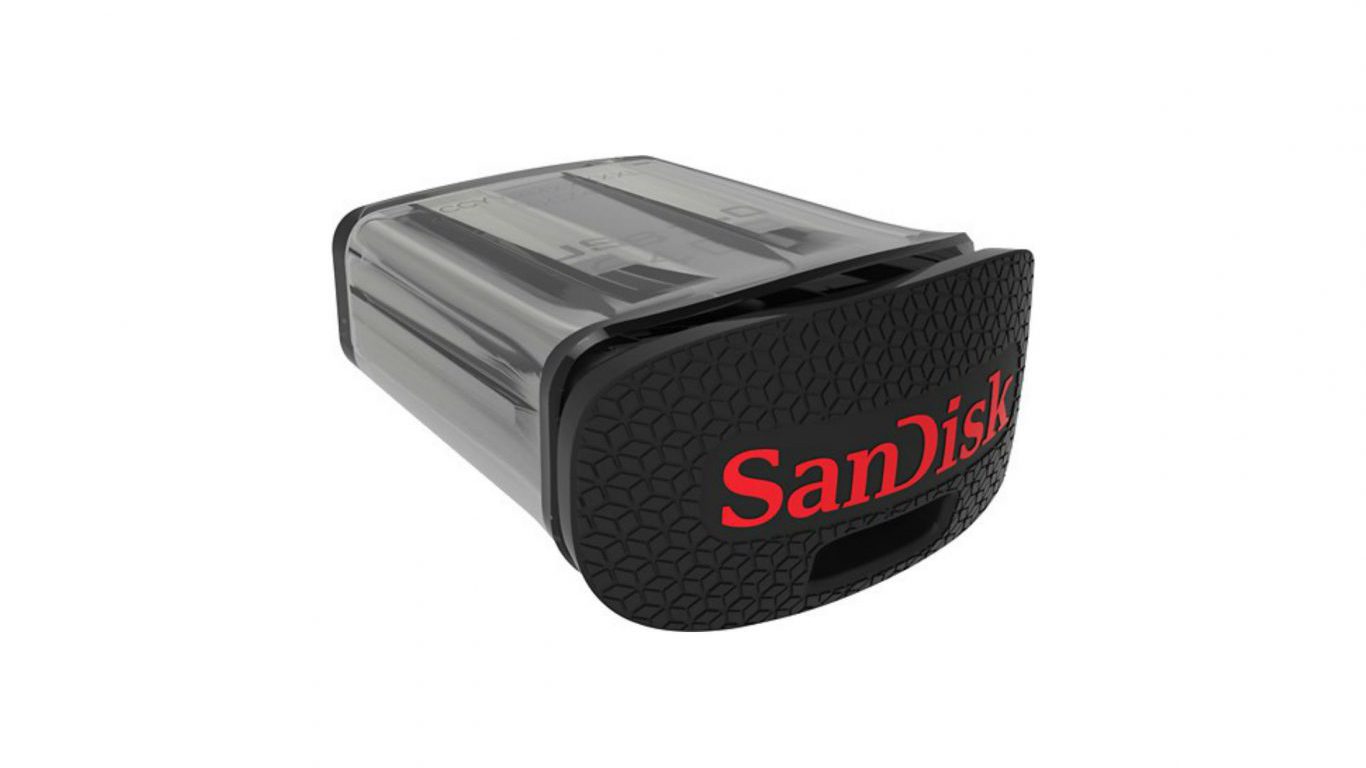
SanDisk (NASDAQ: SNDK) checks every split-candidate box. Shares closed most recently at about $1,383, up 482.7% year to date and 3,467.0% over the past year as the AI memory cycle ignited. Q3 FY26 revenue of $5.95 billion was up 251% year over year, EPS of $23.41 beat the $14.66 estimate. The data center segment soared 645% year over year to $1.47 billion. CEO David Goeckeler called it “a fundamental inflection point for Sandisk.”
Tech is most likely to use splits as a retail signaling tool, and SanDisk has the retail audience. Reddit sentiment hit peak bullish scores of 82 to 90 on May 7, driven by a viral r/stocks post titled “What is the next Sandisk?” that drew 416 upvotes and 383 comments. Analysts back it with 15 Buy, two Strong Buy, and four Hold ratings, and an average target of $1,460.41.

The bear case: shares fell 4.7% in the past week, the trailing PE is 47x, and a recent $1,600 52-week high shows how quickly sentiment can rotate. A split rumor is not an announcement.

What This Means for Investors
Stock splits are cosmetic. Their real impact is on the marginal buyer rather than earnings power, free cash flow, or competitive positioning. Lower per-share prices typically widen retail participation, broaden options activity, and reset the conversation around a name. Goldman has the strongest fundamentals but weakest cultural fit. Markel has the highest sticker price but philosophy least compatible with splitting. SanDisk has the price, momentum, retail audience, and sector tailwind. Keep an eye on SanDisk around its next earnings report, when management would have the natural opportunity to announce one.
Contact [email protected] for any questions or corrections.
Trey has been an editor and author at 24/7 Wall St. for more than a decade, where he has published thousands of articles analyzing corporate earnings, dividend stocks, short interest, insider buying, private equity, and market trends. His comprehensive coverage spans the full spectrum of financial markets, from blue-chip stalwarts to emerging growth companies.
Beyond 24/7 Wall St., Trey has created and edited financial content for Benzinga and AOL's BloggingStocks, contributing additional hundreds of articles to the investment community.
Trey's editorial expertise extends across multiple publishing environments. He served as production editor at Dearborn Financial Publishing and development editor at Kaplan, where he helped shape financial education materials. Earlier in his career, he worked as a writer-producer at SVE. His freelance editing portfolio includes work for prestigious clients such as Sage Publications, Rand McNally, the Institute for Supply Management, the American Library Association, Eggplant Literary Productions, and Spiegel.
Outside of financial journalism, Trey writes fiction and has been an active member of the writing community for years, moderating workshop sessions at regional conventions.