Why Boeing Has the Most to Lose If Tesla and SpaceX Ever Combine
Gene Munster of Deepwater Asset Management and Elon Musk biographer Walter Isaacson have floated the idea that Tesla (NASDAQ: TSLA | TSLA Price Prediction) and SpaceX could combine within the next decade. This remains speculation rather than a deal. For…


Gene Munster of Deepwater Asset Management and Elon Musk biographer Walter Isaacson have floated the idea that Tesla (NASDAQ: TSLA | TSLA Price Prediction) and SpaceX could combine within the next decade. This remains speculation rather than a deal. For Boeing (NYSE: BA), the hypothetical lands harder than for any other company.
Boeing: A Fragile Recovery Meets a Hypothetical Megacompetitor
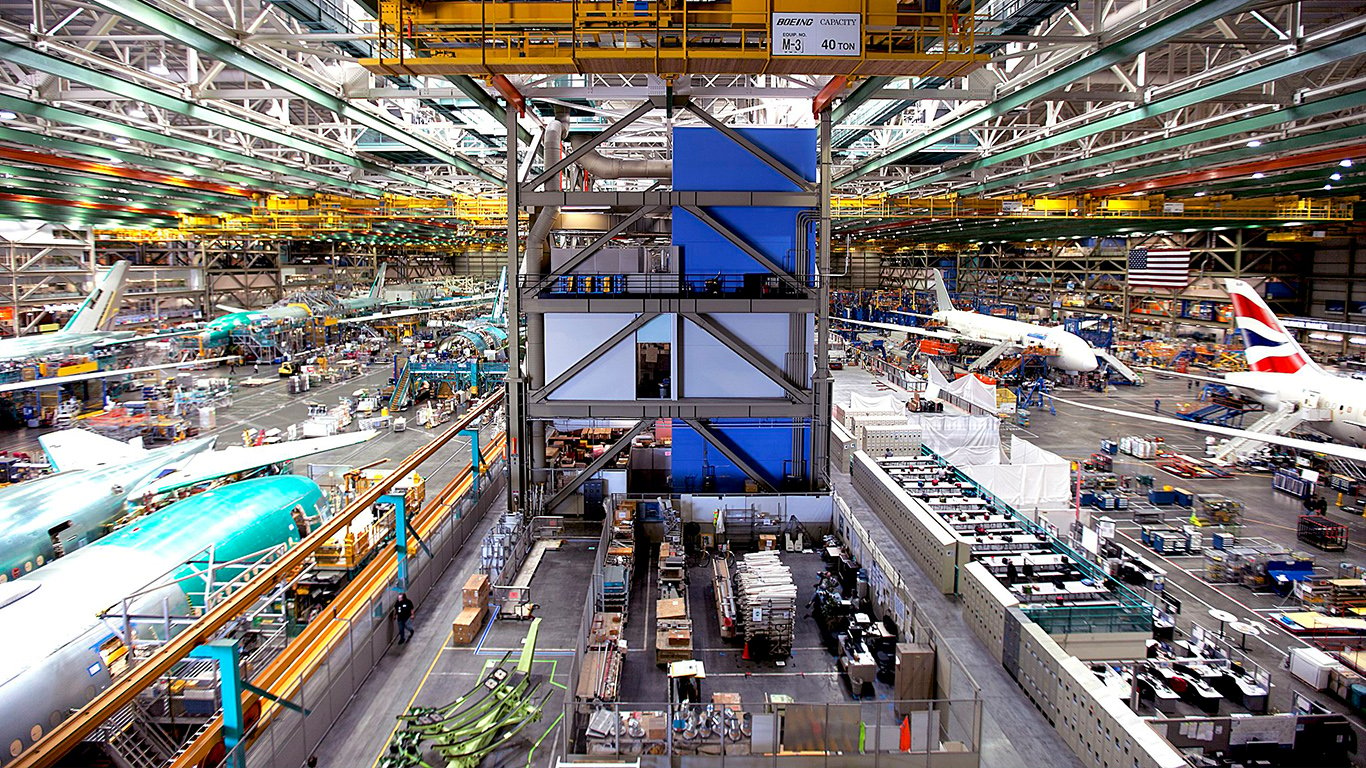
Boeing is mid-turnaround. Q1 2026 revenue hit $22.217 billion, up 14% year over year, with a core loss per share of $0.20 and free cash flow of negative $1.454 billion. Commercial Airplanes ran a 6.1% negative operating margin. The backlog is a record $695 billion, and debt was cut to $47.2 billion from $54.1 billion.

CEO Kelly Ortberg commented: “We’re building on our momentum with a strong start to the year and growing record-breaking backlog across our business, while supporting our customers with inspiring missions like Artemis II.”

The stock paints a less inspiring picture. Shares closed most recently at $215.01, down 9.2% in a week and 1.0% year to date. A Polymarket contract puts the probability of a U.S. federal stake in Boeing by year-end at 29.5%.
Where a Musk Megamerger Would Bite
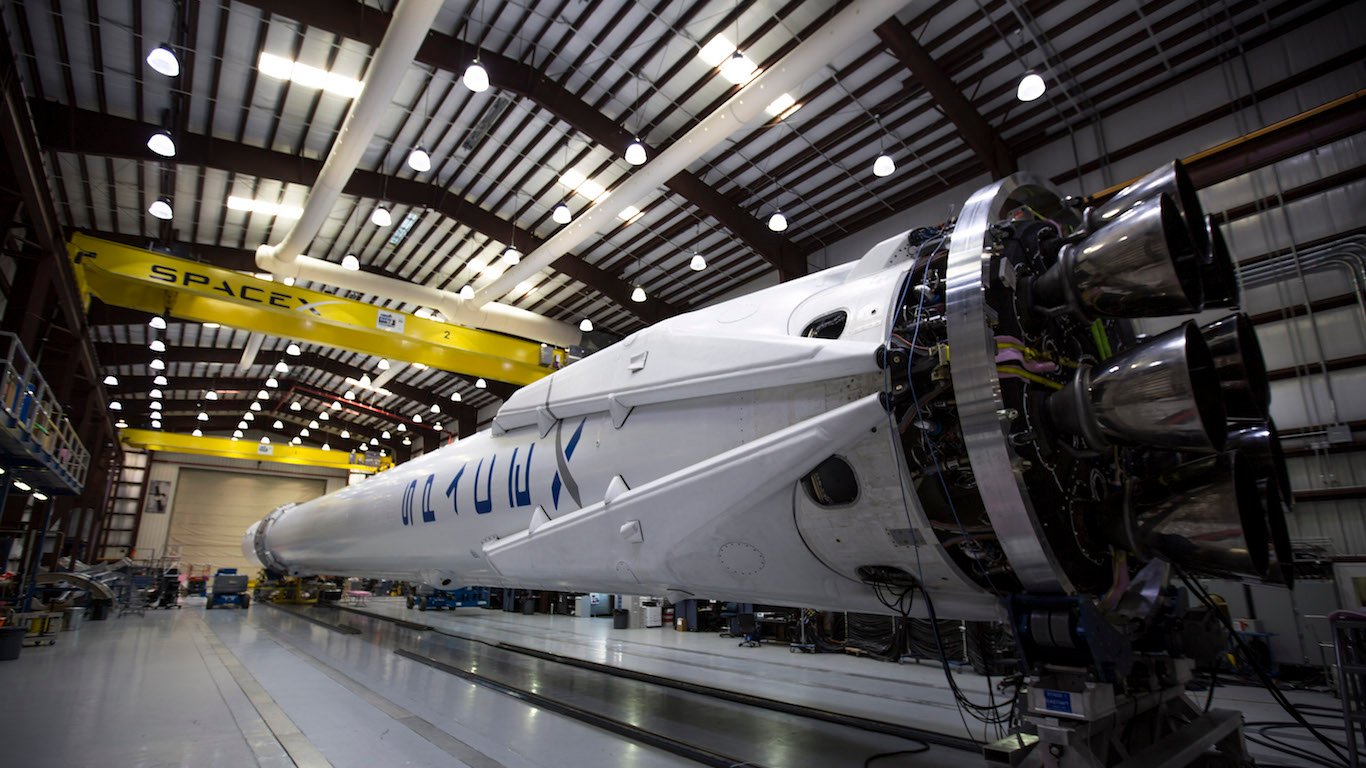
A combined Tesla and SpaceX would fuse launch dominance with vertical-integration manufacturing and artificial intelligence (AI). Boeing’s direct exposure spans Starliner versus Crew Dragon, SLS subcontracting versus Starship, satellite manufacturing versus Starlink, NSSL defense launch contracts, and ULA, which Boeing owns 50% with Lockheed. Layer in talent flight risk, capital markets advantage if SpaceX goes public through the merger, and Tesla Optimus crossing into defense robotics, and the threat compounds.
Insiders show limited conviction. On February 19, 2026, Ortberg parted with 5,016.643 shares at $236.71, alongside 10 other executives in a five-day window.
Boeing’s Better-Executing Peers
Lockheed Martin (NYSE: LMT) trades at $526.63, up 8.9% year to date. CEO Jim Taiclet described framework deals to “increase production rates of these critical systems by 3-4 times current rates.” Lockheed won a $1.5 billion Peru F-16 contract and a $4.8 billion PAC-3 award.
Northrop Grumman (NYSE: NOC) trades at $556.34, up 18.1% over one year. Aeronautics swung to a $305 million operating profit on B-21 ramp, and the company has opened 20+ new facilities and added more than 2 million square feet of manufacturing space in 24 months.
The Moat Boeing Still Owns
Boeing beat Airbus on 2025 orders for the first time since 2018, landed a Delta deal, and saw Citi and Wolfe lift price targets. The commercial duopoly, KC-46, F-15EX, Apache, Chinook, and deep Department of Defense relationships are not easily disrupted by a Silicon Valley fusion. Ortberg argues the new defense budget is “really funding additional production of existing systems, which should be low risk for us.”


The bear case is clear: weak space and defense margins, a publicly embarrassing Starliner program, and Commercial Airplanes still bleeding. A unified Musk competitor would compound pressure on Boeing at exactly the wrong moment.
Contact [email protected] for any questions or corrections.
Trey has been an editor and author at 24/7 Wall St. for more than a decade, where he has published thousands of articles analyzing corporate earnings, dividend stocks, short interest, insider buying, private equity, and market trends. His comprehensive coverage spans the full spectrum of financial markets, from blue-chip stalwarts to emerging growth companies.
Beyond 24/7 Wall St., Trey has created and edited financial content for Benzinga and AOL's BloggingStocks, contributing additional hundreds of articles to the investment community.
Trey's editorial expertise extends across multiple publishing environments. He served as production editor at Dearborn Financial Publishing and development editor at Kaplan, where he helped shape financial education materials. Earlier in his career, he worked as a writer-producer at SVE. His freelance editing portfolio includes work for prestigious clients such as Sage Publications, Rand McNally, the Institute for Supply Management, the American Library Association, Eggplant Literary Productions, and Spiegel.
Outside of financial journalism, Trey writes fiction and has been an active member of the writing community for years, moderating workshop sessions at regional conventions.