“Just do your own thing,” Trump tells new Fed Chair Warsh at swearing-in
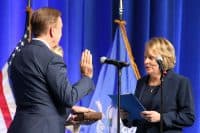
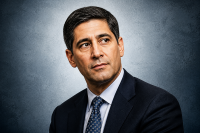
The headlines writing themselves before Kevin Warsh took the oath as the 17th Chair of the Federal Reserve on May 22, 2026, were the obvious ones. Markets wanted a read on the rate path. Fed watchers wanted to parse the…

This post may contain links from our sponsors and affiliates, and Flywheel Publishing may receive compensation for actions taken through them.
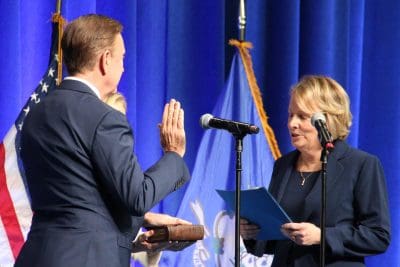
The headlines writing themselves before Kevin Warsh took the oath as the 17th Chair of the Federal Reserve on May 22, 2026, were the obvious ones. Markets wanted a read on the rate path. Fed watchers wanted to parse the resume. Political reporters wanted to count how many times the new chair would be asked to cut. The most interesting line of the morning came from somewhere else entirely.
The Expected Story: Credentials and the Rate Path
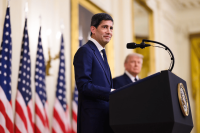
President Trump opened with the resume reel. “No one in America is better prepared to lead the Federal Reserve than Kevin Warsh,” he said, before walking through a biography designed to reassure markets: a Stanford degree in public policy, a Harvard Law J.D., coursework under Milton Friedman, mentorship from Secretary of State George Shultz, the distinction of being the youngest-ever Fed governor at age 35, and 15 years as a fellow at Stanford’s Hoover Institution.
Trump also framed the institution itself, calling it “a pillar of the world financial system and the most important central bank anywhere in the world, with a history stretching back more than 100 years.” The macro backdrop that Warsh inherits is the part that traders were studying. The federal funds target upper bound sits at 3.75%, unchanged for roughly five and a half months after a cumulative 75 basis point reduction from the 4.5% peak in September 2025.
The 10-year Treasury yield closed at 4.57% on May 21, near the 12-month high of 4.67% set on May 19, and the 10-year minus 2-year spread has compressed to 0%, the tightest reading of the past year. Core PCE, the Fed’s preferred gauge, rose to 129.28 in March, up 0.3% on the month and now sitting in the 91st percentile of the 12-month range. Sticky inflation, a flattening curve, and a paused cutting cycle: that was the setup everyone came to dissect.
The Actual Surprise
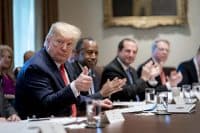
Then Trump pivoted. “I want Kevin to be totally independent. I want him to be independent and just do a great job. Don’t look at me, don’t look at anybody. Just do your own thing and do a great job,” he said. Anyone tracking Trump’s previous public commentary on Fed policy would have flagged that sentence immediately. A sitting president telling an incoming Fed Chair to tune out the White House, on camera, at the swearing-in, is a meaningful departure from the pressure campaigns that defined the prior cycle.
Why This Matters for Markets
Fed independence is one of the variables most major 2026 outlooks have been quietly pricing. Vanguard’s 2026 outlook pegs the neutral rate at 3.5% and forecasts solid growth with sticky inflation that limits room for further cuts. JPMorgan expects persistent macro volatility through 2026 with an inflation-driven freeze on earlier easing paths.
BlackRock has flagged how “divergences of central bank balance sheet operations” function as a durable source of market dispersion in 2026. A credible independence signal compresses one tail risk that has been embedded in long-end yields. The 10-year sitting at the 98th percentile of the year-to-date range reflects, in part, a term premium for exactly that uncertainty.
The framework for interpreting Warsh’s tenure now has three live questions. First, does the data give him room to cut, with core PCE still climbing? Second, does the flattening curve resolve through stronger growth or weaker forward expectations? Third, and now newly salient, does the hands-off pledge hold when policy and politics diverge later this year?
The official record of Fed policy moves and minutes is published through the Board of Governors at federalreserve.gov, and that paper trail will be the only reliable scoreboard. While the credentials were the expected story, it was the rate path that was the priced story, and the promise to look away was the one worth writing down.
Contact [email protected] for any questions or corrections.
David Beren has been a Flywheel Publishing contributor since 2022. Writing for 24/7 Wall St. since 2023, David loves to write about topics of all shapes and sizes. As a technology expert, David focuses heavily on consumer electronics brands, automobiles, and general technology. He has previously written for LifeWire, formerly About.com. As a part-time freelance writer, David’s “day job” has been working on and leading social media for multiple Fortune 100 brands. David loves the flexibility of this field and its ability to reach customers exactly where they like to spend their time. Additionally, David previously published his own blog, TmoNews.com, which reached 3 million readers in its first year. In addition to freelance and social media work, David loves to spend time with his family and children and relive the glory days of video game consoles by playing any retro game console he can get his hands on.