




The IPO market is back in full force. After two years of sluggish dealmaking, investors are once again chasing the next mega-listing, and the bigger the valuation, the bigger the excitement seems to get. That enthusiasm is helping to push stock indexes to record highs as valuations across tech and AI expand with a rise in corporate profits.
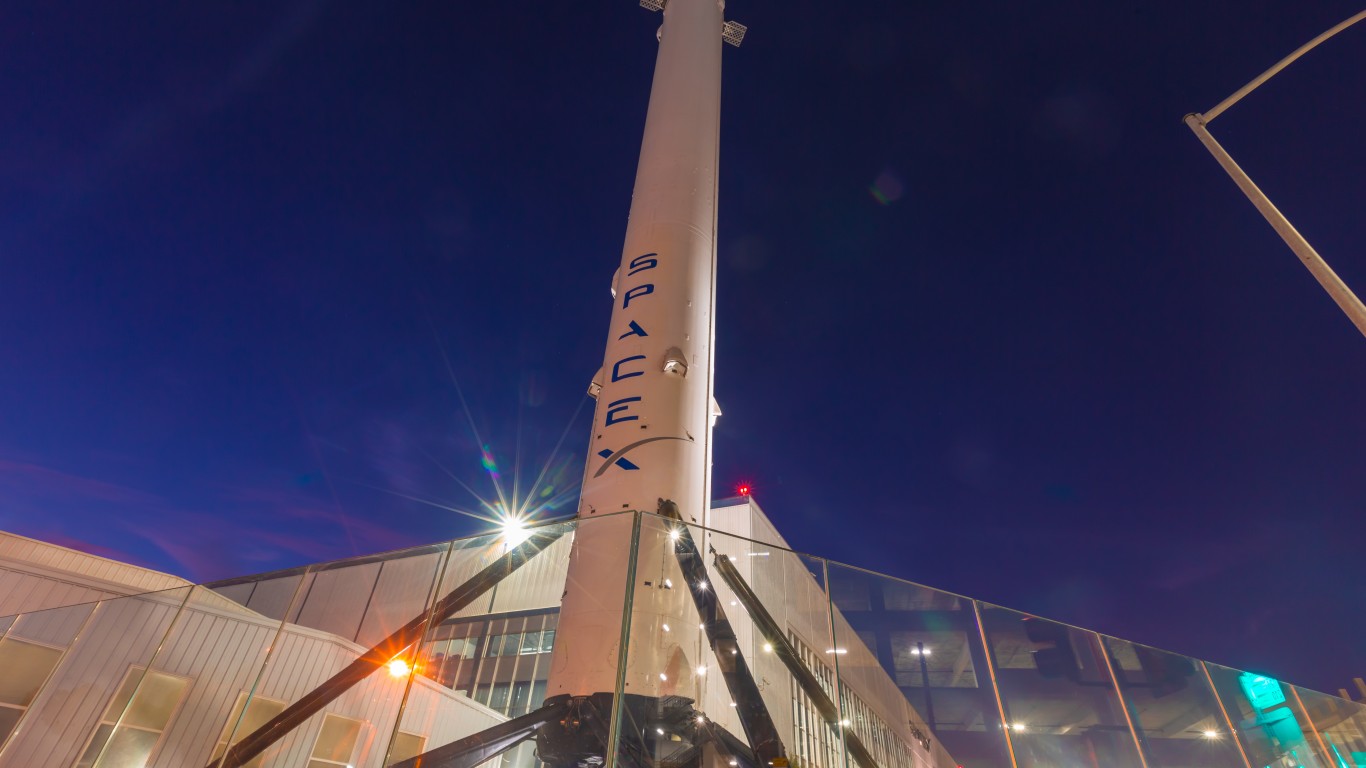
Yet what happens when the world’s most anticipated private company finally goes public? That’s the question hanging over SpaceX ahead of its scheduled June 12 IPO — one that could value Elon Musk’s rocket giant at $1.75 trillion and instantly become the largest public offering in history.
Granted, SpaceX may very well become one of the defining companies of the next decade. But history says investors piling in on day one could face a turbulent ride.
The Biggest IPO Ever Is About to Test Investor Appetite
According to SpaceX’s IPO filings, the company is targeting what it calls a $28.5 trillion total addressable market spanning satellite broadband, launch services, defense contracts, deep-space logistics, and global communications infrastructure. For perspective, the U.S. inflation-adjusted GDP currently sits around $24.17 trillion.
That’s the kind of narrative Wall Street loves. And exchanges are fighting for a piece of it. The Nasdaq, for example, was willing to modify certain index inclusion rules so SpaceX shares could potentially enter major indexes almost immediately after listing. That matters because index inclusion forces ETFs and passive funds to buy shares regardless of valuation.
In other words, demand could become automatic. And there’s little doubt demand will be enormous. SpaceX dominates the private space industry:
| Company | Estimated Valuation | Core Business |
| SpaceX | $1.75 trillion | Rockets, Starlink satellites |
| Rocket Lab (NASDAQ:RKLB | RKLB Price Prediction) | $87 billion | Small satellite launches |
| Blue Origin | Private | Space exploration |
| Boeing Space | Part of Boeing (NYSE:BA) | Government aerospace |
Regardless of how you look at it, SpaceX sits in a category by itself.
Surprisingly, History Says Massive IPOs Usually Disappoint
Here’s where things get uncomfortable for investors chasing the opening-day excitement.
Research from 22V Research shows that the larger the IPO, the worse the long-term performance tends to be. According to its study, there have only been seven IPOs larger than $50 billion in size. Median returns one year later averaged negative 31.9%.
The trend weakens only slightly for smaller — though still massive — offerings.
| IPO Size | Number of IPOs | Median 1-Year Return |
| Over $50 billion | 7 | -31.9% |
| $10 billion to $50 billion | 25 | -17.4% |
| $2 billion to $10 billion | 182 | 12.3% |
| $500 million to $2 billion | 221 | 20.8% |
| Under $500 million | 191 | 7.7% |
Source: FactSet, 22V Research
The numbers tell a pretty clear story: the bigger the IPO, the worse the odds for investors over the following year.
Why does that happen? Usually, because expectations outrun reality. Mega-IPOs tend to arrive surrounded by relentless media coverage, aggressive pricing, and heavy retail enthusiasm. By the time shares actually begin trading, years of future growth are already baked into the valuation.
Let’s put that into perspective. At a $1.75 trillion valuation, SpaceX would debut worth more than Alphabet (NASDAQ:GOOG) was worth at its IPO-adjusted peak for years after going public. That leaves very little room for disappointment.
SpaceX May Be Revolutionary — But That Doesn’t Mean the Stock Is Cheap
That’s the distinction investors need to remember. A great company does not automatically equal a great stock at any price.
SpaceX unquestionably has advantages most companies would envy. Starlink reportedly has 10.3 million subscribers globally. Falcon 9 remains the most frequently launched rocket platform in history. NASA and Department of Defense contracts provide recurring revenue streams many startups can only dream about.
That said, valuation still matters. Even if SpaceX eventually grows into its $1.75 trillion price tag, history suggests investors buying during the initial frenzy often endure painful volatility first. Surprisingly, many of the market’s most iconic IPOs — including Facebook and Alibaba (NYSE:BABA) — traded sharply lower after their debuts before eventually recovering years later.
When all is said and done, smart investors should separate admiration for the business from enthusiasm for the stock price.
Key Takeaway
In short, SpaceX could absolutely become one of the most important companies of the century. Its technology leadership, government partnerships, and Starlink network give it advantages few competitors can match.
But IPO history offers a warning investors shouldn’t ignore. According to 22V Research, the largest IPOs on record produced median losses of 32% one year later. Regardless of the excitement surrounding SpaceX’s debut, that data suggests caution — not blind enthusiasm — is the smarter approach. Sharp investors may ultimately get a better opportunity after the opening fireworks fade.






 Top Gaining Stocks
 Top Losing Stocks