The AI Memory Shortage Just Entered Year 2. These 3 ETFs Own Every Layer From DRAM to HBM
HBM supply remains rationed, Micron's margins have reshaped what a memory cycle can look like, and three very different ETFs are competing for the same investor dollars flowing into this trade.

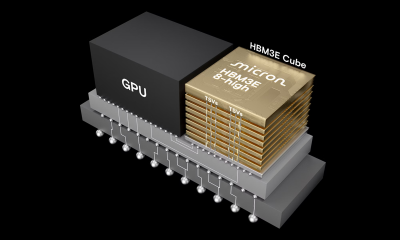
The AI memory shortage that began squeezing hyperscaler supply chains in 2025 has now stretched into its second calendar year, with Micron Technology guiding fiscal Q4 2026 revenue to roughly $50 billion and HBM4 qualification samples still rationed across lead customers. For investors trying to translate that supply tightness into portfolio exposure, three exchange-traded funds capture different slices of the same trade: the VanEck Semiconductor ETF (NASDAQ:SMH), the Roundhill Memory ETF (BATS:DRAM) and the Invesco PHLX Semiconductor ETF (NASDAQ:SOXQ).
Each fund attacks the theme from a different angle. SMH offers a blue-chip anchor with deep Micron and equipment weighting. DRAM is the only pure-play memory vehicle on US exchanges, concentrating the upstream pricing cycle into one ticker. SOXQ delivers similar broad-semi exposure to SMH at a lower price of admission. The right pick depends on whether the investor wants to bet on memory specifically, on the entire chip stack, or on cost minimization.
Why Year 2 Looks Different From Prior Memory Cycles
Memory has historically been the most cyclical corner of semiconductors. DRAM contract pricing fell more than 50% in 2022, and the industry has bust-hard reputations going back four decades. What changed in 2025 was the structural demand floor created by AI inference workloads. A single Nvidia H200 GPU consumes 141GB of HBM3e, and hyperscaler buildouts have pulled HBM bookings into multi-year Strategic Customer Agreements that lock in pricing visibility.
Micron’s most recent quarter illustrates the magnitude. Fiscal Q3 2026 revenue hit $41.4 billion, up 346% year over year, with GAAP gross margin expanding to 84.6% from 37.7%. CEO Sanjay Mehrotra told investors that “Micron’s record fiscal Q3 financial results and even stronger outlook for Q4 reflect the strategic value of memory in the AI era.” SK Hynix and Samsung have echoed similar tightness in their own commentary, with HBM4 ramping into 2027.
SMH: The Liquid Anchor With Built-In Memory Tilt
SMH is the largest and most heavily traded semiconductor ETF, and its weighting methodology happens to place a meaningful chunk of the portfolio in the exact names benefiting from the memory shortage. Micron sits at almost 9% of the fund, ranking as the third-largest holding behind AMD at 10% and Broadcom at almost 10%. NVIDIA holds an 8% slot, which captures the demand side of the HBM equation because every AI accelerator NVIDIA ships pulls more memory through the supply chain.
The fund also owns the picks-and-shovels layer. ASML, Lam Research, and Applied Materials together represent about 19% of the portfolio, which matters because memory makers are spending record capex to add HBM capacity. Micron alone spent $7.8 billion on CapEx in fiscal Q3, and that money flows directly to equipment vendors.
SMH’s recent performance reflects the setup. SMH is up roughly 54% year to date and more than 100% over the trailing twelv12 months, with AUM at $65 billion. The 0.35% expense ratio is reasonable for the liquidity profile. The tradeoff is concentration: the top ten holdings represent almost 78% of assets, so the fund moves with mega-cap chip sentiment more than with the broader sector. A beta of almost 2 tells the rest of the story.
DRAM: Pure-Play Memory in a Single Ticker
DRAM is the sharpest tool on this list for an investor who specifically wants exposure to memory pricing rather than the wider semiconductor complex. The fund holds the three companies that produce essentially all of the world’s HBM and most of its commodity DRAM: Samsung Electronics at 25%, SK hynix at 24% and Micron at almost 24%. Those three names alone make up 73% of the portfolio.
The remaining weight rounds out the storage stack. Kioxia, Sandisk, Western Digital and Seagate each sit between 4% and 5%, adding NAND flash and hard-disk exposure for investors who want the full memory-and-storage picture. Nanya Technology and Winbond fill out the Taiwanese memory tail.
Volatility comes with the territory. DRAM has gained more than 97% since its April 2 debut, while AUM has climbed to roughly $17 billion. The 0.65% expense ratio is the highest of the three funds covered here, which is the price of access to a category that no other US-listed ETF replicates. The structural risk worth flagging: memory has historically been the first segment to roll over when CapEx guidance softens, so the same concentration that powers upside in tight cycles works in reverse when supply catches demand.
SOXQ: The Low-Cost Broad Alternative
SOXQ tracks the PHLX Semiconductor Sector Index, a different benchmark from SMH’s MVIS index but with substantial overlap in constituents. The reason to own it instead of SMH comes down to cost and weighting methodology. SOXQ charges a 0.19% expense ratio, which is roughly half what SMH charges and the cheapest in the category. Over a multi-year hold, that gap compounds.
The PHLX SOX index applies modified capitalization weighting that produces a slightly less top-heavy portfolio than SMH. For an investor who wants exposure to the same broad supply chain (NVIDIA, Broadcom, AMD, Micron, the equipment vendors) without paying up for the liquidity premium of the largest semi ETF, SOXQ has emerged as the natural alternative. Multiple comparative analyses through June flagged SOXQ as the cost-efficient choice against SMH and SOXX.
SOXQ’s recent performance has been strong. SOXQ is up about 65% year to date and nearly 118% over the trailing year, with AUM around $2.6 billion. The tradeoff is liquidity. SOXQ trades meaningfully less volume than SMH, which can matter for larger orders or active rebalancing.
Matching the Fund To the Investor
The decision sorts cleanly along two axes: how concentrated the memory bet should be, and how cost-sensitive the investor is. An investor who views the HBM shortage as the dominant trade and wants to express it directly finds the cleanest fit in DRAM. For those who want AI semis broadly, with Micron and the equipment makers riding shotgun, SMH lines up best. Cost-sensitive buyers who want similar exposure to SMH but are unwilling to pay 35 basis points should look to SOXQ.
The frameworks are not mutually exclusive. Some investors blend the three, weighting SMH heaviest for a broad-semi core and adding DRAM for direct memory-cycle exposure, while others reverse that emphasis when leaning into the memory thesis. The funds layer rather than compete, which is unusual for a sector this concentrated.
Contact [email protected] for any questions or corrections.
Joel South covers large-cap stocks, dividend investing, and major market trends, with a focus on earnings analysis, valuation, and turning complex data into actionable insights for investors.
He brings more than 15 years of experience as an investor and financial journalist, including 12 years at The Motley Fool, where he served as an investment analyst, Bureau Chief, and later led the Fool.com investing news desk. He has also co-hosted an investing podcast and appeared across TV and radio discussing market trends.