The Memory ETF Doesn’t Even Have a Full Year of Trading. It’s Already Up 145%.
A non-leveraged ETF less than three months old just handed early investors returns that most funds take a decade to deliver, and the commodity cycle powering that move is still running. Whether it keeps running depends on three signals most…


Ten thousand dollars dropped into the Roundhill Memory ETF (CBOE:DRAM) on its first trading day, April 2, 2026, was worth somewhere in the neighborhood of $23,400 by the close on June 12, 2026. That is not a typo and it is not a leveraged fund. The shares opened life at $27.76 and printed $65.01 roughly ten weeks later, a 134% move since inception with intraday highs that pushed the headline figure closer to the 145% number making the rounds on social media.
Over the identical window, the SPDR S&P 500 ETF Trust (NYSEARCA:SPY) returned 13.2%, going from $655.24 to $741.75. The broad market did fine. The memory ETF, in its first ten weeks of existence, delivered roughly ten times that. A reasonable person looking at this gap wants to know two things. What is actually inside this thing, and is the trade that produced the run still alive.
Three Stocks Doing Almost All the Work
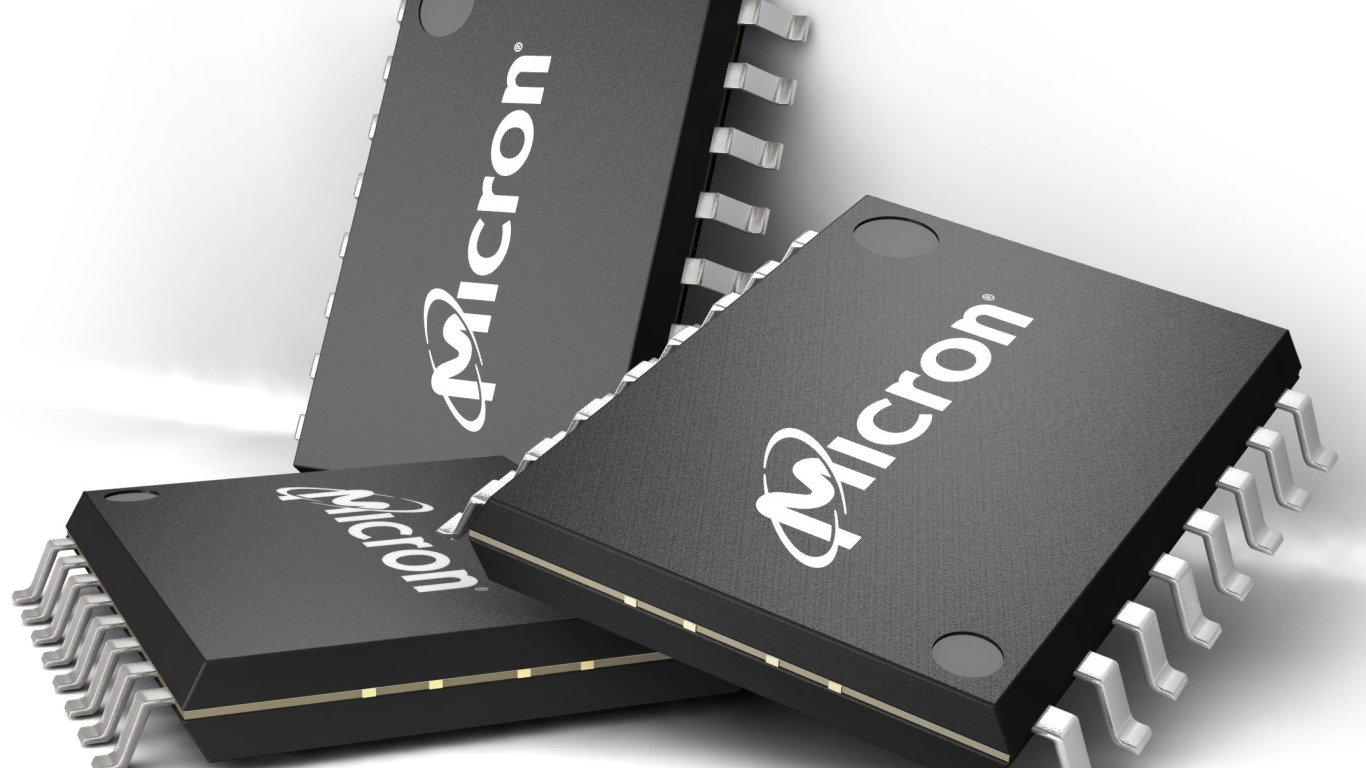
DRAM is a concentrated bet on memory makers, and the top of the book makes that explicit. As of the May 11, 2026 fact sheet, Samsung Electronics sits at 24.99% of net assets, SK hynix at 24.22%, and Micron Technology at 23.83%. Those three names together account for 73.04% of the fund. Everything else, Kioxia, Sandisk, Western Digital, Seagate, Nanya Technology, Winbond, is rounding error by comparison.
That structure matters because the three names at the top are the same three names that control essentially the entire global DRAM market and dominate high-bandwidth memory production. When the spot price of DDR5 modules moves, when hyperscaler HBM3E orders get reallocated, when Samsung announces a node delay, those three companies are the market. DRAM the ETF is, mechanically, a pure-play wrapper around DRAM the commodity and its high-margin HBM cousin.
The fund charges a 0.65% net expense ratio, which is unremarkable for a single-theme sector product and which has not been the story for anyone paying attention. The story has been the commodity underneath.
Why Memory Stopped Acting Like Memory
Historically, you treated memory as the most cyclical corner of semiconductors. Prices boomed, capacity flooded in, prices crashed, the weakest player took the loss, repeat. What changed in 2025 and into 2026 is that one segment of memory, high-bandwidth memory bolted onto AI accelerators, stopped behaving like a commodity and started behaving like a constrained input to the most important infrastructure buildout in the industry.
The AI Investor Podcast captured the shift bluntly. About 40% of demand for DRAM now comes from AI, "a severe ramp, which has led to escalating prices and limitations too." When agentic AI workloads run, model weights live in HBM stacks, and every NVIDIA, AMD, or custom-silicon accelerator that ships pulls a fixed bill of memory with it. That demand profile is not price-sensitive in the way DDR4 sold into PCs ever was.
The macro backdrop reinforces the point. The global semiconductor market reached US$796 billion in 2025, with the European Parliamentary Research Service noting record growth driven by demand for data centres, artificial intelligence systems, and advanced logic and memory chips, with the logic and memory segments experiencing the largest gains. Memory was the wave.
Three companies sell almost all the HBM the world consumes. DRAM owns concentrated positions in all three. The 134% run is what happens when a sector ETF gets to ride a pricing cycle that looks more like a supply shock than a normal commodity inventory rebuild.
The Reddit Tell
Retail noticed. A post titled "Retail Euphoria Turns Six-Week Fund Into Record-Busting AI Trade" ran across r/wallstreetbets across May 16 and 17, 2026, accumulating 420 upvotes and 83 comments at its peak. What is interesting about that thread is not the upvote count. It is the sentiment reading, which came in at 18 to 24 on a bearish-to-very-bearish scale even as the post itself trumpeted the move. Translation, the most engaged retail audience on the internet was already arguing in the replies that the trade had gone too far, while the headline made it sound like a parade.
By late May, discussion had migrated to r/stocks with bullish scores around 74, and by early June to r/options with scores in the 75 to 78 range. That migration pattern, from speculative to mainstream to derivatives-focused, is what a successful momentum trade looks like in its later innings. It does tell you that the easy money is already inside the position.
What Has to Stay True for the Next Leg
The mechanism behind DRAM’s run is not mysterious. HBM allocations are sold out through most of 2026 at the big three suppliers, contract DRAM pricing has rolled higher quarter after quarter, and AI capex from the hyperscalers has not flinched. If those three things keep holding, the fund’s underlying earnings power keeps expanding and a 134% return that looks ridiculous on a ten-week chart starts looking less ridiculous against forward earnings.
The conditions that have to hold are observable and you can watch them yourself. Watch DRAM contract pricing in the monthly TrendForce and DRAMeXchange updates, where a flat or declining month is the first crack. Watch the quarterly capex guidance from the four hyperscalers that buy most of the world’s HBM, where a single guide-down would hit memory before it hits logic. Watch Samsung and SK hynix earnings commentary on HBM3E and HBM4 yields, because a yield breakthrough at a trailing supplier reintroduces price competition that has been absent for most of a year. And watch the inventory line in Micron’s next quarterly report, because memory cycles always turn when inventory builds quietly before pricing breaks publicly.
The honest read on DRAM at $65 is that the setup that produced the run is broadly intact, with one large asterisk. You are buying the same three stocks at materially higher prices than the people who bought the fund on day one, which means your forward return is mechanically lower even if the thesis keeps working exactly as advertised. The fund is not leveraged, the concentration is not hidden, and the AI memory cycle is real. At this price, it is a different trade than it was on April 2. The thing to remember is that DRAM is a wrapper around a commodity cycle, and commodity cycles end when supply catches demand. The earliest place that shows up is contract pricing, not the fund’s NAV.
Contact [email protected] for any questions or corrections.
Austin Smith is a financial publisher with over two decades of experience as an investor, analyst, and advisor. He covers stocks, ETFs, Artificial intelligence and personal finance for 24/7 Wall St. Previously, he spent over a decade at The Motley Fool as a senior editor for Fool.com, portfolio advisor for Millionacres, and launched The Ascent to help reader take control of their personal finances.
His work has been featured on Fool.com, NPR, CNBC, USA Today, Yahoo Finance, MSN, AOL, Marketwatch, and many other publications. He is as an advisor to private companies, and co-hosts The AI Investor Podcast with Eric Bleeker.
When not looking for investment opportunities, he can be found skiing, running, or playing soccer with his children. Learn more about Austin's investment approach here.