The Retirement Portfolio Case: Ditch the Delivery App, Buy the Railroad
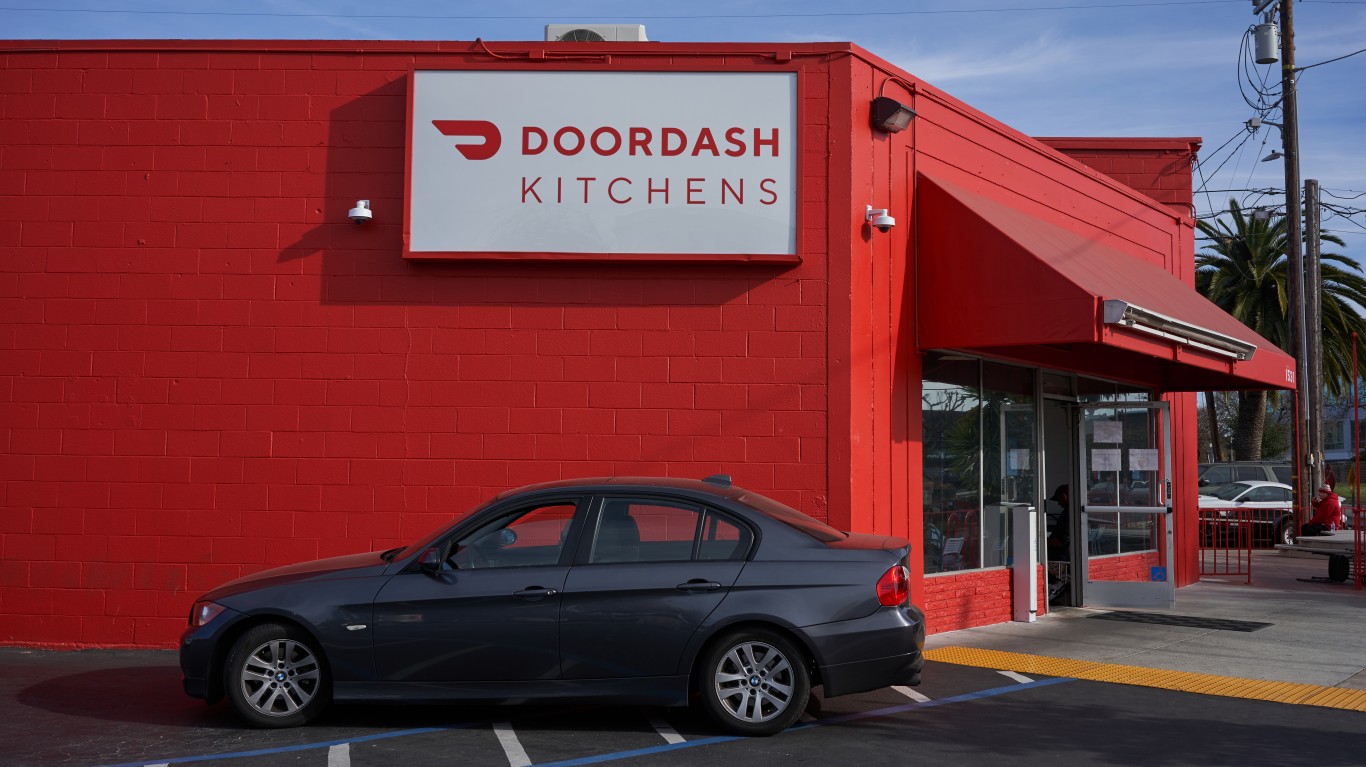
Everyone is talking about DoorDash (NASDAQ:DASH | DASH Price Prediction) again because a splashy Deliveroo deal, autonomous delivery hype, and a fresh AI narrative have analysts pounding the table on a stock that traded near $285 last summer. The underlying…

Everyone is talking about DoorDash (NASDAQ:DASH | DASH Price Prediction) again because a splashy Deliveroo deal, autonomous delivery hype, and a fresh AI narrative have analysts pounding the table on a stock that traded near $285 last summer. The underlying numbers tell a different story.
The DoorDash story is a textbook case of revenue growth masking a deteriorating business. Yes, Q1 2026 revenue jumped 33% year over year to $4.04 billion, but strip out the $362 million Deliveroo contribution and core growth was closer to 21%. More telling: GAAP net income actually declined 5% year over year on that same top line. Net revenue margin slipped from 13.1% to 12.8%, and adjusted EBITDA margin as a percent of GOV compressed from 2.6% to 2.4%. Operating margin sits at a razor-thin 5.25% while the stock trades at a trailing P/E of 76x.
Then there is the labor problem. DoorDash flagged that Dasher gas relief costs will exceed $50 million in Q2 alone, worker classification risk has not gone away, and 2026 stock-based compensation is guided to $1.3 to $1.4 billion. That is shareholder dilution dressed up as a payroll expense. The market has noticed: DASH is down 29.68% year to date and 22.22% over the past year. EPS missed consensus by 19.12% in Q3 2025 and another 18.51% in Q4. Two strikes, and the swing keeps getting wilder.
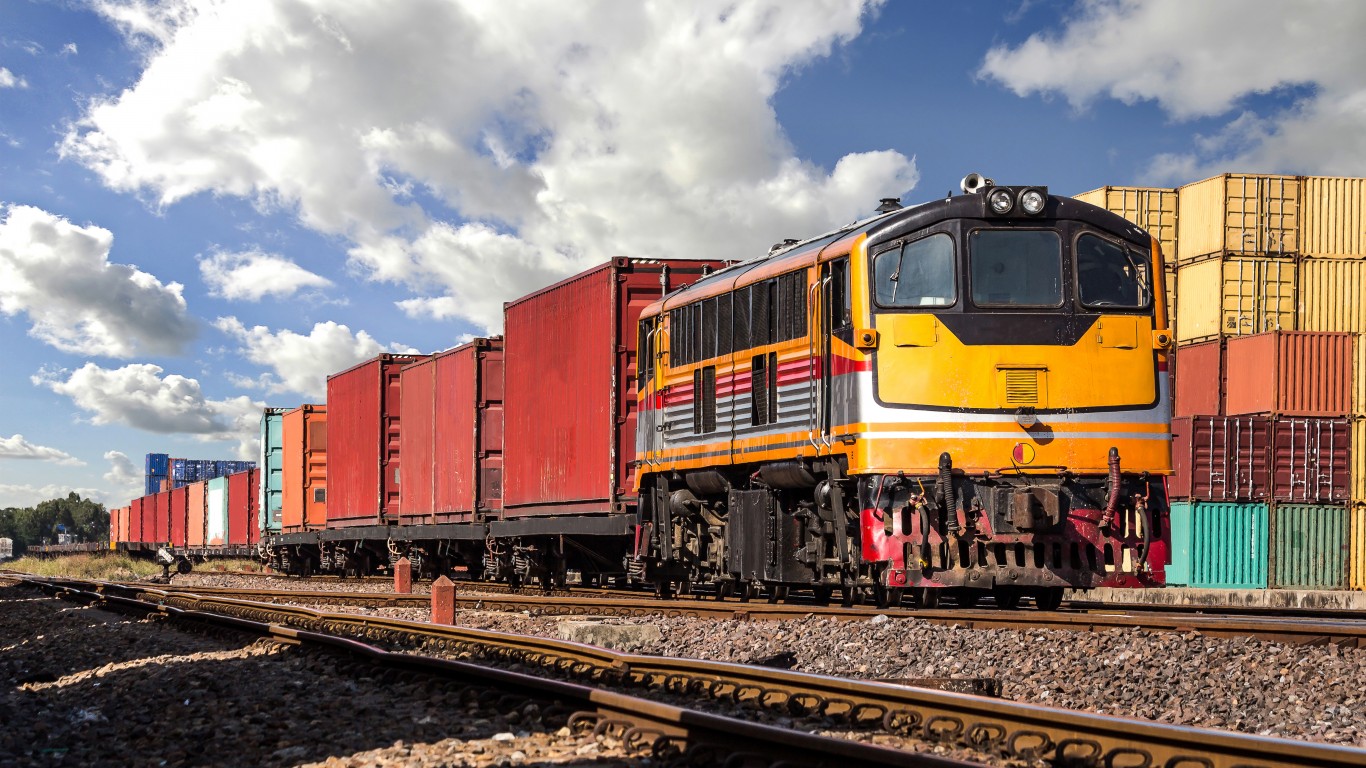
Union Pacific (NYSE:UNP) offers something DoorDash will never have: an irreplaceable physical network. Three reasons it screens more favorably for retirement-focused investors.
First, the moat is the asset. Union Pacific operates roughly half of a true U.S. rail duopoly, and the pending $85 billion Norfolk Southern merger would create America’s first transcontinental railroad spanning 43 states. You cannot replicate that track. You cannot venture-capital your way around it. App-based food delivery is fragmented, commoditized, and one regulatory ruling away from a structural cost reset. Rail is the literal backbone of American commerce.
Second, the numbers actually work. Q1 2026 adjusted EPS of $2.93 beat consensus, revenue rose 3.1% to $6.22 billion, and the adjusted operating ratio tightened 80 basis points to 59.9%. Operating margin runs at 40.4%, profit margin at 29.2%, and the P/E is a sane 22x. CEO Jim Vena affirmed mid-single-digit EPS growth for 2026 and a multi-year target of high-single to low-double digit EPS growth through 2027.
Third, capital comes back to you. Union Pacific paid $1.38 per share in its most recent quarter, raised the dividend in 2025 after years of steady hikes, and bought back $2.68 billion of stock in 2025. DoorDash pays no dividend and is busy printing shares to pay its workforce. The contrast is what retirement portfolios are built on.
Freight tied to grain, coal, chemicals, and industrial inputs is essential, while premium burrito delivery sits squarely in the discretionary bucket. With UNP up 15.35% year to date and 306% over the past decade, the market is already voting.
For investors weighing the two, Union Pacific looks like the more durable name to dig into next.
Contact [email protected] for any questions or corrections.
Alex Sirois is a financial writer with experience spanning both retail and institutional investing. He has written for InvestorPlace and held roles at BNY Mellon and Bernstein, giving him a perspective that bridges Main Street portfolios and Wall Street analysis.
Alex holds an MBA from George Washington University and has built his career across multiple industries, including e-commerce, education, and translation — a breadth of experience that informs how he breaks down complex financial topics for everyday investors. His writing is conversational, actionable, and grounded in long-term, buy-and-hold investing principles.
At 247 Wall St., Alex focuses on delivering analysis that is both accessible and useful, with a clear emphasis on helping readers make more informed decisions with their money.