DoorDash Sits Near Its 52-Week Low, Yet Analysts Are Overwhelmingly Bullish
DoorDash (NASDAQ: DASH | DASH Price Prediction) is trading near $159, a little above its 52-week low of $153.00 and well off its 52-week high of $285.50. The $258.00 average analyst price target implies over 61% upside. That gap reflects…


DoorDash (NASDAQ: DASH | DASH Price Prediction) is trading near $159, a little above its 52-week low of $153.00 and well off its 52-week high of $285.50. The $258.00 average analyst price target implies over 61% upside. That gap reflects a stock Wall Street still believes in while the market has largely walked away.
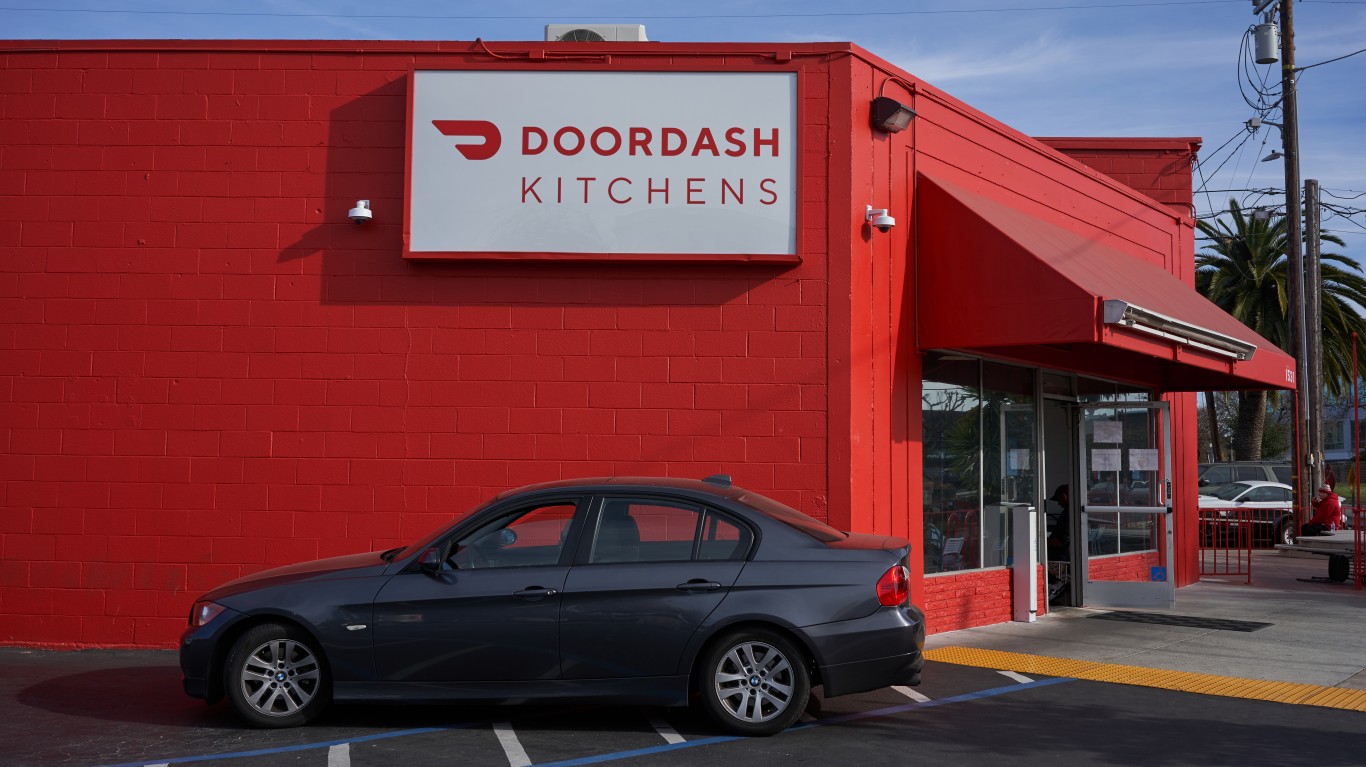
DoorDash operates a local commerce platform connecting consumers with merchants and delivery drivers across more than 40 countries. Its core business is on-demand restaurant delivery, but the company has been expanding aggressively into grocery, retail, and international markets. The selloff has been steep enough to attract retirement-focused investors. They should understand exactly why the stock is here.
Two Straight EPS Misses Sent the Stock Sliding
The decline traces back to earnings disappointments. In Q3 2025, DoorDash reported EPS of $0.55 against a consensus estimate of $0.68, missing by 19.12%. The stock was at $209.65 at the time of that filing. In Q4 2025, it reported EPS of $0.48 that missed the $0.589 estimate by 18.51%, with the stock at $180.41 at filing. It has continued sliding, finishing down 29.36% year to date from a starting price of $226.48.
The misses were not driven by a failing business. They reflect deliberate investment spending: integration costs from the Deliveroo acquisition, which closed October 2, 2025, for approximately $3.90 billion, combined with seasonal Dasher expenses and heavy investment in grocery and retail expansion. Revenue in Q4 grew 37.7% year over year to $3.96 billion, and Marketplace GOV rose 39% YoY to $29.70 billion. The business is growing fast; the bottom line is absorbing the cost.
Consumer sentiment adds risk. The University of Michigan Consumer Sentiment Index sat at 55.5 as of March 2026, well below the 80-point neutral threshold. For a discretionary delivery platform, that backdrop matters. Investors are pricing in the possibility that spending fatigue hits order frequency before the investment cycle pays off.
Analysts Are Betting the Investment Phase Ends With Higher Margins
Despite the slide, analyst conviction is unusually strong. Of analysts covering DoorDash, nine rate it Strong Buy, 27 rate it Buy, and nine rate it Hold. There are zero Sell or Strong Sell ratings. No one on Wall Street is actively telling clients to exit.
The core thesis centers on a margin inflection expected in the second half of 2026. Management has guided that U.S. grocery and retail unit economics are expected to turn positive in 2H 2026, and that adjusted EBITDA will be significantly higher in 2H 2026 versus 1H 2026. Deliveroo, a drag in Q1 2026, is expected to contribute approximately $200 million to 2026 adjusted EBITDA for the full year. Annual earnings growth is running at 47.7% year over year, and full-year 2025 operating income surged 2,002.63% from2024. Analysts appear to be looking past near-term noise at a company that achieved GAAP quarterly profit in Q1 2025 and has maintained profitability since.
Where Things Stand
- Current Price: $159.98
- Average Analyst Target: $258.00
- Implied Upside to Consensus Target: approximately 61%
- 52-Week High / Low: $285.50 / $153.00
- YTD Performance: −29.36%
- Beta: 1.9
Analyst Ratings Breakdown:
- Strong Buy: 9
- Buy: 27
- Hold: 9
- Sell / Strong Sell: 0 / 0
The bullish consensus is broad, but analyst targets are not guarantees. One thing worth flagging: insider selling has been consistent throughout the decline. The CFO sold 16,578 shares at $175.164 on March 2, 2026, and the COO sold 23,853 shares at prices between $161.803 and $171.584 in late February. These were pre-planned 10b5-1 transactions, which limits what can be read into them, but no discretionary insider buying has appeared at these prices.
The Risk/Reward Is Real, But So Is the Volatility
The thesis holds if the second half of 2026 margin inflection materializes on schedule. Grocery and retail unit economics turning positive, Deliveroo reaching its $200 million EBITDA contribution, and continued order volume growth would validate that the current price is a temporary dislocation. The top-line fundamentals are strong and the profitability story remains intact.
The risks are real if consumer spending deteriorates further or Deliveroo integration proves more costly than guided. With a beta of 1.9, this stock moves hard in both directions. For retirement-focused investors, that volatility deserves serious weight. The forward P/E of 35x leaves little room for guidance misses, and two consecutive EPS disappointments suggest the market has lost patience with the “investing for growth” narrative. The gap between price and analyst targets is real. Whether it closes depends on execution in the back half of 2026.
Contact [email protected] for any questions or corrections.
Trey has been an editor and author at 24/7 Wall St. for more than a decade, where he has published thousands of articles analyzing corporate earnings, dividend stocks, short interest, insider buying, private equity, and market trends. His comprehensive coverage spans the full spectrum of financial markets, from blue-chip stalwarts to emerging growth companies.
Beyond 24/7 Wall St., Trey has created and edited financial content for Benzinga and AOL's BloggingStocks, contributing additional hundreds of articles to the investment community.
Trey's editorial expertise extends across multiple publishing environments. He served as production editor at Dearborn Financial Publishing and development editor at Kaplan, where he helped shape financial education materials. Earlier in his career, he worked as a writer-producer at SVE. His freelance editing portfolio includes work for prestigious clients such as Sage Publications, Rand McNally, the Institute for Supply Management, the American Library Association, Eggplant Literary Productions, and Spiegel.
Outside of financial journalism, Trey writes fiction and has been an active member of the writing community for years, moderating workshop sessions at regional conventions.