Delivery Divergence: Why DoorDash Is Down 30% This Year but Amazon Is Up 14%
Two stocks both labeled “delivery” have produced opposite results this year. DoorDash (NASDAQ:DASH | DASH Price Prediction) stock is down 30% year to date (YTD), while Amazon (NASDAQ:AMZN) stock is up 14% YTD. The gap is real and persistent. Over…

This post may contain links from our sponsors and affiliates, and Flywheel Publishing may receive compensation for actions taken through them.
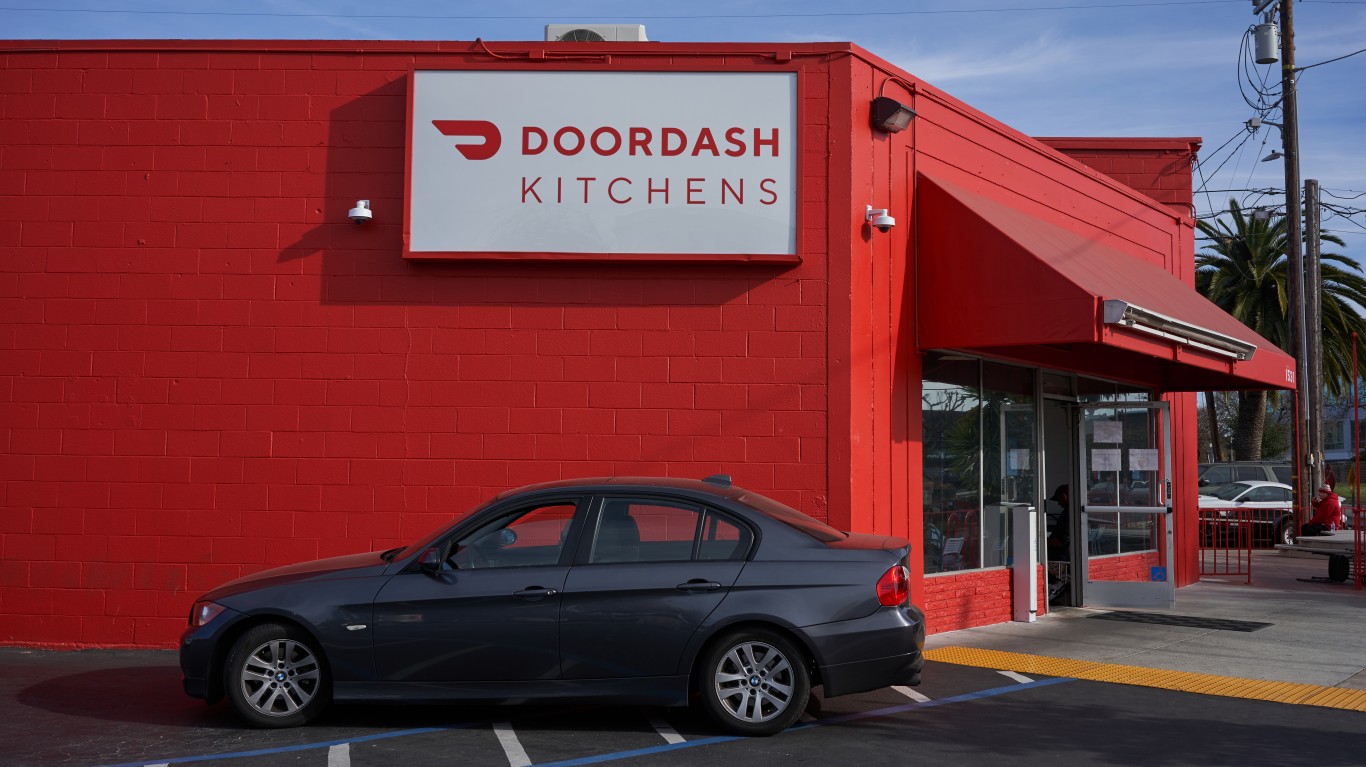
Two stocks both labeled “delivery” have produced opposite results this year. DoorDash (NASDAQ:DASH | DASH Price Prediction) stock is down 30% year to date (YTD), while Amazon (NASDAQ:AMZN) stock is up 14% YTD.
The gap is real and persistent. Over the past year, DoorDash stock is down 20%, while Amazon stock is up 28%. So, what’s behind the delivery-stock divide?
The “Delivery” Label Is Misleading
The market is increasingly sorting these two as different businesses. DoorDash is a pure-play local logistics operator: food, grocery, and retail orders fulfilled by gig workers. Amazon’s delivery network is a feature inside a flywheel that includes cloud, advertising, and Prime subscriptions.
That structural difference is the divergence. Amazon’s delivery is subsidized by higher-margin segments. DoorDash has no such cushion.
Amazon’s Flywheel Is Working in 2026
Amazon’s Q1 2026 report on April 29 delivered EPS of $2.78 versus a $1.73 estimate, a 61% beat. Revenue rose 17% to $181.52 billion.
AWS revenue grew 28%, the fastest pace in 15 quarters, with operating margins of 38%. Amazon CEO Andy Jassy noted on the call, “Our custom silicon business is now one of the top three data center chip businesses in the world.” Amazon’s advertising revenue hit $17.24 billion, up 22%, while Stores unit growth reached 15%, the highest since the end of COVID-19 lockdowns.
What’s Gone Wrong for DoorDash
DoorDash’s Q1 2026 report on May 6 looked strong on top-line numbers. Revenue rose 33% to $4.04 billion, with Marketplace Gross Order Value (GOV) up 37%. Yet, DoorDash’s GAAP net income fell 5% year over year (YoY) to $184 million, and adjusted EBITDA margin (as a percent of GOV) compressed from 3% to 2%.
That margin compression is the story. Deliveroo integration is expensive, U.S. grocery and retail unit economics aren’t expected to turn positive until the second half of 2026, and Dasher gas relief is running over $50 million per quarter. DoorDash CFO Ravi Inukonda told analysts, “We did have to push out some investments in H1 in order to make room for this.”
The company’s stock-based compensation is expected to total $1.3 to $1.4 billion for the year. DoorDash also missed EPS in both Q3 and Q4 2025, denting confidence.
The Bull Case for DoorDash Still Exists
The reset has been brutal, but DoorDash isn’t broken. The company’s free cash flow was $420 million in the quarter, total orders grew 27%, and the company is sitting on $4.58 billion in cash with roughly $4.795 billion left on its buyback authorization.
[stock_chart symbol=”DASH”]
Wall Street’s average analyst price target for DASH stock sits at $246.57, with 36 Buy ratings against 10 Holds and no Sells. Insider activity has skewed toward buying. Even so, at a P/E ratio of 73x, DoorDash’s valuation still demands flawless execution on the path to retail profitability.
What to Watch
[stock_chart symbol=”AMZN”]
The Q2 2026 results from both companies will sharpen the picture. Amazon guided for Q2 revenue of $194 billion to $199 billion, while DoorDash guided for Marketplace GOV of $32.4 billion to $33.4 billion with adjusted EBITDA of $770 million to $870 million.
Watch for whether DoorDash’s new verticals turn gross-profit positive in the second half as management has guided. Also, check for whether AWS’s $364 billion backlog continues converting into accelerating revenue. Until DoorDash proves the unit economics, the market is likely to keep treating these two stocks as different animals wearing the same costume.
Contact [email protected] for any questions or corrections.
David Moadel is financial writer specializing in stocks, ETFs, options, precious metals, and Bitcoin. David has written well over 1,000 articles for leading online publications, helping investors understand markets, income strategies, and risk.His work has appeared in The Motley Fool, InvestorPlace, U.S. News & World Report, TipRanks, ValueWalk, Benzinga, Market Realist, TalkMarkets, Finmasters, 24/7 Wall St., and others.With a master’s degree in education, David has taught at the elementary, high school, and college levels. That teaching background shapes his writing style: clear, educational, and practical. David has also built a loyal social-media audience by providing trustworthy financial content on YouTube, X/Twitter, and StockTwits.