The Memory Chip ETF That Quietly Returned 134% in 2026 While Investors Chased Nvidia
Although 2026 has been a roller coaster year for the markets so far, certain sectors have remained strong. Ironically, while the Magnificent 7 stocks have been volatile due to mixed perception about AI, industries that make AI happen from a…


Although 2026 has been a roller coaster year for the markets so far, certain sectors have remained strong. Ironically, while the Magnificent 7 stocks have been volatile due to mixed perception about AI, industries that make AI happen from a mechanical aspect have still remained relatively bullish. These include:
- Raw materials needed for data centers, (ex: silver, copper);
- Small nuclear reactors for reliable 24/7 electrical power;
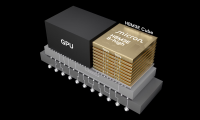
- High Bandwidth Memory (HBM) chips, which are essential for operating A.I.’s massive data throughput.
With HBM demand going through the roof, companies in that sector are notching triple digit gains since January. The Roundhill Memory ETF (CBOE: DRAM) is an ETF that exclusively holds memory chip stocks. Its +150% YTD gain (+63% in just the past month) at the time of this writing is a testament to the strength of this sector, which is also largely contributing as to why Korean market ETFs have also fared so well in 2026.
HBM Supplied The Missing Piece to AI’s Development

AI’s potential was hampered for years as its huge multiple source data throughput and processing capabilities far surpassed available standard memory chip capacity. HBM3E 1.2 TB bandwidth per stack memory experienced some data bottlenecks with Nvidia H200 GPUs. Introduction of HBM4, which contains over 3TB bandwidth, was the solution that allowed AI to finally take off in practical, not only theoretical terms.
Memory chip companies such as Samsung, SK Hynix and Micron were able to use their 5x profit premiums from HBM3E to fund HBM4 R&D. By limiting HBM4 supply, the AI ecosystem had to redesign hardware to maximize processing efficiency, thus further accelerating AI breakthrough potential from AI developers. With these key elements now completing the picture, AI’s capabilities are only just scratching the surface, and its application is being customized in nearly every industry, to some degree.
Roundhill Memory ETF

Since launching a scant two months ago on April 2, 2026, DRAM has soared into triple-digit gains on a scant 15 stocks. As the only pure-play memory chip ETF, it doesn’t have any direct rivals, although broader semiconductor ETFs like iShares Semiconductor ETF (NASDAQ: SOXX) and VanEck Semiconductor ETF (NASDAQ: SMH) contain some overlap.
| Net Assets | $15.04 billion | YTD Return | 150.61% |
| Avg. Daily Volume | 23.269 million shrs | Expense Ratio | 0.65% |
| NAV | $66.67 | P/E Ratio | 55.41 |
| 52-week range | $26.14-$69.74 | # of holdings | 15 |
Top Holdings:
- Micron Technology: 28.43%
- SK Hynix: 27.10%
- Samsung Electronics: 19.45%
- Kioxia Holdings: 6.81%
- Sandisk: 5.02%
- Seagate Technology: 4.15%
- Western Digital: 3.60%
- Nanya Technology: 3.03%
DRAM Pros and Cons

DRAM’s narrow sector concentration and relative exclusivity in the memory chip sector among ETFs is the sword that it can zoom with, but can also be its Achilles’ Heel. For many previous years, the memory chip sector was the poor cousin riding on the coattails of Central Processing Units and Graphics Processing Units from Nvidia, AMD, Intel, and others. It has mostly been through the excitement from AI that the urgency of memory chips has suddenly erupted. This trend seems to be on an extended bull run for the foreseeable future, but given its past history, this might be the bull leg of a longer cycle which may see the memory sector once again come back to earth.
DRAM’s +150.7% YTD gains are measurably ahead of SOXX, which has +90.03% YTD returns, and SMH, which notches a +68.78% YTD gain. However, Micron is the sole dedicated memory stock in both the SOXX and SMH top-10 largest holdings, with processor chips, chip manufacturing, and other sectors given comparatively equivalent weight. DRAM’s narrow focus can also be its weakness if any of its major holdings reports a problem. The diversification factor to mitigate risk is much smaller with DRAM than with either SOXX or SMH.
The near-term prospects for DRAM appear very rosy at present. However, this is not a “buy it and forget it” ETF. If even 1 of its 15 holdings has negative news, the entire ETF can feel its impact. Therefore, regular monitoring and prudent portfolio handling is advisable.
Contact [email protected] for any questions or corrections.
After 15 years on Wall Street with 7 of them as Director of Corporate and Municipal Bond Trading for a NYSE member firm, I started my own project and corporate finance consultancy. Much of the work involves writing business plans, presentations, white papers and marketing materials for companies seeking budgetary allocations for spinoffs and new initiatives or for raising capital for expansion or startup companies and entrepreneurs. On financial topics, I have been published under my own byline at The Motley Fool, 247wallst.com, DealFlow Events’ Healthcare Services Investment Newsletter and The Microcap Newsletter, among others. Additionally, I have done freelance ghostwriting writing and editing for several financial websites, such as Seeking Alpha and Shmoop Financial. I have also written and been published on a variety of other topics from music, audiophile sound and film to musical instrument history, martial arts, and current events. Publications include Copper Magazine, Fidelity (Germany), Blasting News, Inside Kung-Fu, and other periodicals.