DRAM Has Nearly Doubled Since Its April Launch and After Following the AI Memory Shortage Daily These 3 Semiconductor ETFs Keep Rising in My Research
The Roundhill Memory ETF (CBOE:DRAM) launched on April 2, 2026 and has returned roughly 79% since inception, very nearly doubling investor capital in about seven weeks. That is the kind of performance you normally see from a single-stock momentum trade…

This post may contain links from our sponsors and affiliates, and Flywheel Publishing may receive compensation for actions taken through them.

The Roundhill Memory ETF (CBOE:DRAM) launched on April 2, 2026 and has returned roughly 79% since inception, very nearly doubling investor capital in about seven weeks. That is the kind of performance you normally see from a single-stock momentum trade rather than a diversified fund. It happened because DRAM holds the three companies sitting on the chokepoint of the entire AI buildout: Samsung, SK hynix, and Micron, which together make up about 73% of the fund.
I have been tracking the AI memory shortage daily, and three semiconductor ETFs keep surfacing as the cleanest ways to express the trade: DRAM for pure memory, iShares Semiconductor ETF (NASDAQ:SOXX) for broad chip exposure with the deepest liquidity, and Invesco Semiconductors ETF (NASDAQ:PSI) for a tiered equal-weight methodology that pulls in mid-cap names the cap-weighted indexes underweight.
Why memory is the real AI bottleneck
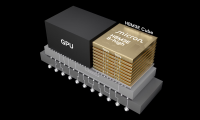
The shortage story everyone reads about is GPUs. The shortage story that actually constrains AI accelerator shipments is high bandwidth memory, or HBM. Every NVIDIA, AMD, or custom AI accelerator needs stacks of HBM die sitting next to the logic chip to feed it data fast enough to keep the compute cores busy. Without HBM, the GPU is an expensive paperweight.
HBM is manufactured by exactly three companies at scale: SK hynix, Samsung, and Micron. Samsung and SK hynix are the dominant HBM beneficiaries, which is why DRAM allocates about half its weight to South Korea. When AI accelerator demand outruns HBM wafer capacity, contract prices for standard DRAM and NAND also rise because the same fabs and the same packaging lines are consumed by HBM production. The shortage is structural rather than a quarterly inventory blip.
DRAM: the only pure-play memory ETF in existence
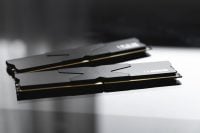
DRAM is the sharpest tool on this list because it is the only fund built for this exact thesis. The portfolio is nine holdings, with Samsung at about 25%, SK hynix at about 24%, and Micron at about 24%. The remaining quarter is split among Kioxia, SanDisk, Western Digital, Seagate, Nanya, and Winbond, which round out NAND and the smaller DRAM specialists.
The investment logic is that if HBM and DRAM pricing stay tight, the rents accrue to these specific nine names and nowhere else. A generic semiconductor fund dilutes that exposure with logic, analog, and equipment companies. DRAM does not.
The fund’s expense ratio is 0.65%, which is reasonable for a single-theme product but well above the cheapest broad semi funds. The harder tradeoff is concentration. South Korea is 49% of the fund, so investors are also taking a currency and Korean-equity exposure they may not have wanted. Total assets are still around $250,000 as the fund is brand new, which means thinner secondary market liquidity than the established semiconductor ETFs. Reddit interest is real but mixed, with one dominant r/wallstreetbets thread climbing past 400 upvotes over a weekend and sentiment oscillating between bearish and very bearish even as the price ran. That is a retail trade as much as it is an institutional one.
Micron alone gives a sense of why the basket has moved. The stock is up about 145% year to date and trades at a forward P/E near 8 against a trailing P/E around 32, with a PEG ratio of 0.26. That valuation spread tells you analysts expect a very large earnings step-up from current memory pricing, with the obvious risk that the forward number is wrong if HBM supply normalizes.
SOXX: the liquid, lower-cost benchmark for the whole chip cycle
SOXX is the default broad semiconductor ETF for a reason. It tracks the NYSE Semiconductor Index, has been trading since 2001, and charges 0.34%, roughly half the cost of DRAM. The investment logic for this list is that memory is one node in a larger AI capex cycle, and SOXX captures the GPU designers, foundries, equipment makers, and analog suppliers that all get paid when AI infrastructure spending accelerates.
The performance backs that up: SOXX is up about 65% year to date and roughly 136% over the past year, even after a 4% pullback over the most recent week. For an investor who wants AI semiconductor exposure but does not want to bet that memory specifically continues to lead, SOXX is the obvious vehicle. It is also where institutions express the trade, which means tight spreads and deep options markets.
The tradeoff is that SOXX is cap-weighted, so the AI logic names dominate. Memory exposure is real but diluted, and a true HBM cycle inflection will show up far more sharply in DRAM than in SOXX. Retail sentiment around SOXX has actually been bearish to very bearish across most of May despite the gains, which suggests the broad index is closer to the consensus AI trade and therefore more exposed to crowded-trade unwinds.
PSI: the non-obvious mid-cap-tilted alternative
PSI is the contrarian pick on this list. Its index uses a tiered equal-weighting methodology that gives mid-cap chip companies more representation than a market-cap fund would. That matters in a cycle like this one because mid-cap memory, packaging, and specialty foundry names often see the largest percentage earnings revisions when pricing turns, and a cap-weighted fund largely misses that effect.
The numbers reflect the methodology. PSI is up about 81% year to date and roughly 169% over the past year, ahead of SOXX over both periods. That is the equal-weight tilt working in a broad sector rally where smaller names re-rate faster.
The tradeoff is symmetrical. When the cycle rolls, equal-weight funds give back more than cap-weighted peers because the mid-cap names tend to overshoot in both directions. PSI is also less liquid than SOXX and carries a higher expense ratio than most cap-weighted competitors. It is the right tool if you believe the AI chip cycle still has room to run and want the broader supplier base to participate, while DRAM remains the cleaner pure-memory expression.
How to choose among the three
If the entire reason you are reading this is the HBM shortage, DRAM is the only fund that actually delivers the thesis, and the near-doubling since its April launch shows what concentrated exposure does when the trade works. The other side is that the same concentration is what makes it fall hardest if memory contract pricing rolls over, and the fund still has very little in assets.
SOXX is the right choice for an investor who wants durable AI semiconductor exposure without timing a single sub-segment, with the lowest costs and deepest liquidity. PSI fits the investor who wants more than the megacaps and is comfortable with a fund whose mid-cap tilt amplifies both directions of the chip cycle.
The risk that applies to all three is the same: HBM capacity is being added aggressively by all three major producers, and the moment supply catches demand, contract pricing turns and the multiple compression starts in memory first. Until then, the data still points the same direction the price has been pointing since DRAM listed.
Contact [email protected] for any questions or corrections.
After 15 years on Wall Street with 7 of them as Director of Corporate and Municipal Bond Trading for a NYSE member firm, I started my own project and corporate finance consultancy. Much of the work involves writing business plans, presentations, white papers and marketing materials for companies seeking budgetary allocations for spinoffs and new initiatives or for raising capital for expansion or startup companies and entrepreneurs. On financial topics, I have been published under my own byline at The Motley Fool, 247wallst.com, DealFlow Events’ Healthcare Services Investment Newsletter and The Microcap Newsletter, among others. Additionally, I have done freelance ghostwriting writing and editing for several financial websites, such as Seeking Alpha and Shmoop Financial. I have also written and been published on a variety of other topics from music, audiophile sound and film to musical instrument history, martial arts, and current events. Publications include Copper Magazine, Fidelity (Germany), Blasting News, Inside Kung-Fu, and other periodicals.