New Inflation Data Confirms the end of Kevin Warsh’s Honeymoon
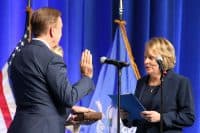
Kevin Warsh was sworn in as the new Federal Reserve chairman on May 22, 2026, after months of tension between departing Fed chair Jerome Powell and President Donald Trump.Trump has long advocated for a reduction in interest rates to promote…

Kevin Warsh was sworn in as the new Federal Reserve chairman on May 22, 2026, after months of tension between departing Fed chair Jerome Powell and President Donald Trump.
Trump has long advocated for a reduction in interest rates to promote economic growth and provide relief to would-be homebuyers facing a difficult housing market and sustained high rates in the post-pandemic era. Warsh had signaled a willingness to reduce rates, arguing that reducing the Fed’s bloated balance sheet could provide opportunities for a rate reduction. He’s also expressed a desire to shift to alternative methods of measuring inflation that didn’t place such heavy weight on transitory causes of inflation spikes, like high gas prices resulting from conflict in Iran.
However, while Trump and Warsh may have appeared in the past to be aligned about the potential for a rate cut, new forecasts from the Federal Reserve could throw cold water on that idea and potentially introduce conflict early on in the new Fed chair’s term.
The upcoming Federal Reserve meeting sets the stage for conflict between Trump and Warsh
President Trump has been sending strong signals to Warsh that the Administration opposes a rate hike, going so far as to say that there’s “no reason” to raise interest rates in a June 7 Meet the Press interview, and arguing that “my feeling is that when a country is doing well, they shouldn’t be penalized by immediately raising interest rates.”
However, while the President is likely to get his wish that rates won’t increase at the upcoming Federal Reserve meeting on June 16 and 17th, the reality is that a rate cut is essentially off the table, and markets are pricing in a rate hike later in 2026. New inflation predictions from the Federal Reserve are one clear reason why that’s the case, along with a stronger-than-expected job report in May.
The Federal Reserve’s inflation predictions are bad news for Warsh
The Federal Reserve Bank of Cleveland publishes an inflation forecast, which contains some very bad news for Warsh. In May, the Fed’s forecasts showed inflation was likely up 4.81% year-over-year, and in June, the increase was 4.05%. This is well above the Federal Reserve’s target rate of 2%.
High energy prices were a leading driver of the surging prices, in large part due to the ongoing conflict in Iran. However, even the Core CPI, which removes highly volatile food and energy costs from the equation, showed a 2.82% year-over-year increase in May and a 2.83% increase in June.
Numbers like these make it very difficult to justify a rate cut, unless the unemployment situation is dire. The Federal Reserve has a dual mandate of maintaining a robust labor market and keeping inflation in check. But, despite long-term unemployment remaining stubbornly high, the recent Bureau of Labor Statistics jobs report showed robust job growth, with total nonfarm payroll employment increasing by 172,000. This is more than double the number many analysts estimated.
The jobs data, combined with inflation predictions, has sent two-year Treasury yields surging, and with yields around 4.15%, Treasuries are trading well above the Fed’s benchmark rate of 3.5%–3.75%. Since two-year Treasury yields are highly predictive of Fed policy, all signs point to the fact that a rate hike is far more likely than a rate decrease at any time in 2026.
With FedWatch predicting over a 98% likelihood that the Fed will stick with the status quo in June, Warsh may not have to immediately buck Trump’s clear preference to avoid rate hikes in his first meeting. But if the Fed removes the easing bias from its guidance, as analysts widely expect, this move alone is likely to draw the President’s Ire.
And if the markets are right and a rate cut is inevitable in the near-term, it will be very, very clear that Warsh’s honeymoon period has come to a swift end.
Contact [email protected] for any questions or corrections.
Christy Bieber has been a personal finance and legal writer since 2008. She has a JD from UCLA School of Law and a BA in English, Media and Communications with a certification in business from the University of Rochester.
Christy has been published by a wide variety of sites, including WSJ Buy Side, Forbes, Kiplinger, Fox Business, Credit Karma, Insurify, and Annuity.org. In addition to writing for the web, she has also ghostwritten textbooks on business and law and served as a subject matter expert for course design.