Wall Street Strategist: This Industry is “Bigger Than AI” And a Massive Buying Opportunity After Friday’s Sell-Off
While the market spent Friday selling tech, Hightower Chief Investment Strategist Stephanie Link sees the sell-off as a way to get in on the next major opportunity. Speaking on CNBC the morning of June 8, Link argued that instead of…


While the market spent Friday selling tech, Hightower Chief Investment Strategist Stephanie Link sees the sell-off as a way to get in on the next major opportunity. Speaking on CNBC the morning of June 8, Link argued that instead of treating cybersecurity as a sidecar to artificial intelligence, they should start treating it as the larger, more durable spending theme. Her view is that AI is the problem, and cybersecurity is the solution.
Her posture heading into this week is clear: “I’m actually looking for opportunities, not only in technology but across other sectors.”
“Cybersecurity Is Bigger Than AI” Thesis
Link’s centerpiece argument is that cybersecurity will be a major growth sector in its own right. “I actually really do think that cybersecurity is really a place where you want to be. I think cybersecurity is bigger than AI because of AI. AI is not secure,” she said. Her logic is that every enterprise dollar spent on deploying AI creates a new attack surface that has to be defended, monitored, and remediated. That implies future spending on identity, network, cloud, and data security that scales alongside, and arguably outlasts, the initial AI capex wave.
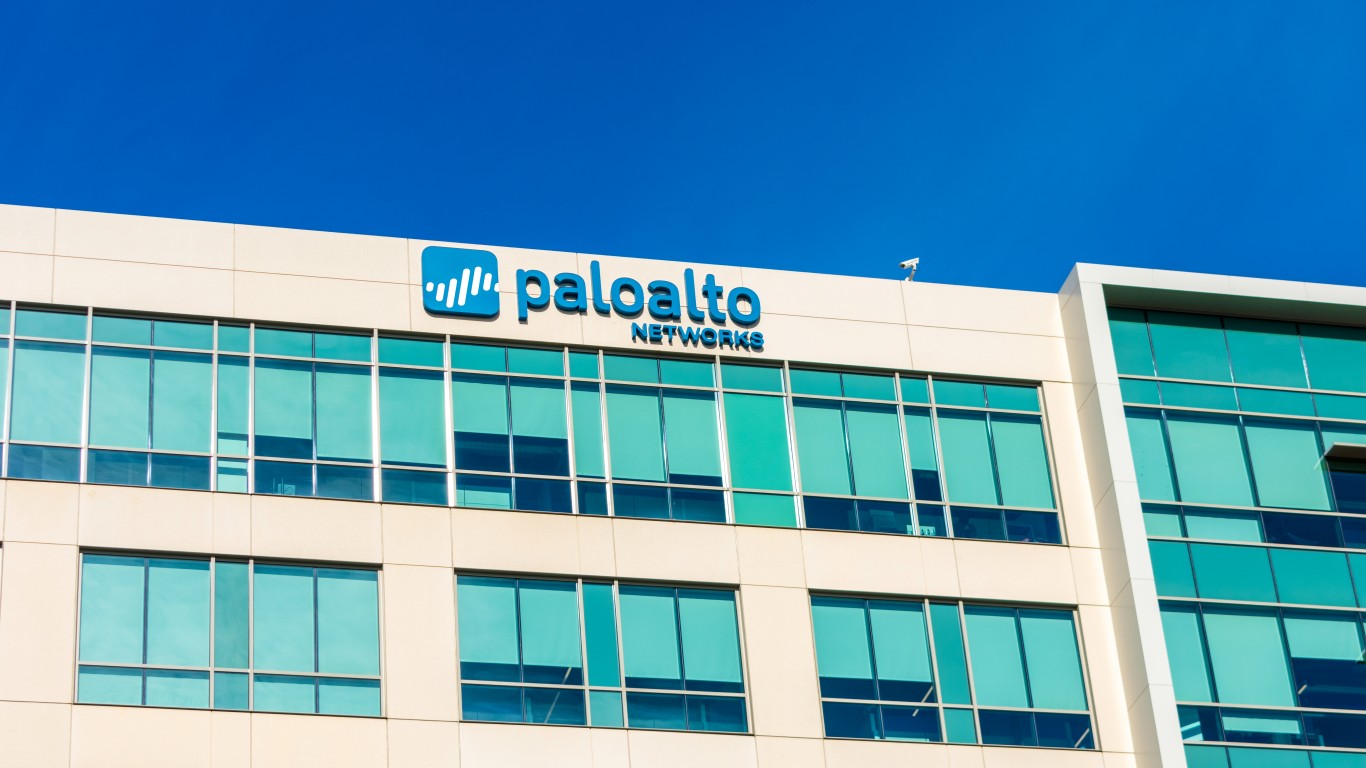
That thesis lines up with what Palo Alto Networks (NASDAQ:PANW | PANW Price Prediction) is telling investors. CEO Nikesh Arora said in the Q3 FY26 release that “The latest advancements at the AI frontier have increased the level of urgency around cybersecurity, and redefined the shape of the industry for the coming years.” Next-Generation Security ARR hit $8.10 billion, up 60% YoY, and total revenue rose 31.1% in the quarter.

The Recent Tech Selloff Is a Gift
According to Link’s framing, Palo Alto Networks (PANW) is down 10% despite 31% product revenue growth and Next-Gen Security products up 60%. PANW closed Friday at $272.05, with the stock down 3.42% on the week, even as Wall Street’s analyst target sits at $306.56.
The bigger dislocation, in her view, is Broadcom (NASDAQ:AVGO). “When a company just reported earnings up 54%… Total revenues up 78%. AI revenues up 143%, going to 200% next quarter, and software going from 8% to 31%. Like, to me, I think that that is an opportunity, especially as the earnings numbers are going higher,” Link said.
Broadcom fell 19.51% from June 3 to June 5. Yet CEO Hock Tan guided Q3 AI semiconductor revenue to $16 billion and told analysts, “2027 will exceed, very easily, $100 billion in 2027″ in AI sales, with potential to reach $150 billion. Broadcom’s market cap is just shy of $1.9 trillion, with about $75 billion in sales in the past 12 months.
Consolidation Favors the Giants
Link expects the cybersecurity sector to consolidate aggressively. “I think you’re going to need more companies, and the bigger companies are going to get bigger and bigger and continue to do acquisitions and that sort of thing,” she said. That maps directly onto Palo Alto’s playbook: CyberArk and Chronosphere combined contributed $388 million to Q3 revenue, and management is guiding to a 40% adjusted free cash flow margin by FY28. For investors sharing Link’s thesis, the implication is to own the companies consolidating the industry, not just the acquisition targets.
The Macro Backdrop
Link’s contrarian buying rests on a macro footing she considers favorable. “Unit labor costs came down 1.8% in the first quarter, and productivity went up 2.8%. That’s a great combination, right?” She pegs growth at around 3-3.5%, above trend. The 10-year Treasury yield closed the week at 4.47%, and the VIX spiked to 21.51, an elevated reading but well below the March peak.
As proof of how fast leading stocks can run, Marvell Technology (NASDAQ:MRVL) is up over 200% in two and a half months ahead of S&P 500 inclusion, with CEO Matt Murphy citing “exceptional AI-related bookings” in raising the FY27 and FY28 outlook.
Link’s message is that demand for cybersecurity will grow precisely because AI creates the threats that cybersecurity must defend against. However, investors should recognize that many of these stocks already trade at premium valuations. Palo Alto Networks trades at roughly 67 times forward earnings, meaning higher interest rates and market volatility could create significant swings in share prices even if the long-term investment case remains strong.
Contact [email protected] for any questions or corrections.
Thomas Richmond is a financial writer and content strategist with 5+ years of experience covering stocks and financial markets. He has published over 500 articles focused on individual stock analysis, helping investors better understand business fundamentals, stock valuations, and long-term opportunities.
Thomas previously served as a Content Lead at TIKR, a stock research platform, where he helped scale the company’s blog to hundreds of articles per month and contributed to a weekly newsletter reaching more than 100,000 investors.
Outside of work, Thomas enjoys weight lifting and soccer.