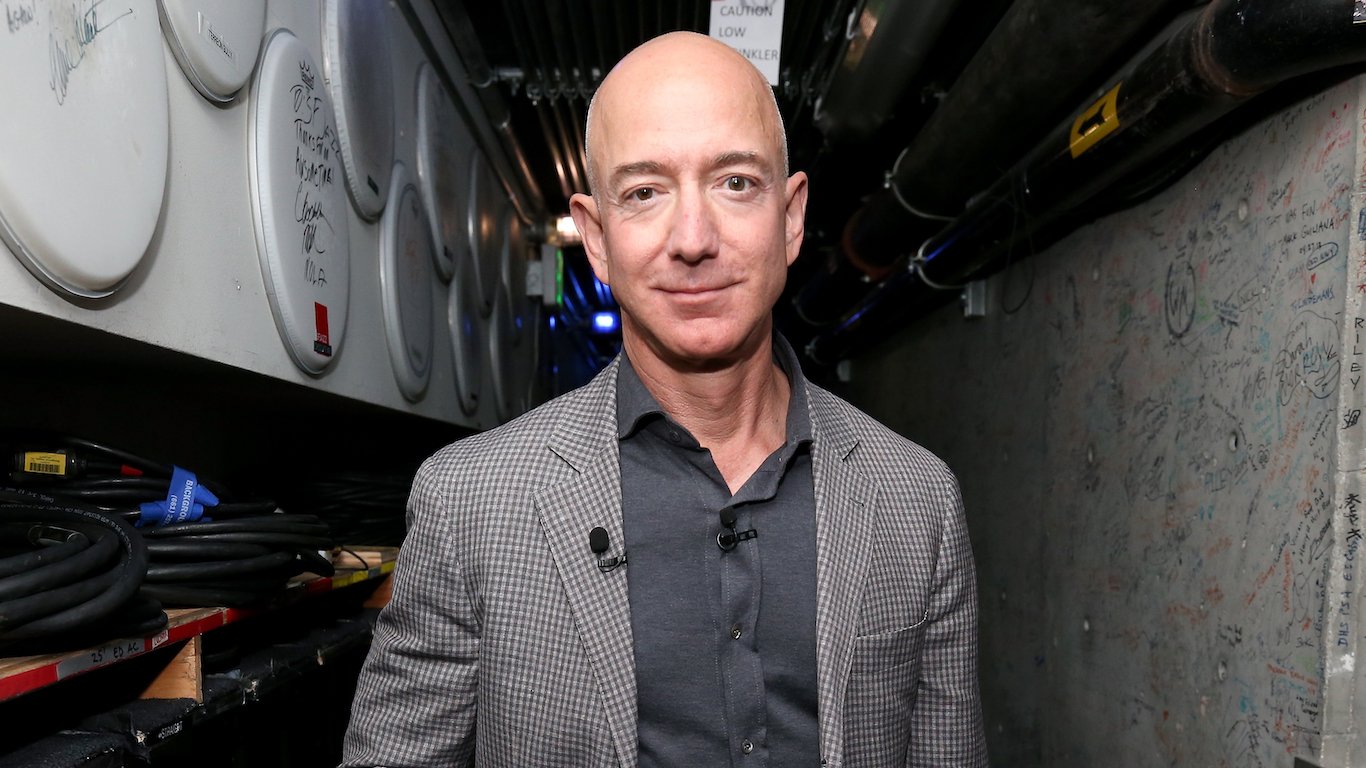
Is Jeff Bezos’ New Startup An Even Bigger Idea than Amazon? He Tells CNBC it Will Drive ‘Civilizational Wealth.’
Jeff Bezos sat down with CNBC on June 11, 2026, to make the case that his next act could become even bigger than Amazon. As co-founder and co-CEO of Prometheus, Bezos is pitching a thesis that tries to answer one…


Jeff Bezos sat down with CNBC on June 11, 2026, to make the case that his next act could become even bigger than Amazon. As co-founder and co-CEO of Prometheus, Bezos is pitching a thesis that tries to answer one question: What actually makes societies rich?
His answer is invention. “What drives the wealth of nations? What drives civilizational wealth? And the answer is invention,” Bezos said. That framing is the philosophical foundation of Prometheus, a physical AI company aiming to compress the timeline between idea and manufactured object.
The Plow, the Steam Engine, and Now Software
Bezos reached deep into history to argue that breakthroughs in tools translate into broad-based prosperity. “6,000 years ago, somebody invented the plow, and we all got wealthier. Much later, somebody invented the steam engine, and we all got wealthier. These things drive productivity,” he told CNBC. He argues that durable wealth comes from inventions that lift the productivity ceiling for everyone, not just the inventor.
Prometheus wants to be the next entry in that lineage. Bezos described the company’s purpose this way: “Our goal at Prometheus, what we’re working on, is building a set of tools that accelerate that invention loop. How long does it take to improve something? How long does it take from idea to actually manufacturing, to seeing it at rate and have a useful object?”
Time-to-market is the key variable they’re looking to shrink. If a software platform can shave years off the path from concept to scaled production, the compounding effect across industries could be enormous.
An “Artificial General Engineer”
The technical bet underneath the philosophy is that AI has finally crossed a threshold where it can do real engineering work. “The idea that you might build a set of tools that could actually do engineering, an artificial engineer, an artificial general engineer, is a dream people have thought about for decades, but it’s never really been possible. But now it is. And that’s what we’ve been working on since late 2024,” Bezos said.
That timeline matters. Prometheus began work in late 2024, which lines up with the broader inflection point in frontier model capabilities that has reshaped enterprise AI spending. The infrastructure boom feeding this moment is visible across markets: Lam Research (NASDAQ:LRCX | LRCX Price Prediction) recently hit an all-time high of $349.21, and J.P. Morgan projects KLA Corporation (NASDAQ:KLAC) could more than triple its earnings by 2030, reaching $95 per share, driven by demand for process control tools that make advanced chips possible. Power and connectivity providers are scaling alongside, including a 150 MW / 600 MWh battery facility contracted with Dominion Energy (NYSE:D) to serve AI infrastructure in Virginia.
Could Prometheus Become Bigger Than Amazon?
Amazon (NASDAQ:AMZN) reshaped retail, logistics, and cloud computing. Prometheus is targeting something more upstream: the act of invention itself. If the company succeeds in building what Bezos calls an artificial general engineer, the addressable market is every industry that designs and manufactures physical goods. That is a larger surface area than e-commerce ever offered.
Today, Prometheus is a private company, meaning that everyday investors cannot buy shares in the business. However, investors can still follow the story and watch the second-order beneficiaries. If Prometheus or any peer succeeds in automating engineering, the picks-and-shovels layer of semiconductors, energy, and data center capacity becomes even more strategic. Bezos is betting that a centuries-long pattern will repeat itself. The question for portfolios is which listed companies sit closest to that loop when it accelerates.
Contact [email protected] for any questions or corrections.
Thomas Richmond is a financial writer and content strategist with 5+ years of experience covering stocks and financial markets. He has published over 500 articles focused on individual stock analysis, helping investors better understand business fundamentals, stock valuations, and long-term opportunities.
Thomas previously served as a Content Lead at TIKR, a stock research platform, where he helped scale the company’s blog to hundreds of articles per month and contributed to a weekly newsletter reaching more than 100,000 investors.
Outside of work, Thomas enjoys weight lifting and soccer.