The Fed Just Quietly Released Surprisingly Bad Economic News. Is a Recession Already Starting?
Economic slowdowns rarely arrive with a flashing warning sign. More often, they show up in obscure data releases, weaker spending patterns, and subtle shifts in consumer behavior long before the headlines catch up. That’s why investors should pay attention to…

Economic slowdowns rarely arrive with a flashing warning sign. More often, they show up in obscure data releases, weaker spending patterns, and subtle shifts in consumer behavior long before the headlines catch up. That’s why investors should pay attention to a little-followed report from the Chicago Federal Reserve.
While Wall Street focused on May’s inflation report and the upcoming Federal Open Market Committee meeting, the Chicago Fed quietly released new retail spending data that suggests American consumers may be pulling back. On its own, the report isn’t enough to declare a recession. Combined with rising inflation and growing warnings from economists, however, it paints a picture investors shouldn’t ignore.
The Chicago Fed’s Consumer Spending Data Just Turned Negative
The data comes from the Chicago Fed’s Advance Retail Trade Summary, a report that receives far less attention than the Fed’s interest-rate decisions but offers a real-time look at consumer demand.
Here’s what the latest numbers show:
| Measure | February 2026 | April 2026 | May 2026 |
| Food & Services Spending (Nominal) | +0.8% | 0.0% | -0.3% |
| Food & Services Spending (Inflation Adjusted) | +0.8% | 0.0% | -1.3% |
Source: Chicago Federal Reserve Current Data release.
The inflation-adjusted figure is the key number. After accounting for rising prices, Americans bought 1.3% less food and services in May than they did previously. That’s a sharp deterioration from April’s flat reading and February’s 0.8% increase.
Consumer spending accounts for roughly two-thirds of U.S. economic activity. When households start cutting back on necessities like food and services, investors should take notice.
May consumer inflation accelerated to 4.2%, the highest reading since April 2023, while core inflation climbed to 2.9%. Rising prices appear to be squeezing household budgets just as spending begins to weaken.
Moody’s Economist Sees Recession Risks Rising
The Chicago Fed data arrived only days after Moody’s Analytics Chief Economist Mark Zandi warned that inflation has once again become a meaningful recession threat.
Zandi has argued that rising prices, slowing consumer demand, and labor market deterioration could create a negative feedback loop for economic growth. His recession indicators have been flashing cautionary signals for several months.
The concern is straightforward. Higher inflation reduces purchasing power. Consumers spend less. Businesses see weaker demand and slow hiring. Economic growth cools further. The Chicago Fed’s latest spending figures fit neatly into that narrative.
Granted, one month of weak retail data doesn’t mean a recession has already begun. Economic data is noisy, and monthly readings can reverse quickly. Still, investors should recognize that consumer spending is moving in the wrong direction at precisely the same time inflation is moving in the wrong direction.
There Are Still Reasons for Optimism
That said, recession fears aren’t the whole story. The labor market remains relatively resilient. May payroll growth came in at 172,000 jobs while unemployment held at 4.3%, hardly the profile of an economy in freefall.
Meanwhile, the AI investment boom continues to drive corporate spending. Capital expenditures tied to artificial intelligence infrastructure remain strong, helping support economic activity even as consumers show signs of strain.
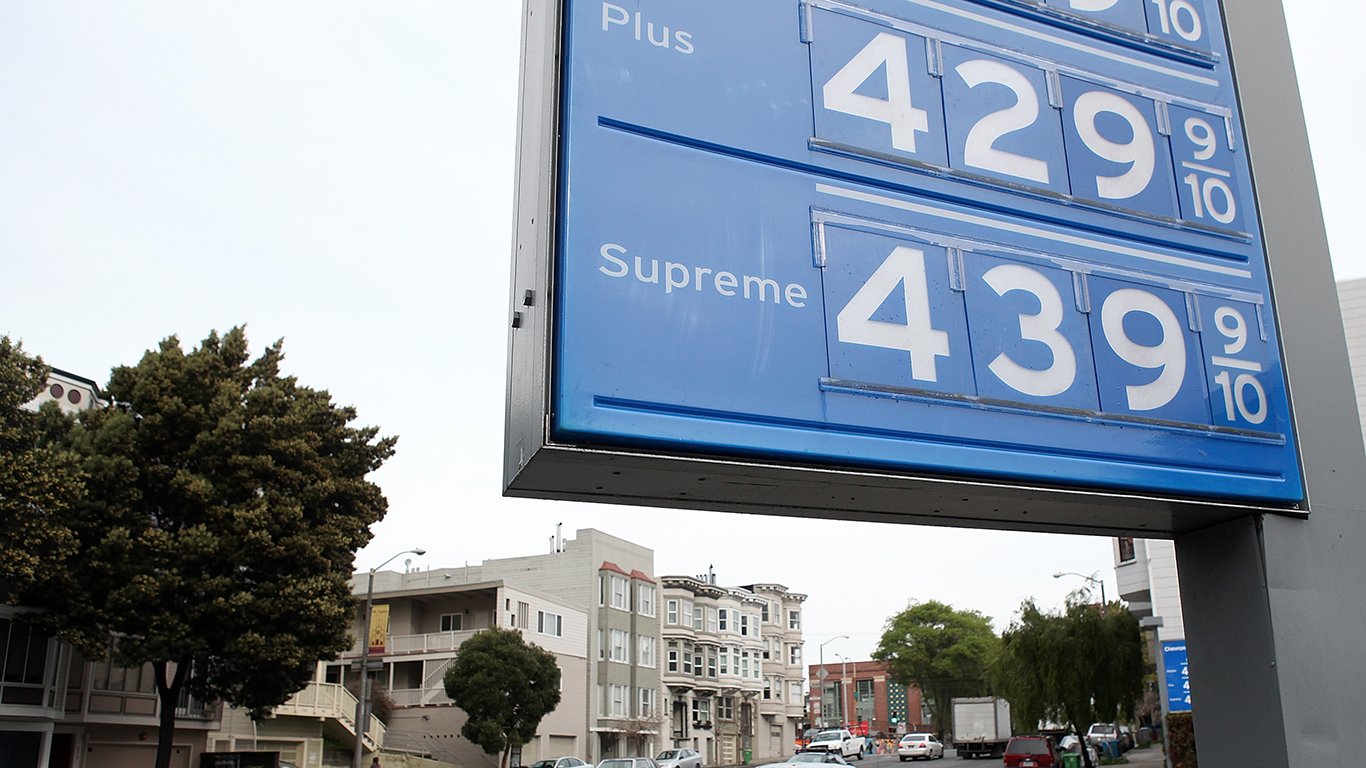
Energy prices could also become a wildcard. Much of the recent inflation surge has been linked to oil and gasoline costs stemming from tensions involving Iran and disruptions in global energy markets. If those tensions ease, inflation could cool more quickly than many economists currently expect.
Notably, financial markets aren’t behaving as though a recession is imminent. Prediction markets currently place roughly a 52% probability on at least one Fed rate hike occurring before the end of 2026, suggesting traders remain concerned about inflation rather than economic collapse.
Key Takeaway
In short, the Chicago Fed’s latest spending data is one of the more concerning economic releases investors have seen in recent weeks. Inflation-adjusted food and services spending fell 1.3% in May, marking a clear deterioration from earlier in the year and lending support to warnings that consumers are beginning to crack under higher prices.
Yet the broader economy remains mixed. Job growth continues, AI-driven investment remains strong, and falling energy prices could quickly change the inflation outlook.
For now, sharp investors should view the Chicago Fed report as an early warning signal rather than a recession confirmation. The economy isn’t clearly in recession today. But the consumer — the engine that drives nearly 70% of U.S. GDP — is showing signs of fatigue, and that’s a development worth watching closely.
Contact [email protected] for any questions or corrections.
After two decades of patrolling the dark corners of suburbia as a police officer, Rich Duprey hung up his badge and gun to begin writing full time about stocks and investing. For the past 20 years he’s been cruising the markets looking for companies to lock up as long-term holdings in a portfolio while writing extensively on the broad sectors of consumer goods, technology, and industrials. Because his experience isn’t from the typical financial analyst track, Rich is able to break down complex topics into understandable and useful action points for the average investor. His writings have appeared on The Motley Fool, InvestorPlace, Yahoo! Finance, and Money Morning. He has been featured in both U.S. and international publications, including MarketWatch, Financial Times, Forbes, Fast Company, and USA Today.