Consumers Flash Recession Warning as Trump Economy Sentiment Implodes
For months, Wall Street has tried to look past the cracks forming in the U.S. economy. The stock market keeps climbing, AI stocks keep printing new highs, and headline GDP figures still suggest growth. But Main Street is telling a…


For months, Wall Street has tried to look past the cracks forming in the U.S. economy. The stock market keeps climbing, AI stocks keep printing new highs, and headline GDP figures still suggest growth. But Main Street is telling a very different story. Consumers are getting squeezed from every angle — rising inflation, higher gasoline prices, swelling credit card balances, and the growing risk the Federal Reserve may raise interest rates again instead of cutting them.
That pressure is now showing up in hard data. Regardless of how you look at it, the latest numbers paint a troubling picture for President Donald Trump’s economy.
Consumer Sentiment Just Fell Off a Cliff
The latest reading from the University of Michigan’s Survey of Consumers delivered a stunning result. Consumer sentiment plunged 11% in May to 44.2 — the lowest reading in the survey’s 75-year history.
Even more striking, the final May figure came in 8% below the already weak preliminary reading released just two weeks earlier. Here’s what the numbers tell us:
| Consumer Sentiment Data | Reading |
| April 2026 Sentiment | 49.7 |
| Preliminary May 2026 | 48.2 |
| Final May 2026 | 44.2 |
| Decline from April | 11% |
| Decline vs Preliminary May | 8% |
That isn’t normal economic anxiety. It signals consumers believe conditions are deteriorating rapidly.
The survey also found that 57% of consumers spontaneously mentioned high prices hurting their finances, up from 50% the month before. In short, inflation is no longer an abstract economic statistic — it is now dominating household decision-making.
Granted, consumer confidence surveys can sometimes overreact to political headlines. But when all is said and done, Americans tend to know when their wallets are under pressure.
Inflation and Oil Prices Are Hitting Consumers Hard
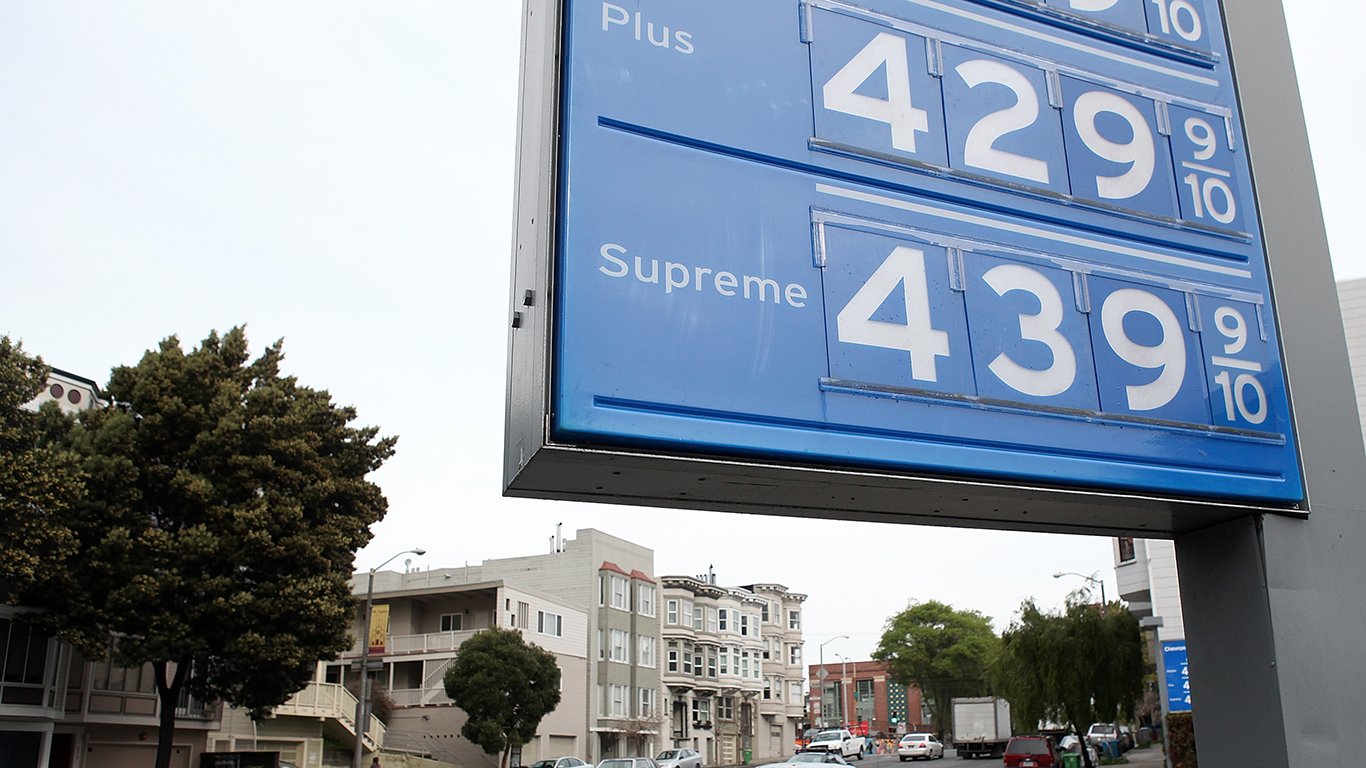
The turning point appears to have come after Trump launched military operations against Iran in February. Since then, oil prices have climbed sharply, gasoline prices have followed, and inflation expectations have moved higher. That matters because energy acts like a hidden tax on consumers.
When gasoline rises from $3.20 per gallon to $4.55, households have less money available for restaurants, travel, entertainment, and discretionary purchases. The pain spreads across the economy fast.
At the same time, inflation has started accelerating again across several categories. Recent Consumer Price Index and Producer Price Index reports from the U.S. Bureau of Labor Statistics showed price pressures broadening beyond energy into services and consumer goods.
Now investors face a problem few expected six months ago: the Federal Reserve may not cut rates this year at all.
Surprisingly, some economists are now discussing the possibility the Fed may need to raise rates again if inflation continues climbing. Higher rates would increase borrowing costs on mortgages, auto loans, and credit cards precisely when consumers are already stretched thin.
Debt Levels Are Adding Fuel to the Fire
Consumers are entering this slowdown with record debt burdens. According to the Federal Reserve Bank of New York, U.S. credit card balances recently exceeded $1.3 trillion. Delinquency rates have also climbed as more borrowers struggle to keep up with payments.
That combination creates a dangerous feedback loop:
- Higher prices reduce disposable income
- Consumers rely more heavily on credit cards
- Higher interest rates increase debt servicing costs
- Spending slows further
A soaring stock market does not override pocketbook issues. Most Americans do not measure the economy by the Nasdaq or the S&P 500. They measure it by grocery bills, utility costs, rent payments, and gasoline prices.
That helps explain why Trump’s support has started eroding even among conservative voters who initially backed his economic agenda. Inflation has a way of cutting through politics.
Key Takeaway
In short, the latest consumer sentiment data sends a clear warning investors should not ignore. Consumers are under pressure from rising inflation, elevated oil prices, growing debt burdens, and the increasing possibility interest rates stay higher for longer — or even move higher still. The University of Michigan’s sentiment index falling to 44.2, the lowest reading in 75 years, confirms that stress is intensifying.
That said, markets can remain disconnected from consumers for a while. Mega-cap technology stocks and AI enthusiasm continue pushing indexes higher. But regardless of short-term market gains, consumer spending still drives roughly two-thirds of the U.S. economy.
And right now, the American consumer looks exhausted.
Contact [email protected] for any questions or corrections.
After two decades of patrolling the dark corners of suburbia as a police officer, Rich Duprey hung up his badge and gun to begin writing full time about stocks and investing. For the past 20 years, he’s been cruising the markets looking for companies to lock up as long-term holdings in a portfolio while writing extensively on the broad sectors of consumer goods, technology, and industrials. Because his experience isn’t from the typical financial analyst track, Rich is able to break down complex topics into understandable and useful action points for the average investor. His writings have appeared on The Motley Fool, InvestorPlace, Yahoo! Finance, Money Morning, and, of course, 24/7 Wall St. He has been featured in both U.S. and international publications, including MarketWatch, Financial Times, Forbes, Fast Company, and USA Today.