Jim Cramer Says SpaceX Is a ‘Meme Stock.’ He Couldn’t Be More Wrong.
Markets and commentators have a habit of confusing popularity with speculation. When a stock rises rapidly, skeptics too often reach for the same label: meme stock. That description fit companies like GameStop (NASDAQ:GME | GME Price Prediction) and AMC Entertainment…

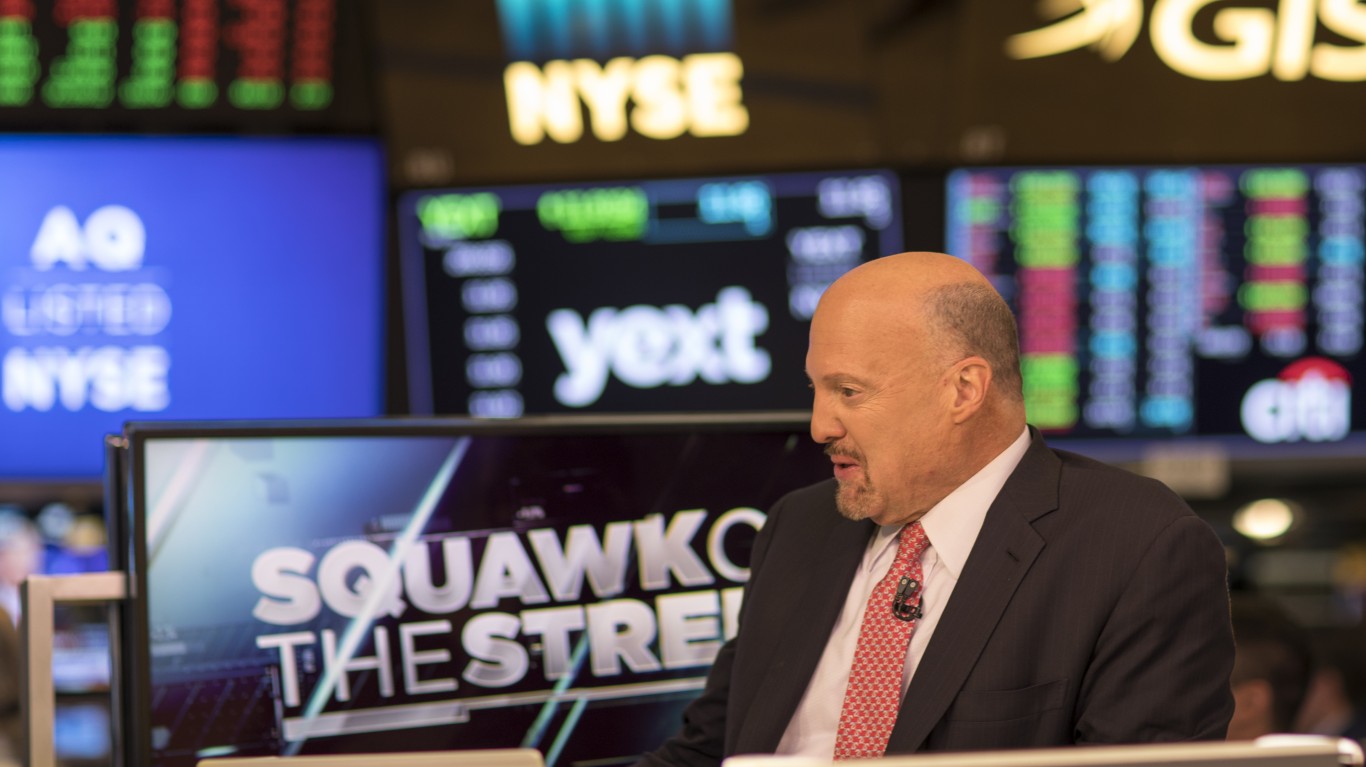
Markets and commentators have a habit of confusing popularity with speculation. When a stock rises rapidly, skeptics too often reach for the same label: meme stock. That description fit companies like GameStop (NASDAQ:GME | GME Price Prediction) and AMC Entertainment (NYSE:AMC) during the pandemic-era trading frenzy, where social media enthusiasm often outpaced business fundamentals. But not every stock that captures investors’ imagination belongs in that category.
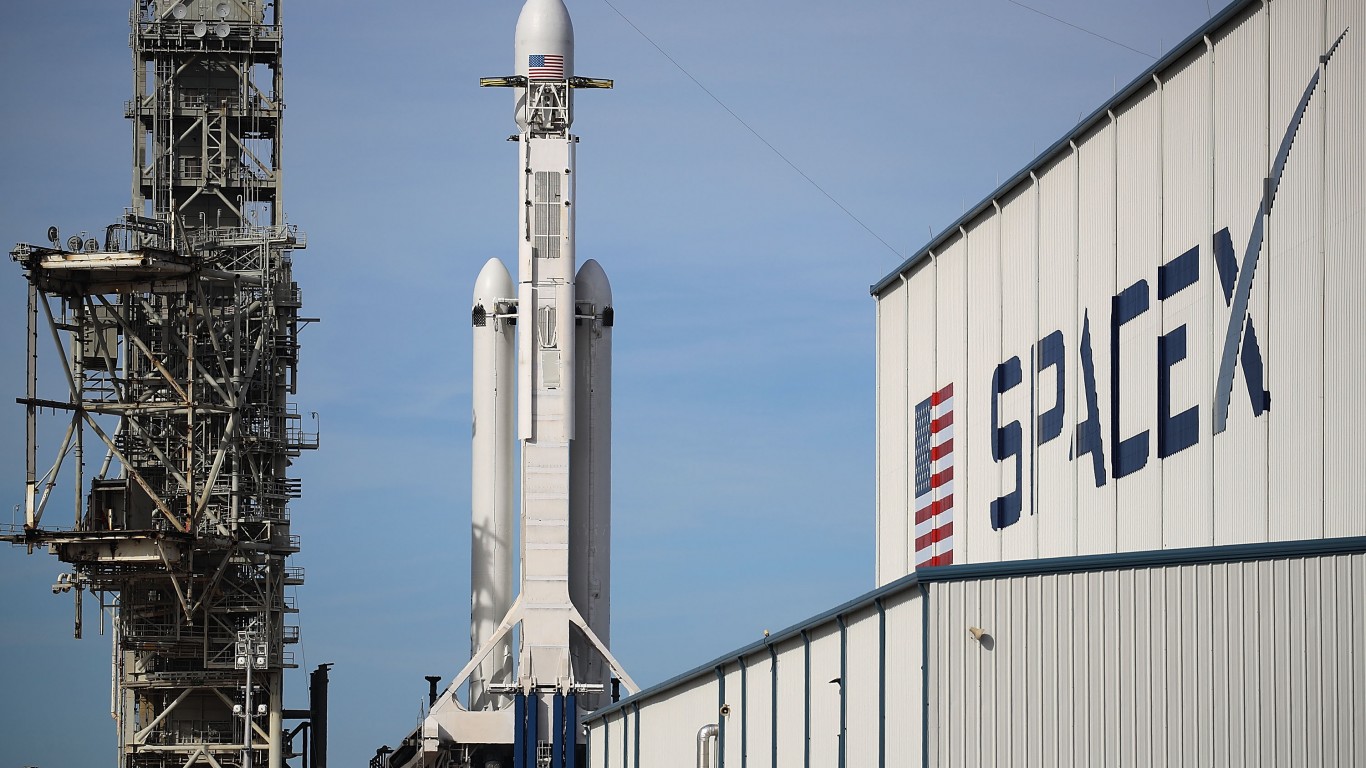
That’s especially true for SpaceX (NASDAQ: SPCX), whose shares have surged since its record-setting IPO. CNBC’s Jim Cramer just argued that SpaceX has become a “meme stock,” an assessment that is wildly wrong because it overlooks what the company actually is — and what it’s building.
What Makes a Meme Stock a Meme Stock?
A meme stock is typically characterized by three traits:
- Social media-driven buying
- Limited connection between valuation and business performance
- Price movements fueled by momentum rather than fundamentals
GameStop became the poster child for the phenomenon in 2021 as traders on Reddit‘s WallStreetBets coordinated buying activity that pushed shares far beyond what the company’s earnings could justify.
SpaceX certainly has excitement surrounding it. Its stock climbed from an IPO valuation of $1.8 trillion to over $2.7 trillion within days of trading. It rose more than 19% on each of its first two days as a public company, and is over 10% higher in noon trading today.
But enthusiasm alone doesn’t create a meme stock. The critical difference is that SpaceX isn’t a single-product company with a struggling business model. It operates across multiple industries that are expanding rapidly.
A Collection of Industry Leaders Under One Roof
Investors buying SpaceX are not betting on one story. They’re buying exposure to several.
| Business Segment | Opportunity |
| Launch Services | Global leader in reusable rockets |
| Starlink | Satellite broadband serving consumers, businesses, and governments |
| Defense & National Security | Launch contracts and military communications |
| Artificial Intelligence | Building AI infrastructure and computing capacity |
| Robotics & Manufacturing | Developing advanced manufacturing systems and automation |
| Space Infrastructure | Long-term lunar, orbital, and Mars-related projects |
Few companies have leadership positions across so many emerging markets simultaneously.
That doesn’t mean today’s valuation is automatically justified. It does mean the company possesses tangible businesses, assets, customers, and technology platforms that extend well beyond social media excitement.
In short, meme stocks are usually chasing relevance. SpaceX is creating it.
Management Is Playing a Different Game
Another reason the meme-stock label falls short is management’s approach.
Most companies obsess over quarterly earnings. SpaceX President Gwynne Shotwell has repeatedly emphasized it has a much longer time horizon, focusing on projects that may take years to generate returns. That mindset matters, and is what investors should look for in the executives running their companies.
A company focused on maximizing next quarter’s results might avoid large investments that pressure current profitability. SpaceX appears willing to make those investments anyway. Its acquisition announcement this morning that it was buying Cursor for $60 billion proves the point.
Management has signaled that decisions should be judged by where the business stands years from now and whether it was successful, not by whether they boost the next earnings report.
Granted, that approach can frustrate shareholders. Spending aggressively today may weigh on profits and even pressure the stock price. But that’s the opposite of how meme stocks operate. Meme stocks rely on attention. SpaceX is spending capital to build future competitive advantages.
Key Takeaway
Cramer is right about one thing: SpaceX stock could be ahead of its intrinsic value today. A company that gains nearly $900 billion in market capitalization within days deserves careful scrutiny.
That said, valuation risk and meme-stock status are not the same thing. A meme stock is driven primarily by hype, whereas SpaceX is driven by businesses spanning launch services, satellite communications, defense technology, AI infrastructure, advanced manufacturing, and space exploration. Investors may be overpaying for that future today, and the stock could experience a sharp correction tomorrow.
Regardless, don’t confuse enthusiasm for a frontier pioneer with a Reddit-fueled trading phenomenon. SpaceX may be expensive. It may be volatile. But it is not a meme stock. It’s one of the most ambitious industrial and technology companies ever brought to public markets.
Contact [email protected] for any questions or corrections.
After two decades of patrolling the dark corners of suburbia as a police officer, Rich Duprey hung up his badge and gun to begin writing full time about stocks and investing. For the past 20 years, he’s been cruising the markets looking for companies to lock up as long-term holdings in a portfolio while writing extensively on the broad sectors of consumer goods, technology, and industrials. Because his experience isn’t from the typical financial analyst track, Rich is able to break down complex topics into understandable and useful action points for the average investor. His writings have appeared on The Motley Fool, InvestorPlace, Yahoo! Finance, Money Morning, and, of course, 24/7 Wall St. He has been featured in both U.S. and international publications, including MarketWatch, Financial Times, Forbes, Fast Company, and USA Today.