Gold Just Dropped $68. Peter Schiff Says That’s Your Buy Signal.
Peter Schiff told listeners of The Peter Schiff Show Podcast that the sharp pullback in gold is an entry point, not an exit. He flagged a roughly $50 drop on Friday and another $18 at the time of recording, putting…


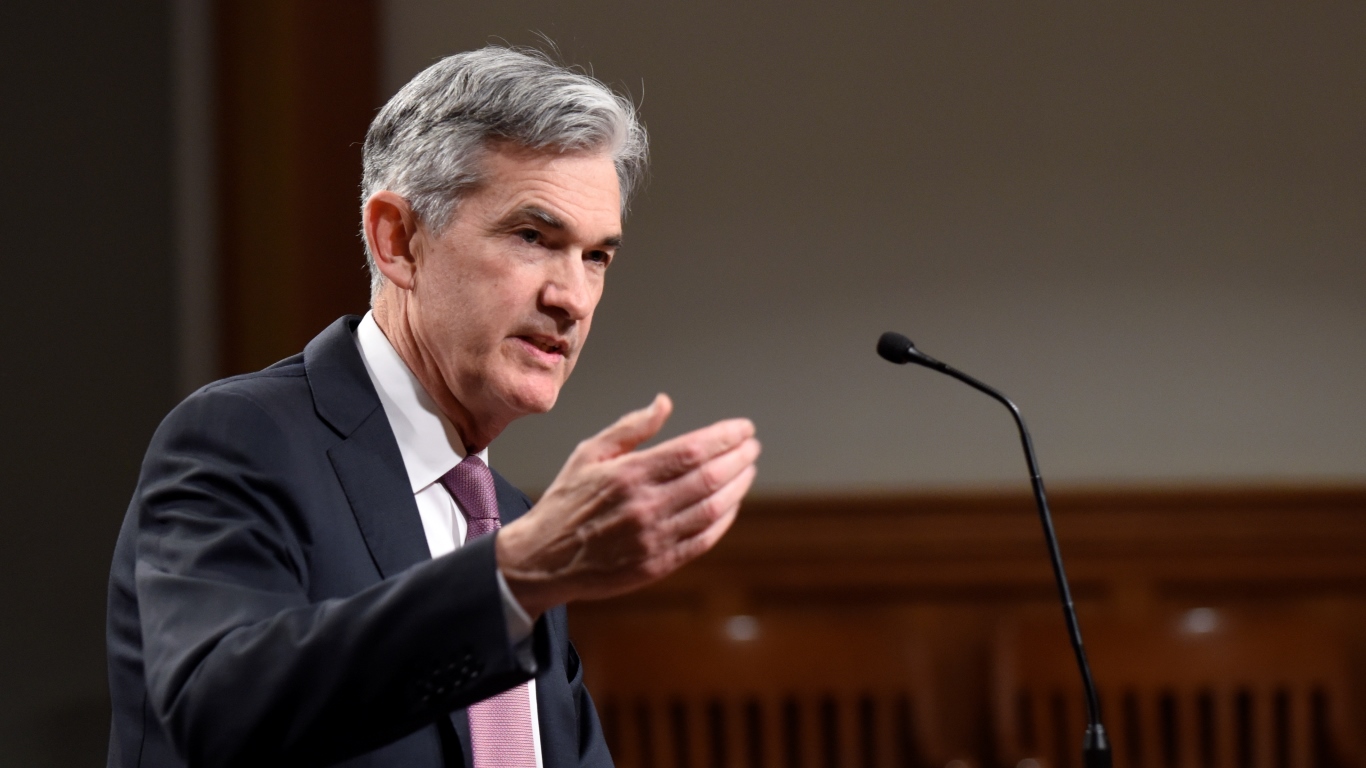
Peter Schiff told listeners of The Peter Schiff Show Podcast that the sharp pullback in gold is an entry point, not an exit. He flagged a roughly $50 drop on Friday and another $18 at the time of recording, putting spot gold near $4,135 and silver just over $64 after sliding more than a dollar. The trigger, in his view, was incoming Fed Chair Kevin Warsh sounding hawkish on inflation. Schiff is not buying it.
“I don’t believe any of this tough talk. It’s easy to talk tough. The hard part is to walk the walk. It’s not going to happen,” he said. His takeaway for investors: “The fact that gold has sold off again is just an opportunity for people to buy more. The strength in the dollar is the same thing.”
What the price action actually shows
The bullion proxy most retail investors watch, the SPDR Gold Shares ETF (NYSEARCA: GLD), closed at $387.12 on June 18. The fund is down 5.92% over the past month and 2.32% year to date. That captures the kind of weakness Schiff is pointing to. Step back, and the longer picture is the one bulls keep emphasizing: up 24.77% over the past year, 134.72% over five years, and 214.2% over the past decade.
Why Schiff thinks Warsh cannot follow through
Schiff’s argument rests on a simple claim.
Warsh is structurally boxed in the same way the Bank of Japan is. And the policy data so far supports the skeptic’s case. The Fed has already cut its target range to 3.75% as of June 21, 2026. That’s down from a peak of 4.5% in September 2025. Even with that easing, Schiff notes the Fed’s balance sheet expanded by another $11 billion in the prior week while Warsh was already in the chair. You can review the weekly H.4.1 release directly at the Federal Reserve.
Inflation has not cooperated either. Core PCE, the Fed’s preferred gauge, sits at 129.63 as of April 1, 2026, with the index climbing every month over the past year. Headline CPI is at 335.12 for May 2026, up 0.5% month over month. M2 money supply hit $22.80 trillion in April 2026, up from $21.94 trillion a year earlier. Schiff’s read is that any near-term rate hike, even a couple of quarter points, would be “spitting in the ocean” against that backdrop.
The Japan parallel
Schiff repeatedly compared Warsh to the Bank of Japan.
He’s arguing the Fed cannot meaningfully shrink its balance sheet without breaking the bond market. The dollar is currently fetching about 161.74 yen, near generational highs. The 10-year Treasury yield sits at 4.49% as of June 17, 2026, in the upper end of its 12-month range of 3.97% to 4.67%. Schiff’s view is that higher yields tighten conditions on their own, which makes aggressive Fed action even less likely.
What to keep watching
Investors weighing Schiff’s framework can monitor three things: the Fed’s weekly balance sheet release, the trajectory of core PCE relative to the 2% target, and whether Warsh’s rhetoric translates into actual reserve drainage. Goldman Sachs Asset Management’s 2026 outlook acknowledges that “Federal Reserve policymakers appear more finely balanced between dovish and hawkish stances”, and that real assets may “improve overall portfolio performance.” That is a more measured version of the same point Schiff is making in stronger terms.
Whether or not you share his conviction, the gap between Fed rhetoric and Fed balance sheet behavior is a number you can verify weekly. That gap, in Schiff’s framework, is the reason he treats every pullback in gold as a discount rather than a top.
Contact [email protected] for any questions or corrections.
Ian Cooper is a veteran market analyst and investment strategist with more than 20 years of experience covering stocks, commodities, and macro trends. Since 1999, he has helped investors identify market opportunities using a blend of technical analysis, fundamental research, and market sentiment.
He is the creator of the ADD News Flow Strategy, which focuses on trading market reactions to major news events and investor psychology. Cooper was also among the analysts who warned about the 2008 financial crisis and major financial institution collapses ahead of the broader market.
Before joining 247 Wall St., Cooper wrote extensively for InvestorPlace and other financial publications, covering market trends, trading strategies, and investment opportunities.