Did Oracle Need To Fire 21,000 Because It Is In Trouble?
Badly damaged tech company Oracle (NASDAQ: ORCL | ORCL Price Prediction) fired 21,000 people. It said they were being replaced by AI. It is 13% of the company’s total workforce. Oracle took a charge of $1.84 billion. In its 10K,…

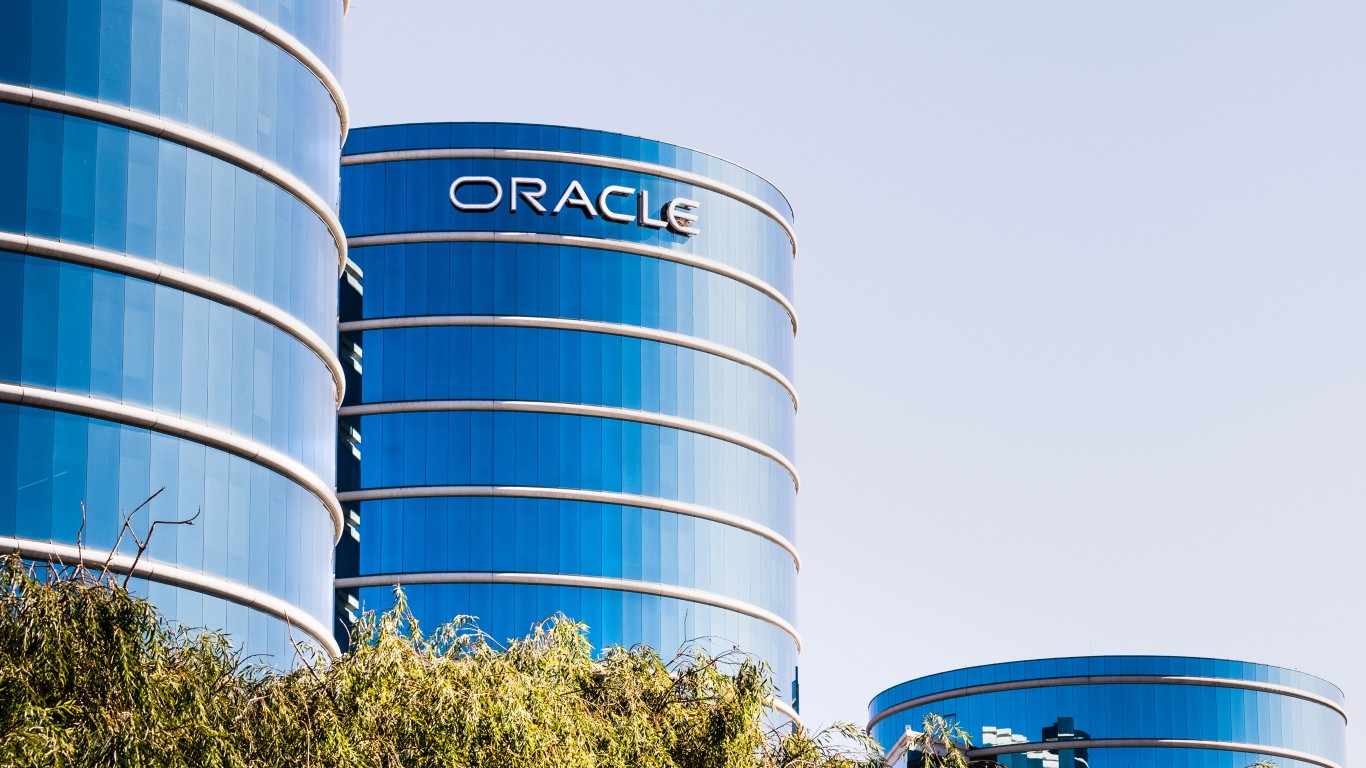
Badly damaged tech company Oracle (NASDAQ: ORCL | ORCL Price Prediction) fired 21,000 people. It said they were being replaced by AI. It is 13% of the company’s total workforce. Oracle took a charge of $1.84 billion.
In its 10K, the company explained “… improve operational efficiencies, including through the adoption and integration of AI technologies…” But is that the case? More and more investors are skeptical of this explanation. What if the company is just in financial trouble?
Financial trouble is a real issue. Oracle’s stock is down 14% in the last year. The S&P is 25% higher.
Earlier this month, investors expressed worry about Oracle’s data center expenditures; In its fourth fiscal quarter, it spent $16.5 billion on these facilities. That was much higher than expectations. Free cash flow was a negative $1.87 billion. As Axios pointed out, this brings “the sum of the cash it has burned over the last year to roughly $23.7 billion.”
Another fear is that Oracle has raised about $43 billion in debt and equity. It strongly hinted that it would raise nearly as much in the next year.
Here is the fact– Oracle is not Microsoft (NASDAQ: MSFT), Alphabet (NASDAQ: GOOG), Anthropic, or OpenAI. It wants to play with the big boys, but doesn’t have the money to do so. It will, therefore, pay dearly for each dollar it raises. It is also not in the conversation about the companies that may benefit massively from AI as adoption rises, if it does.
Oracle also operates in a sector where investors worry that large companies are cutting back on AI use because they are not getting results. Oracle will have trouble waiting for that out. And, to wait for it, it will need to be part of an investment in AI data hyperscalers, which will, according to McKinsey, spend over $5 trillion on infrastructure in a little over three years.
Oracle can’t be a major player in enterprise AI, either. That means that the layoffs at the company will keep coming
Contact [email protected] for any questions or corrections.
Douglas A. McIntyre is the co-founder, chief executive officer and editor in chief of 24/7 Wall St. and 24/7 Tempo. He has held these jobs since 2006.
McIntyre has written thousands of articles for 24/7 Wall St. He is an expert on corporate finance, the automotive industry, media companies and international finance. He has edited articles on national demographics, sports, personal income and travel.
His work has been quoted or mentioned in The New York Times, The Wall Street Journal, Los Angeles Times, The Washington Post, NBC News, Time, The New Yorker, HuffPost USA Today, Business Insider, Yahoo, AOL, MarketWatch, The Atlantic, Bloomberg, New York Post, Chicago Tribune, Forbes, The Guardian and many other major publications. McIntyre has been a guest on CNBC, the BBC and television and radio stations across the country.
A magna cum laude graduate of Harvard College, McIntyre also was president of The Harvard Advocate. Founded in 1866, the Advocate is the oldest college publication in the United States.
TheStreet.com, Comps.com and Edgar Online are some of the public companies for which McIntyre served on the board of directors. He was a Vicinity Corporation board member when the company was sold to Microsoft in 2002. He served on the audit committees of some of these companies.
McIntyre has been the CEO of FutureSource, a provider of trading terminals and news to commodities and futures traders. He was president of Switchboard, the online phone directory company. He served as chairman and CEO of On2 Technologies, the video compression company that provided video compression software for Adobe’s Flash. Google bought On2 in 2009.