SpaceX Rises After Three Brutal Days as Susquehanna Sees “Quite a Bit of Risk” in SPCX Stock
SpaceX (NASDAQ:SPCX | SPCX Price Prediction) stock has endured a rough stretch since its highly anticipated public debut. After closing at $211.39 on June 16, SPCX stock fell to $191.82 on June 17, then slipped to $185 on June 18…


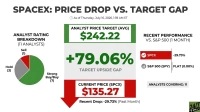
SpaceX (NASDAQ:SPCX | SPCX Price Prediction) stock has endured a rough stretch since its highly anticipated public debut. After closing at $211.39 on June 16, SPCX stock fell to $191.82 on June 17, then slipped to $185 on June 18 before plunging to $154.60 on June 22.
SpaceX stock is trading modestly higher today, but the three-session selloff erased a significant portion of the gains that followed SpaceX’s June IPO. The sharp decline appears to reflect a combination of profit-taking, valuation concerns, and growing debate about how much future growth is already priced into SPCX shares.
At the same time, Wall Street is far from uniformly bearish on SpaceX. The company continues to command attention thanks to its dominant position in rocket launches, the growth potential of Starlink, and ambitious plans that could reshape multiple industries.
SPCX Stock Loses Altitude After Strong Debut
The recent decline in SPCX stock comes after an extraordinary run that briefly pushed SpaceX’s valuation into rarefied territory. Even after the selloff, SpaceX remains one of the most closely watched growth stories in the market.
Some investors appear to be reassessing the premium valuation attached to SpaceX following its debut. Growth stocks can experience sharp swings when expectations are elevated, and SpaceX stock has quickly become a focal point for both the bulls and the bears.
Susquehanna Sees Upside but Remains Cautious
Susquehanna initiated coverage of SpaceX stock with a Neutral rating and a $170 price target. The firm expects SpaceX to grow revenue by 81% annually and EBITDA by 76% annually through 2028, highlighting the company’s impressive long-term growth profile.
According to Susquehanna, SpaceX benefits from a dominant position in rocket launch services and from Starlink’s expanding global connectivity platform. Those advantages help support the bullish thesis surrounding SpaceX and its ability to generate substantial growth in the years ahead.
However, Susquehanna stopped short of recommending SPCX stock. The analyst stated that the valuation requires premium multiples based on aggressive growth assumptions and warned that a wide range of outcomes remains possible.
Bull Case Centers on Starlink and Launch Leadership
SpaceX continues to lead the commercial launch industry through its reusable rocket technology and extensive launch cadence. That competitive advantage has helped the company establish a position that few rivals can currently match.
Meanwhile, Starlink has emerged as a major growth engine for SpaceX. The satellite internet business serves customers across a large number of countries and gives SpaceX exposure to a potentially enormous global connectivity market.
The bullish outlook also includes future opportunities tied to Starship and other emerging initiatives. If SpaceX successfully executes on those projects, the company’s long-term revenue opportunity could expand considerably.
Waiting for a Better Entry Point
The central concern raised by Susquehanna is that expectations may already be exceptionally high. Even strong execution may not guarantee attractive returns if SpaceX stock remains priced for near-perfect outcomes.
SpaceX also operates in several markets that remain relatively unproven, including initiatives tied to artificial intelligence and other emerging technologies. Those opportunities could become major growth drivers, but they also introduce uncertainty into long-term forecasts.
Investors can watch for whether SpaceX continues to deliver strong operational progress while supporting its premium valuation. Watch for whether future updates on Starlink growth, Starship development, and profitability help strengthen the case for SPCX stock.
For now, the bulls can point to SpaceX’s leadership positions and impressive growth forecasts, while the bears can point to valuation risk and execution challenges. Cautious investors might consider keeping their position sizes modest until SpaceX demonstrates that its ambitious growth targets can translate into sustained shareholder value.
Contact [email protected] for any questions or corrections.
David Moadel is financial writer specializing in stocks, ETFs, options, precious metals, and Bitcoin. David has written well over 1,000 articles for leading online publications, helping investors understand markets, income strategies, and risk.His work has appeared in The Motley Fool, InvestorPlace, U.S. News & World Report, TipRanks, ValueWalk, Benzinga, Market Realist, TalkMarkets, Finmasters, 24/7 Wall St., and others.With a master’s degree in education, David has taught at the elementary, high school, and college levels. That teaching background shapes his writing style: clear, educational, and practical. David has also built a loyal social-media audience by providing trustworthy financial content on YouTube, X/Twitter, and StockTwits.