Kevin Warsh’s First Fed Meetings Are Handing Trump the One Answer He Does Not Want
When Powell was the Fed Chair, Trump was consistently vocal about how much he wanted interest rate cuts, no matter what was on the horizon. His hand-picked candidate, Kevin Warsh, is now the Chairman, but even he has not been…

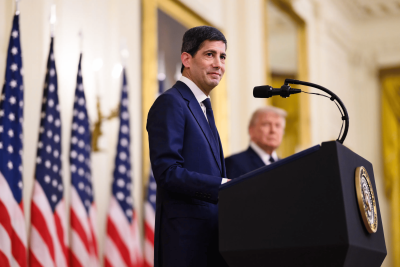
When Powell was the Fed Chair, Trump was consistently vocal about how much he wanted interest rate cuts, no matter what was on the horizon. His hand-picked candidate, Kevin Warsh, is now the Chairman, but even he has not been able to give Trump what he wants.
Warsh was sworn in on 22 May 2026 after a 55-45 Senate vote, and this set the backdrop that easy money was coming. The decision on 17 June 2026 shattered these expectations as the Committee kept the target range at 3.5-3.75%, and 9 out of 19 officials penciled one hike by December.
Trump has not been as vocal about interest rate cuts, likely because Warsh was his pick. Moreover, higher oil prices plus a war-ceasefire-war loop in the Middle East validated the Fed’s decision to keep rates high.
Trump is unlikely to be happy with the Fed anytime soon
Warsh had comparatively little to say, and he told reporters: “I can’t give you any forward guidance… the good news is we meet again in six weeks.”
That good news could quickly morph into worse news if inflation keeps rising. The June inflation report is coming out on Tuesday, July 14, 2026, with the Fed meeting two weeks later. Fed officials have not made any surprising decisions and have been following broader expectations, which themselves are driven by data.
If June inflation comes in higher again, Warsh will be unable to cut. Oil prices have declined sharply in June, but it might take months for this to translate into notably lower gas prices nationwide before it can tug back inflation’s momentum.
That means Trump won’t be getting what he wants anytime soon.
Rate cuts are likely inevitable long-term
Even if inflation remains hot in the summer, lower crude oil prices will lead to lower numbers. Iranian oil is flooding into the market to the tune of 150 million barrels. Gulf production is restarting in the coming months, though stuck ships are yet to leave at once. Only a few dozen ships are still transiting the strait daily.
However, if Trump can bite the Iran bullet politically and make the ceasefire stick, oil prices will inevitably go down and translate into lower inflation. Inflation must break decisively below 3% for the Committee to reverse course, and that’s not in its own forecast yet. The Summary of Economic Projections (or SEP) median is already above today’s rate for year-end 2026.
Even optimistic private forecasts (Citi) put the first trim in Q4 2026. More forecasters have moved their baseline to 2027 after the June meeting. Regardless, rate cuts are coming, albeit probably not as fast as Trump would like.
The best-case scenario for Trump
There are only three meetings before voters go to the polls. The July meeting is too soon for new data to change minds, and the October meeting sits in an informal “quiet zone” when the Fed avoids rocking the boat as elections are close.
Realistically speaking, the fastest interest rate may come in September. The Fed may go for interest rate cuts in October if inflation goes down much faster than expected, but it’s going to be controversial ahead of the midterms. On FedWatch, 50% are actually expecting a 25bps hike in September to a 3.75-4% range. Only 33.1% expect interest rates to hold.
That September range is what traders believe the Fed will settle onto for over a year, but that’s highly unlikely since expectations swing all the time due to economic reports. Still, you can draw your conclusions about how lucky Trump would have to be to get down to his preferred 1%-or-lower level.
Contact [email protected] for any questions or corrections.
Omor Ibne Ehsan is a writer at 24/7 Wall St. He is a self-taught investor with a focus on growth, cyclical, and dividend equities that have strong fundamentals, value, and long-term potential. He also has an interest in high-risk, high-reward investments such as penny stocks.