Trump Accounts Just Went Live. Here’s Why You Must Open One Today
For generations, the stock market has quietly done something no savings account has ever been able to match — it has turned patience into wealth. Despite recessions, wars, inflation, and market crashes, the S&P 500 has delivered roughly a 10%…

For generations, the stock market has quietly done something no savings account has ever been able to match — it has turned patience into wealth. Despite recessions, wars, inflation, and market crashes, the S&P 500 has delivered roughly a 10% average annual return over the long run. That simple fact has helped millions of Americans build retirement nest eggs that would have been impossible through saving alone.
Now, for the first time, millions of children have an opportunity to begin that journey at birth thanks to the launch of Trump Accounts, which officially began accepting contributions on July 4.
Time Is the Greatest Investment You Can Own
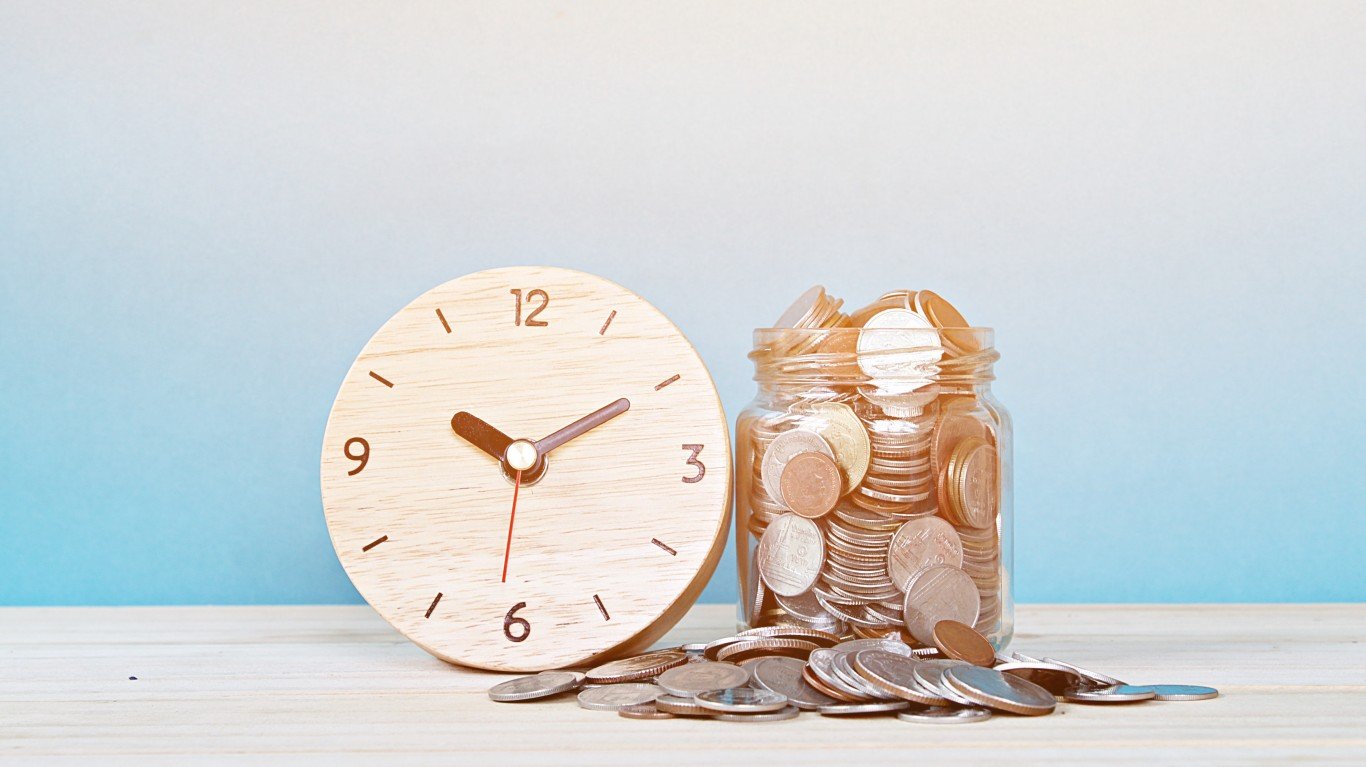
The most powerful investing tool that exists is time. The earlier money enters the market, the longer compound returns have to work. Historically, the S&P 500 has returned about 10% annually before inflation over long periods. A single dollar invested decades ago has become many times larger — not because of clever stock picking, but because earnings generated more earnings year after year.
Trump Accounts were created to harness exactly that principle. Under the program, every eligible child born between Jan. 1, 2025, and Dec. 31, 2028 receives a $1,000 federal contribution after an account is opened. Parents remain custodians until the child reaches age 18. Anyone may generally contribute up to $5,000 annually, while charitable organizations and governments can contribute beyond those limits under certain circumstances. The accounts are invested in a low-cost S&P 500 index fund and eventually transition into a traditional IRA.
Here’s what the math says using a 10% annual return:
| Investment | Value at Age 18 | Value at Age 62* |
| $1,000 one-time deposit | ~$5,600 | ~$372,000 |
| $1,000 seed contribution + $5,000 contributed annually (beginning of year) for 18 years | ~$256,400 | ~$17.0 million |
*Assumes no additional contributions after age 18 and continued 10% annual compound returns through age 62.
Those aren’t guarantees — markets fluctuate — but they illustrate why starting early matters far more than starting big.
Private America Is Joining the Effort
The federal contribution is only the beginning. Billionaire Michael Dell and his wife, Susan, pledged $6.25 billion to provide additional funding for children age 10 or under before Jan. 1, 2025, who live in qualifying lower-income ZIP codes. Eligible children can receive a $250 contribution that otherwise would not have existed.
Meanwhile, SpaceX (NASDAQ:SPCX | SPCX Price Prediction) president Gwynne Shotwell announced that she and her husband would donate 2 million shares of SpaceX stock to children between ages 11 and 17 living in lower-income communities who have Trump Accounts.
Corporate America has also embraced the program. Among the companies announcing matching contributions or similar programs are:
| Company | Program |
| Bank of America (NYSE:BAC) | Matches the $1,000 federal contribution for eligible employees’ children |
| Broadcom (NASDAQ:AVGO) | Employee matching program |
| Intel (NASDAQ:INTC) | Employee contribution program |
| Coinbase (NASDAQ:COIN) | Matching contributions |
| Uber Technologies (NYSE:UBER) | Employee benefit contribution |
| Visa (NYSE:V) | Employee matching program, credit card reward points contributions |
In total, 88 companies and individuals have committed funding to the initiative, with rapper Nicki Minaj pledged between $150,000 and $300,000 to help fund Trump Accounts for the children of her fans.
A First Step Into the Stock Market
Granted, investing always carries risk. Stocks don’t rise every year, and future returns won’t perfectly match the past. But the greatest risk for many families has never been market volatility. It’s never getting invested at all.
For millions of Americans, a Trump Account will represent the first stock market investment anyone in their family has ever owned. That changes more than a brokerage statement — it creates ownership in America’s largest companies from the very beginning of life.
In the end, that’s the program’s greatest strength. A child who starts with $1,000 could someday retire with hundreds of thousands of dollars if history repeats itself. Add annual family contributions, employer matches, philanthropic gifts, or donations from organizations, and the numbers become significantly larger.
Key Takeaway
Trump Accounts officially launched on Independence Day, giving millions of American families a new way to begin building generational wealth.
The federal government’s $1,000 seed contribution is valuable by itself. Combined with decades of compounding, employer matches, charitable donations, and family contributions, it becomes something far more powerful: an opportunity to introduce an entire generation to long-term investing.
For eligible families, opening an account isn’t just about claiming free money. It’s about giving time — the most valuable asset in investing — a chance to do what it has done for generations.
Contact [email protected] for any questions or corrections.
After two decades of patrolling the dark corners of suburbia as a police officer, Rich Duprey hung up his badge and gun to begin writing full time about stocks and investing. For the past 20 years, he’s been cruising the markets looking for companies to lock up as long-term holdings in a portfolio while writing extensively on the broad sectors of consumer goods, technology, and industrials. Because his experience isn’t from the typical financial analyst track, Rich is able to break down complex topics into understandable and useful action points for the average investor. His writings have appeared on The Motley Fool, InvestorPlace, Yahoo! Finance, Money Morning, and, of course, 24/7 Wall St. He has been featured in both U.S. and international publications, including MarketWatch, Financial Times, Forbes, Fast Company, and USA Today.