$50 Billion Is About to Flood Into Defense Stocks: Here’s Who Cashes In
NATO allies just converted a years-old spending pledge into a wave of purchase orders, and one defense analyst has a specific test for separating the stocks that will actually see the cash from those chasing headlines.

Jerry McGinn, who runs the Center for the Industrial Base at CSIS, went on CNBC with a number that will define the defense trade for the rest of the year. Roughly $50 billion in deal announcements have come out of the NATO summit in recent days, as allies convert last year’s pledge to reach 5% of GDP defense spending by 2030 into actual purchase orders. Canada, Germany, and Norway are lining up behind U.S. primes. McGinn’s message to investors was blunt about what to trust and what to discount.
The $50 Billion in Fresh Deals
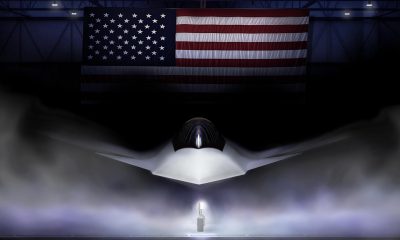
The headline transaction is NATO buying the Triton unmanned surveillance aircraft from Northrop Grumman, alongside deals featuring European firms like Saab on ISR systems (Saab trades in Stockholm, not on a U.S. exchange, so American investors get the theme through the primes). Northrop Grumman (NYSE:NOC | NOC Price Prediction) already booked $400 million in Triton awards in Q1 and is expanding B-21 production capacity with the Air Force. Its backlog stands at $95.6 billion, and management reaffirmed FY26 sales of $43.5 to $44.0 billion.
The stock is down 7.5% year to date, which tells you the market has not fully priced the NATO order book. Analyst consensus target is $689.33, against a current price near $541, with shares trading at a forward P/E of 19x.
The Commitment-to-Contract Gap Investors Have to Watch
McGinn’s investor test is the whole ballgame. “What investors need to be looking at is how does this translate into actual real business contracts?” He flagged three hurdles. U.S. congressional approval comes first, then European parliamentary approval, then actual contracting. Pledges are cheap. Contracts show up in backlog.
Lockheed Martin (NYSE:LMT) is the clearest example of pledge-to-paper conversion. In its Q1 filing, CEO Jim Taiclet said the company signed framework agreements for advanced Patriot Missile, THAAD, and PrSM that will support raising production rates to 3 to 4 times current levels. That is a multi-year purchase commitment. Lockheed’s backlog closed 2025 at a record $194 billion. General Dynamics (NYSE:GD) shows the same conversion, with a consolidated Q1 book-to-bill of 2-to-1 and total estimated contract value climbing to $188.4 billion from $178.9 billion. GD shares are up 9.75% YTD and 23% over the past year, so much of the good news is already in.
New Money Spigots and Where Munitions Cash Lands
The financing side is where things get interesting. McGinn pointed to Canadian Prime Minister Carney’s newly announced defense bank and the expanded U.S. loan authority as tools designed to attract private capital to the industrial base. The Pentagon’s FY2027 request backs this up with real dollars. The DoW budget book earmarks $20.2 billion for the Defense Credit Account and over $100 billion in Defense Industrial Base investments, including $72.3 billion for Industrial Base Analysis and Sustainment and Defense Production Act Title III. That is munitions and hypersonics money.
Which brings you to Kratos Defense & Security Solutions (NASDAQ:KTOS), the pure-play beneficiary. CEO Eric DeMarco told investors on the Q1 call that “Fiscal 2027 National Security spend is currently projected to be $1.5 trillion, an approximate $400 billion increase above Fiscal Year 2026” and that the Department plans to spend the entire $156 billion Reconciliation Bill defense funding in fiscal 2026, covering Kratos’ Valkyrie CCA, solid rocket motors, and hypersonics.
Kratos beat Q1 EPS estimates by 23%, raised FY26 revenue guidance to $1.70-$1.76 billion, and announced a 100,000-square-foot expansion in Oklahoma City to boost Valkyrie production. The catch is valuation. The stock trades at a forward P/E of 62x and is down 39% YTD from its highs.
McGinn’s framework is the right one. Watch backlogs. Congressional and parliamentary votes come first, then contracts, then revenue. That sequence decides whether $50 billion of headlines becomes real EPS.
Contact [email protected] for any questions or corrections.
Omor Ibne Ehsan is a writer at 24/7 Wall St. He is a self-taught investor with a focus on growth, cyclical, and dividend equities that have strong fundamentals, value, and long-term potential. He also has an interest in high-risk, high-reward investments such as penny stocks.