Apple Skipped the AI Arms Race – Now Its Strategy Looks Like Pure Genius
Apple (NASDAQ:AAPL) was planning to end its exclusive ChatGPT partnership and open Siri to rival AI assistants in iOS 27 ahead of WWDC 2026, according to Bloomberg. WWDC came and went on June 8, and while Siri AI powered by…

This post may contain links from our sponsors and affiliates, and Flywheel Publishing may receive compensation for actions taken through them.
Apple (NASDAQ:AAPL | AAPL Price Prediction) was planning to end its exclusive ChatGPT partnership and open Siri to rival AI assistants in iOS 27 ahead of WWDC 2026, according to Bloomberg’s Mark Gurman. That report flipped Wall Street’s narrative overnight. What had looked like corporate hesitation suddenly appeared as a masterstroke.
The Restrained Approach That Wasn’t Lazy at All
Earlier this year, Apple’s deliberate restraint came into sharper focus: minimal capital spending, heavy reliance on third-party models, and a laser focus on on-device processing. The contrast with peers could not be more stark. Following the Q1 2026 earnings cycle, tech giants like Alphabet (NASDAQ:GOOGL) raised their full-year capex guidance to $180 billion to $190 billion after initially guiding to $175 billion to $185 billion, while Amazon (NASDAQ:AMZN), Microsoft (NASDAQ:MSFT), and Meta Platforms (NASDAQ:META) each committed to similarly historic infrastructure outlays.
Apple is moving in a fundamentally different direction. Rather than pouring cash into data centers, the company authorized a fresh $100 billion share repurchase program alongside its fiscal Q2 2026 results and raised its quarterly dividend 4% to $0.27 per share. Apple spent roughly $4.3 billion on capital expenditures across the first half of its fiscal year, a fraction of what any single hyperscaler spends in a quarter. Research and development spending surged 33% year over year to $11.42 billion in that quarter, signaling genuine investment in AI capability without the crushing hardware overhead bearing down on rivals. Total revenue reached a March-quarter record of $111.2 billion, up 17% year over year, and services revenue hit an all-time high of $30.98 billion.
The financial momentum carried into the June quarter. Apple’s fiscal Q3 2026 results set new June-quarter records across the board: revenue reached $109.4 billion, up 16% year over year, with iPhone revenue surging 22% to $54.3 billion and services revenue hitting $30.7 billion. The company’s installed base of active devices reached an all-time high across all major product categories and geographic segments, surpassing 2.5 billion devices. That scale of distribution is exactly what makes Apple’s position in AI so difficult for rivals to replicate.
At the time, many analysts read the strategy as defensive. In retrospect, it reveals something far more aggressive. Apple has no interest in winning the model-training arms race. Instead, it is methodically building ownership of the distribution layer that every AI company needs to reach consumers. Turning its massive installed base into a high-margin revenue engine, without shouldering the infrastructure costs its peers face, is the central bet.
Siri Becomes the World’s Largest AI Marketplace
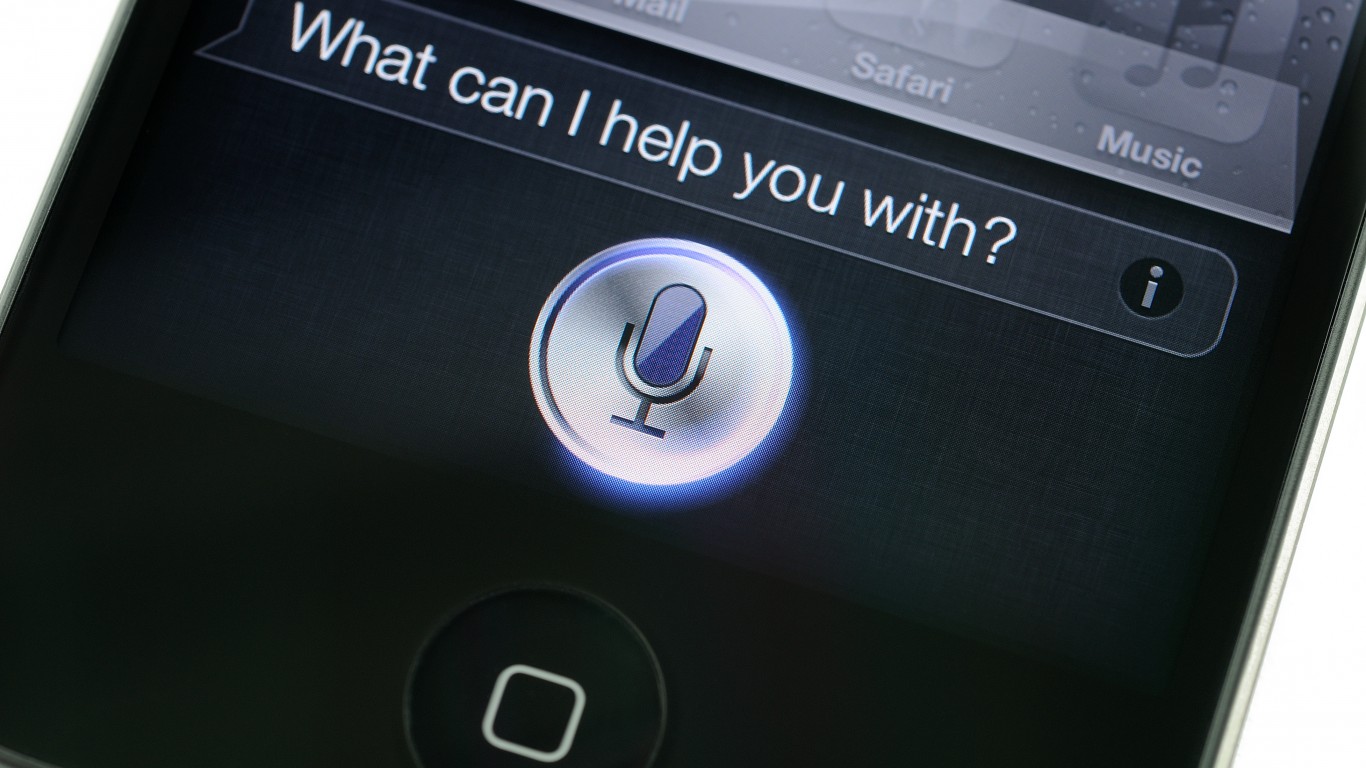
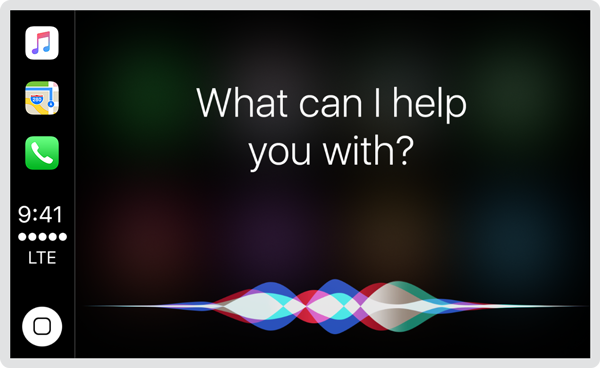
The centerpiece of the new plan is a system Apple calls “Extensions” inside iOS 27. Users would see a simple toggle menu in Settings listing every AI app installed on their device, including Claude, Gemini, Grok, Perplexity, Copilot, and whatever emerges next. Activating one plugs it directly into Siri, turning the assistant into a universal front door rather than a single-vendor gatekeeper. The framework is also designed to extend beyond voice queries: third-party AI providers could power Writing Tools and Image Playground, giving them access to some of Apple’s most-used native features.
WWDC 2026, which took place on June 8, delivered only part of the story. Apple officially unveiled Siri AI, now powered by Google’s Gemini and housed in a new standalone app, with Dynamic Island integration confirmed. The Siri Extensions framework, however, was conspicuously absent from the keynote — and from the final iOS 27 release that shipped publicly on September 14. According to reporting from Bloomberg’s Mark Gurman and analysis from The Next Web, the framework’s code was found active in the iOS 27 developer beta, with a settings panel and a dedicated App Store section both built but toggled off. The reasons appear to include ongoing EU regulatory friction (Siri AI is not available at launch in the EU at all, due to regulatory constraints), and Apple’s preference to let its native Siri AI prove itself before opening the floodgates. The architecture is built; the public rollout is pending.
The financial logic behind Extensions remains compelling regardless of timing. Apple already collects a 30% cut on subscriptions routed through the App Store. Multiply that across every AI company competing for mindshare on over 2.5 billion active Apple devices, and the revenue potential is enormous. Competitors pour tens of billions into data centers and GPUs. Apple spends almost nothing on the same infrastructure, yet still gets paid at the point of distribution.
The Apple vs. OpenAI Complication
A significant development since the original Extensions reporting is the collapse of Apple’s relationship with OpenAI into open litigation. On July 10, 2026, Apple filed a trade secret lawsuit against OpenAI in the U.S. District Court for the Northern District of California, alleging OpenAI orchestrated a coordinated scheme to extract confidential hardware information from former Apple employees. The complaint accuses OpenAI of coaching departing Apple staff on how to evade security processes and of circulating internal Apple documents to new hires. Apple is seeking damages, injunctions, and an order forcing OpenAI to stop using the alleged stolen secrets. OpenAI has pushed back, arguing that Apple’s own security and offboarding practices undermine the legal threshold for trade secret protection. Oral argument on the preliminary injunction motion is set for October 1, 2026.
The lawsuit reframes what the article originally described as a “threat of legal action from OpenAI.” The legal pressure runs in the opposite direction: it is Apple pressing the case. That context matters for the Extensions story, since ChatGPT remains integrated into Apple Intelligence even as the two companies litigate. It also underscores just how fractured the AI partnership landscape has become, and why Apple’s own Siri AI, powered by Gemini rather than OpenAI’s models, is now the default engine.
Beyond Text: On-Screen Context and Visual Intelligence
The technical evolution of iOS 27 reaches well past voice commands. Siri is designed to use local processing to securely evaluate user data across native applications, enabling multi-step, cross-app actions such as retrieving event details from Messages and composing a calendar update in a single, uninterrupted flow. A dedicated Visual Intelligence mode within the camera app adds real-time analysis of physical environments, reading product labels or extracting appointment details directly into native software without transmitting data to the cloud. These features shipped with iOS 27 on September 14, arriving pre-installed on the iPhone 18 Pro, iPhone 18 Pro Max, and the new foldable iPhone Duo.
The Hybrid Model That Solves Industry Problems
Apple is deepening its technical partnership with Google’s Gemini models to power the more capable native Siri experience confirmed at WWDC. That arrangement sits alongside the Extensions marketplace rather than replacing it. On the hardware side, the company continues investing quietly in its own silicon. Future M-series chips are expected to run pruned frontier models locally at speeds of 30 to 60 tokens per second, keeping everyday tasks like summarization, email drafting, and basic reasoning on the device, private, instant, and free. More complex queries can route to whichever cloud model the user prefers.
This hybrid architecture sidesteps the two biggest headaches facing the rest of the industry: skyrocketing energy costs and thin near-term margins. Hyperscalers are wrestling with depreciating hardware and uncertain returns on massive buildouts. Apple treats foundational model infrastructure as a commodity to be licensed, not owned. Its real moat remains the operating system, the hardware ecosystem, the 2.5-billion-device distribution network, and the 30% toll it collects at the point of sale.
Leadership Transition Now Complete
The strategic picture gained additional dimension when Apple announced in April 2026 that Tim Cook would step down as CEO, with hardware engineering chief John Ternus succeeding him. That transition took effect on September 1, 2026. Cook, who led the company for 15 years, became executive chairman. Ternus, 51, joined Apple’s board of directors on the same day he took over as CEO. The board also named Arthur Levinson as lead independent director, effective the same date. The handover places a career-long Apple insider and silicon-focused engineer at the helm precisely as the company’s competitive edge in on-device AI processing becomes central to its long-term differentiation.
WWDC 2026 was Cook’s final developer keynote as CEO, and he used the occasion to affirm that the Google Gemini collaboration powering Siri “is going well.” Ternus now leads the company into its first full product cycle as CEO, one defined by hardware and software integration around AI silicon.
Privacy and Silicon Power Give Apple the Edge
For shareholders, the strength of the strategy lies in its defensibility. On-device processing keeps sensitive user data away from the cloud, reinforcing Apple’s long-standing privacy brand. The Extensions model lets the company capture upside from the very innovation it chooses not to fund internally. Analysts note this approach could generate meaningful, high-margin AI revenue far sooner than the capital-heavy plans of competitors. The acknowledged risk is that reliance on third-party licenses, particularly Gemini, could pressure ecosystem margins and create vendor-dependency exposure if Apple’s own local model infrastructure falls behind the pace of external AI development.
Key Takeaway
Apple’s strategy is distinctive precisely because it refuses to play the same game as its rivals. By staying asset-light, embracing an open Extensions model, and monetizing through its unmatched ecosystem, the company has positioned itself to generate profitable AI returns without the capital burden its peers continue to shoulder. Where others are committing hundreds of billions to infrastructure with uncertain return horizons, Apple is building the toll road.
The full iOS 27 Extensions rollout has yet to materialize as a public feature, even after the OS shipped on September 14. But the code is there, the financial logic is intact, and the Ternus era gives the strategy a committed steward. Apple’s deliberate restraint today remains the foundation for a very large bet on what comes next.
Editor’s note: This article has been updated to reflect that iOS 27 publicly launched on September 14, 2026 without the Extensions framework as a live feature; that Apple’s fiscal Q3 2026 results showed revenue of $109.4 billion and services revenue of $30.7 billion, both June-quarter records; that Apple filed a trade secret lawsuit against OpenAI in July 2026 (the original framing had this reversed); that the CEO transition to John Ternus took effect on September 1, 2026; and that Ternus is 51, not 50.
Contact [email protected] for any questions or corrections.
After two decades of patrolling the dark corners of suburbia as a police officer, Rich Duprey hung up his badge and gun to begin writing full time about stocks and investing. For the past 20 years, he’s been cruising the markets looking for companies to lock up as long-term holdings in a portfolio while writing extensively on the broad sectors of consumer goods, technology, and industrials. Because his experience isn’t from the typical financial analyst track, Rich is able to break down complex topics into understandable and useful action points for the average investor. His writings have appeared on The Motley Fool, InvestorPlace, Yahoo! Finance, Money Morning, and, of course, 24/7 Wall St. He has been featured in both U.S. and international publications, including MarketWatch, Financial Times, Forbes, Fast Company, and USA Today.