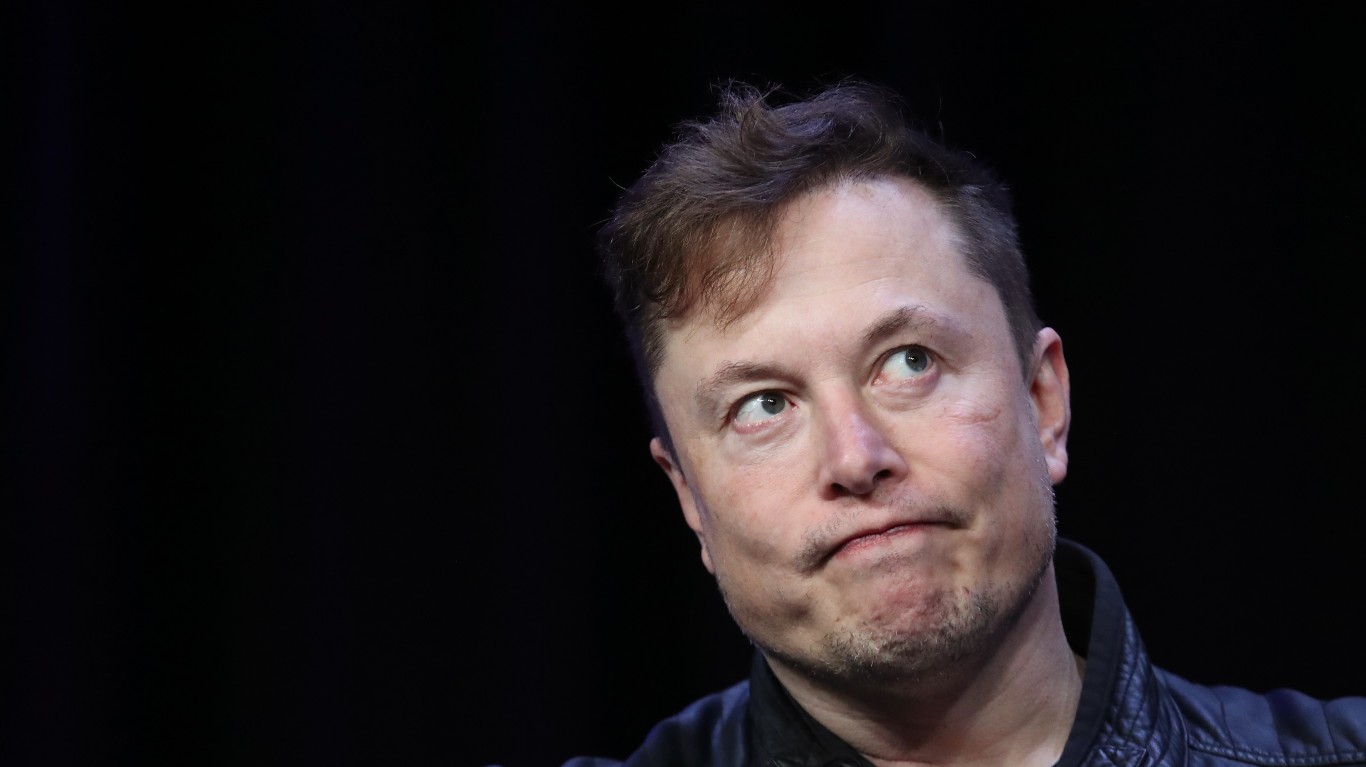
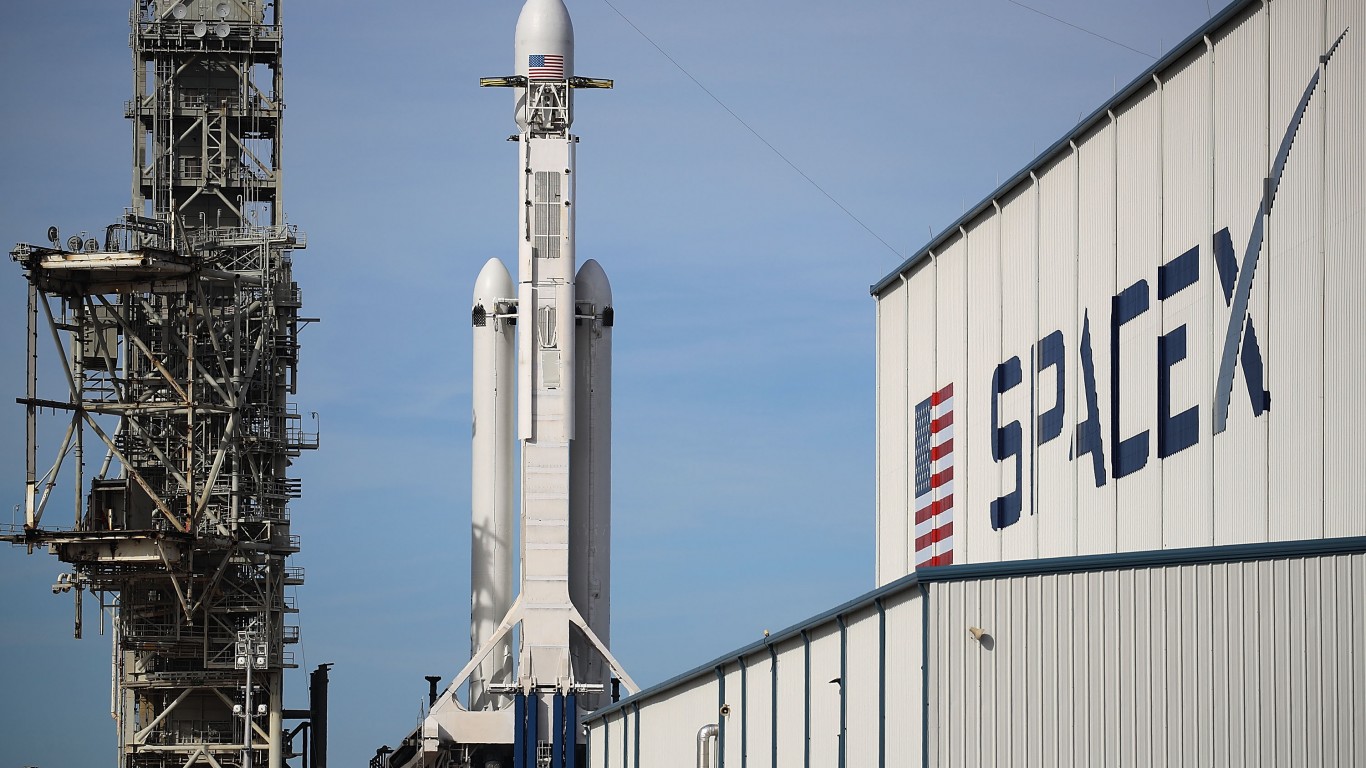
Cathie Wood Says SpaceX Could Be the Most Important Company in History, and She’s Buying the 38% Dip
Cathie Wood just called SpaceX the most important company in history and started buying a 38% dip that has a $116 billion share unlock waiting on the other side. Her actual thesis has almost nothing to do with rockets.

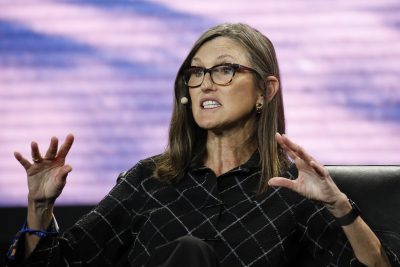
Cathie Wood is doing the Cathie Wood thing again. SpaceX (NASDAQ:SPCX | SPCX Price Prediction) is down 38% from its recent peak and trading below its IPO price; the lockup clock is ticking, and the founder of the firm that manages $30 billion in assets just told Fox Business on July 22, 2026, that the company “could become the most important company in history.” Not the decade. History. ARK is buying more instead of trimming.
The underlying claim is more interesting than the headline, because Wood is not defending a rocket business anymore. She is defending an AI holding company that happens to own the world’s cheapest way to leave the atmosphere. The public-market proxies for this thesis, Tesla (NASDAQ:TSLA) and Rocket Lab (NASDAQ:RKLB), tell you what the market thinks of the space-and-AI trade right now. Tesla is down 14% year to date, and Rocket Lab is down 27% over the past month. Wood is buying anyway.
The Moat Wood Is Actually Defending
“SpaceX has a first mover advantage. It will be difficult. It has a ten year lead and the key has been reusable rockets.” That decade of iteration shows up in one number that matters more than any valuation multiple. SpaceX controls 70% of satellites in orbit. Reusable boosters are the reason. Every competitor has to build the flywheel from zero while SpaceX is already spinning it.
Rocket Lab is the closest publicly traded pure-play alternative, and Peter Beck’s team is running the correct playbook. Q1 2026 revenue hit $200.35 million, up 63.46% year over year, with a backlog of $2.20 billion and non-GAAP gross margins of 43.0%. Neutron, the medium-lift vehicle meant to compete with Falcon 9, is targeted for its debut launch later in 2026 after a stage-1 tank test failure pushed the timeline. That is the state of “second place” in launch. Impressive, growing, and still years behind.
The Real Thesis Is Orbital Data Centers
Rockets are the setup. The punchline is compute. Wood argued that “The secret to scaling technologies is falling costs as units increase… SpaceX has a first mover advantage with 70% of the satellites and beyond that we have the global data centers, orbital data centers so they will be the most economic and will allow Elon and team the opportunity to develop… some of the most sophisticated frontier models in the world at the lowest cost.”
If you own launch, you own the cheapest way to put racks of GPUs into orbit where solar is free, and cooling is a physics problem instead of a water bill. The GAO flagged this exact concept in April, noting that data centers could account for up to 12% of U.S. electrical demand by 2028 and that since January 2026, the FCC has received three applications from U.S. companies for large satellite constellations operating as data centers. Wood says SpaceX is already renting data center capacity to Anthropic and Google. If that scales, the company competes with hyperscalers, not Boeing (NYSE:BA).
Tesla is the tell. Tesla disclosed a roughly $2 billion equity investment in SpaceX in Q1 2026 and is partnering with SpaceX on a vertically integrated semiconductor fab at Gigafactory Texas. Elon is stitching his companies into one AI-industrial stack. The Q1 filing shows where the money moves.
The Multi-Trillion Stack Versus the $116 Billion Unlock
Wood’s final flourish stacks the businesses on top of each other. “Ultimately SpaceX when they combine the most powerful, the robotaxi opportunity, the orbital data center opportunity… There are lots of opportunities and they are multi trillion dollar opportunities.” She also framed AI productivity as a generational advantage for U.S. companies, with Chinese competitors looking less efficient despite throwing raw compute at the problem.
Now the ugly part. SpaceX is set to unlock $116 billion in shares after IPO restrictions lift. That is a supply wave arriving into a stock already down 38%. Prediction markets are pricing 96.4% odds against S&P 500 inclusion in 2026, meaning index-fund buying will not rescue the float. Nasdaq-100 inclusion is already resolved yes, which helps, but does not neutralize the coming supply.
Wood’s thesis is coherent and more sophisticated than the headline suggests. The launch moat is real, the orbital compute angle is not science fiction, and the Tesla-SpaceX-xAI convergence is happening in filings. Whether you buy the dip depends on whether you can sit through the unlock. Wood can. Most retail cannot.
Contact [email protected] for any questions or corrections.
Omor Ibne Ehsan is a writer at 24/7 Wall St. He is a self-taught investor with a focus on growth, cyclical, and dividend equities that have strong fundamentals, value, and long-term potential. He also has an interest in high-risk, high-reward investments such as penny stocks.