AMD Is On Track to Beat Lisa Su’s $100 Billion Revenue Prediction By 2 Years
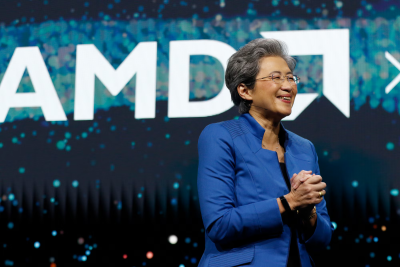
Lisa Su set a bold target for AMD to hit $100 billion in annual revenue by 2030, but Wall Street analysts now see a very different timeline taking shape as AI infrastructure spending reshapes the entire semiconductor landscape.

Artificial intelligence spending continues to reshape the semiconductor industry. Hyperscale cloud providers are committing hundreds of billions of dollars to AI infrastructure, and the market is beginning to look less like a winner-take-all race than many investors expected just two years ago. As inference workloads expand alongside AI training, customers increasingly want a second supplier capable of delivering cutting-edge accelerators at scale. That shift is creating an opportunity that simply didn’t exist when Nvidia (NASDAQ:NVDA | NVDA Price Prediction) stood almost alone.
Advanced Micro Devices (NASDAQ:AMD) has moved from being an afterthought in AI GPUs to becoming a legitimate challenger. While it still trails Nvidia by a wide margin, Wall Street is beginning to price in a future where AMD captures enough of the exploding AI market to become a permanent fixture in hyperscale data centers. If those forecasts prove accurate, CEO Lisa Su’s ambitious goal of reaching $100 billion in annual revenue by 2030 may arrive much sooner than expected.
AMD’s Next Generation Could Be the Catalyst
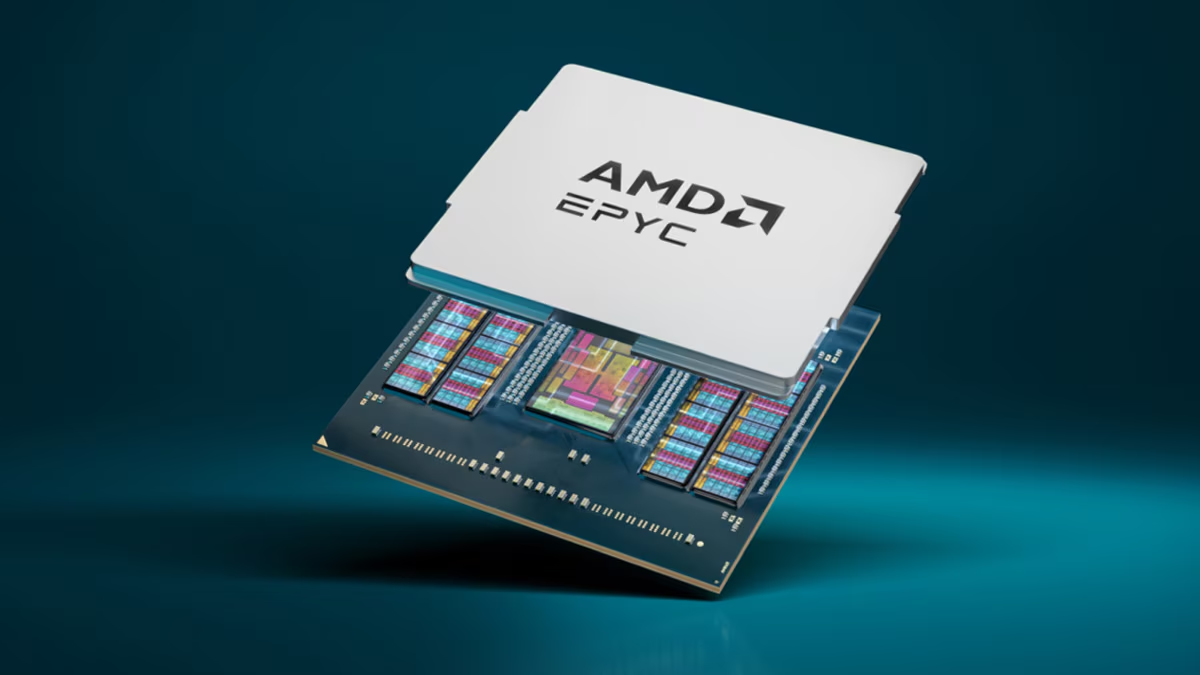
AMD’s AI story barely existed a few years ago. Today, its Instinct accelerators are winning deployments at many of the world’s largest cloud providers, and the next generation of products could accelerate that momentum.
According to AMD’s product roadmap, the forthcoming MI450 accelerator and Helios AI rack system are designed to compete for larger-scale AI deployments. Rather than selling individual chips, AMD is increasingly offering integrated rack-scale solutions that mirror how hyperscalers now build AI clusters.
That matters because inference demand is expanding rapidly. Training large language models remains important, but serving billions of AI queries every day requires enormous computing capacity. No single supplier is likely to satisfy all of that demand.
If MI450 and Helios execute as planned, AMD could establish Instinct as the industry’s credible second source at scale. That’s an attractive position because customers often prefer multiple suppliers to improve pricing, reduce supply chain risk, and diversify technology platforms.
The Numbers Already Point Toward a Faster Timeline
Wall Street’s forecasts suggest AMD may be much closer to Su’s long-term vision than many investors realize. According to analyst consensus estimates, AMD is expected to deliver:
| Metric | Forecast |
| 2026 Revenue Growth | 43.5% |
| 2027 Revenue Growth | 58.9% |
| Revenue Growth Needed in 2028 to Exceed $100 Billion | 26.6% |
| 2026 EPS Growth | 78.6% |
| 2027 EPS Growth | 83.3% |
| Five-Year Annual EPS Growth Rate | 66.6% |
If AMD delivers the projected 43.5% revenue growth this year and another 58.9% next year, it would need only about 26% growth during 2028 to surpass $100 billion in annual sales — beating Su’s original 2030 target by roughly two years.
Even more striking, that would represent roughly three times the revenue AMD generated during 2025. Few companies of AMD’s size have sustained that kind of expansion without creating an entirely new business. AI accelerators appear to be doing exactly that.
Let’s also remember that these estimates aren’t assuming AMD overtakes Nvidia. Instead, they’re based on AMD capturing a meaningful slice of an AI infrastructure market that’s growing rapidly enough to support multiple winners.
Execution Still Matters
Granted, these projections remain forecasts, not guarantees. Nvidia continues to dominate AI accelerators, and competition from custom silicon developed by hyperscalers could limit market share gains over time.
That said, AMD no longer needs to become the market leader for shareholders to benefit. Its strategy increasingly revolves around becoming the preferred alternative for customers building massive AI clusters, and every successful Instinct deployment strengthens that position.
As AI spending shifts toward inference at scale, having two credible GPU suppliers may become less of a luxury and more of a necessity. That trend could give AMD a longer runway than many investors currently appreciate.
Key Takeaway
In short, AMD’s transformation into a serious AI infrastructure company is happening faster than almost anyone expected. According to Wall Street consensus estimates, the company is on pace to reach Su’s once-aspirational $100 billion revenue milestone by 2028 instead of 2030, while analysts also project 66% average annual EPS growth over the next five years.
The biggest catalyst isn’t simply selling more AI chips. It’s the arrival of the MI450 accelerator and Helios rack platform, which could establish Instinct as the leading second source for hyperscale customers as inference demand expands.
Regardless of whether AMD ever matches Nvidia’s scale, investors should recognize that becoming the clear No. 2 in one of the fastest-growing technology markets in history could still produce extraordinary growth for shareholders.
Contact [email protected] for any questions or corrections.
After two decades of patrolling the dark corners of suburbia as a police officer, Rich Duprey hung up his badge and gun to begin writing full time about stocks and investing. For the past 20 years, he’s been cruising the markets looking for companies to lock up as long-term holdings in a portfolio while writing extensively on the broad sectors of consumer goods, technology, and industrials. Because his experience isn’t from the typical financial analyst track, Rich is able to break down complex topics into understandable and useful action points for the average investor. His writings have appeared on The Motley Fool, InvestorPlace, Yahoo! Finance, Money Morning, and, of course, 24/7 Wall St. He has been featured in both U.S. and international publications, including MarketWatch, Financial Times, Forbes, Fast Company, and USA Today.