AI’s Biggest Winners Today Will Share the Spotlight as Technology Spreads Across the Entire Market
NVIDIA and Microsoft dominate AI headlines, but the real money may flow to a quieter group of power producers and metal miners building the infrastructure underneath. Here is why the next wave of AI winners might look nothing like the…


The host’s argument on Investing Insights lands with a specific market backdrop: Large AI companies like NVIDIA (NASDAQ:NVDA | NVDA Price Prediction) and Microsoft (NASDAQ:MSFT) dominate indexes right now, but the buildout underneath is quietly minting a second tier of beneficiaries in power generation and industrial metals. The host compared today’s AI moment to the late 1990s internet boom, saying “Back in the late ’90s, it was a lot of hype, but then eventually try imagining doing your job today without accessing the internet in any way, shape, or form. So it’s nearly impossible.” The investing implication: today’s concentrated winners will eventually share the stage.
The Concentrated Winners Are Still Winning
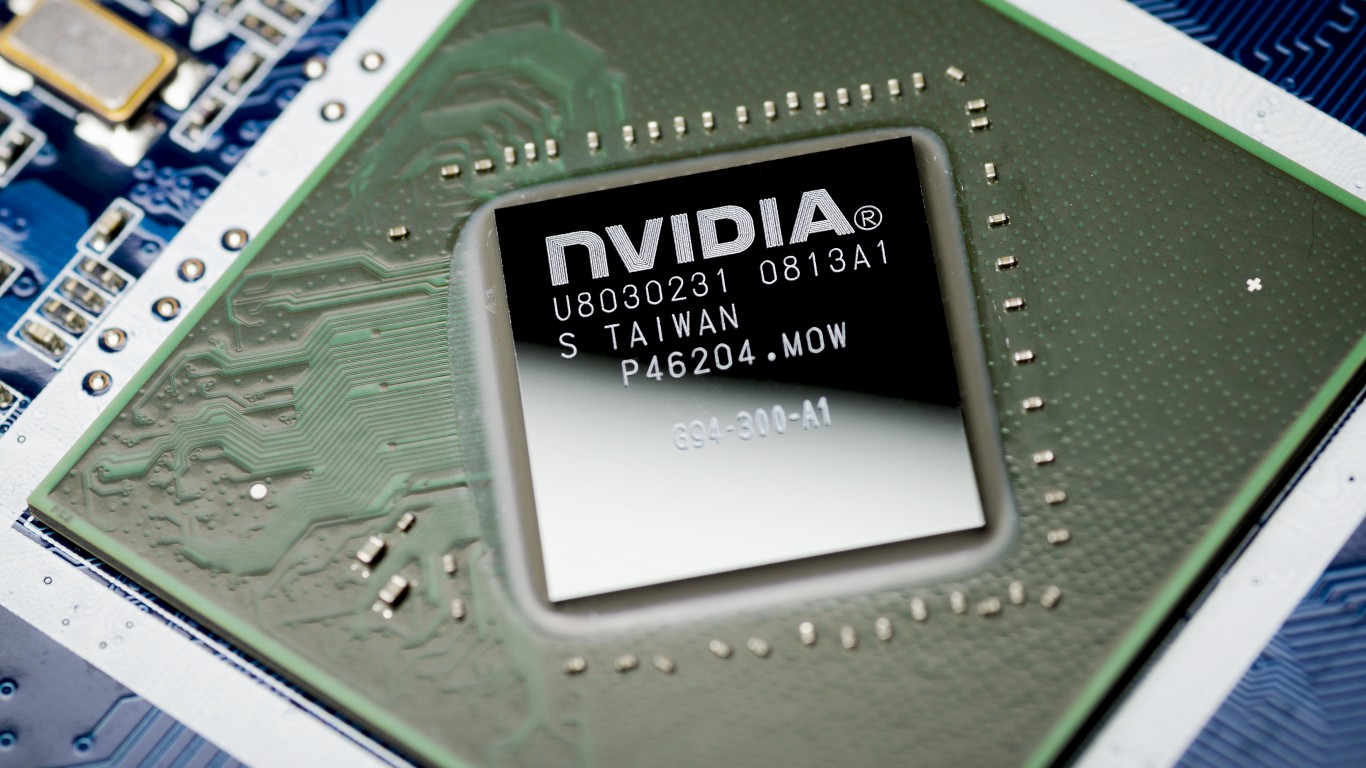
NVIDIA sits at the center of the concentration story. Q1 FY2027 revenue reached $81.615 billion, up 85.23% year over year, with Data Center revenue of $75.246 billion (up 92% YoY) and networking up 199% YoY. CEO Jensen Huang framed it directly in the Q1 release: “The buildout of AI factories, the largest infrastructure expansion in human history, is accelerating at extraordinary speed.” Shares are up 5.24% year to date and 919.18% over five years.
Microsoft is monetizing demand from the software side. Satya Nadella told investors “Our AI business surpassed an annual revenue run rate of $37 billion, up 123% year-over-year” in the most recent quarter, with commercial remaining performance obligations of $627 billion and capital expenditures of $30.88 billion in Q3 FY2026 alone. Shares are down 2.82% YTD following the company’s July 29 earnings report.

Taiwan Semiconductor (NYSE:TSM) provides the foundry capacity that makes all of it possible. Q2 2026 revenue hit $40.2 billion (up 36% YoY), and management guided full-year 2026 growth to slightly above 40% in USD terms, with 3nm at 30% and 2nm at 3% of wafer revenue. Shares are up 28.80% YTD and 70.37% over one year.
The Trickle-Down: Power and Copper
The host’s more interesting call is that the infrastructure layer underneath AI, including power and data center construction, is becoming its own investable theme. The Department of Energy projects data centers will account for up to 12% of U.S. electrical demand by 2028, driven by AI. That is the ceiling utilities and independent power producers are building against.
Constellation Energy (NASDAQ:CEG) is the cleanest listed vehicle for that thesis. After closing the Calpine acquisition on January 7, 2026, Constellation now runs 55 GW of combined capacity. Q1 2026 revenue jumped 63.9% to $11.12 billion, and management guided 2026 adjusted operating EPS to $11.00–$12.00 with 20%+ base EPS growth targeted through 2029. Data center contracts already signed include a 20-year PPA with Microsoft at the Crane Clean Energy Center, plus deals with Meta and CyrusOne. Shares are down 27.31% YTD after a strong 2025, with analyst target price at $356.86.
Freeport-McMoRan (NYSE:FCX) is the copper play behind the grid buildout and data centers themselves. CEO Kathleen Quirk described the company as “America’s Copper Champion and as a global leader in copper with large scale, geographically diverse operations.” Q1 2026 realized copper hit $5.78 per pound versus $4.44 a year earlier, and S&P Global projects copper demand reaching 42M metric tons by 2040, a 50% jump driven by electrification, AI, data centers and defense modernization. The stock is up 19.83% YTD and 54.65% over one year, despite the Grasberg mud rush limiting Indonesia output to roughly 65% of capacity through H2 2026.
What Investors Should Watch Next
The host’s framework has one testable near-term implication. Microsoft’s July 29 report validated the $50 billion-plus CapEx trajectory, the spend flows directly to Taiwan Semiconductor wafers, Constellation megawatt-hours and Freeport copper tonnage. Concentration risk is real, and Reddit’s most-upvoted thread this month captures it: “34% of the S&P is 10 stocks making the same bet.” The counter-thesis worth positioning for is that the same capex cycle keeps pulling adjacent industries into the trade.
Contact [email protected] for any questions or corrections.
Joel South covers large-cap stocks, dividend investing, and major market trends, with a focus on earnings analysis, valuation, and turning complex data into actionable insights for investors.
He brings more than 15 years of experience as an investor and financial journalist, including 12 years at The Motley Fool, where he served as an investment analyst, Bureau Chief, and later led the Fool.com investing news desk. He has also co-hosted an investing podcast and appeared across TV and radio discussing market trends.