Tesla Continues to Crater in 2026: Why One of Wall Street’s Most Controversial Pros Expects 100% Gains
Tesla has cratered 27% this year while the broader market surged, yet one of Wall Street's most polarizing analysts is doubling down on a call that implies the stock nearly doubles from here. Here is what separates his vision from…

This post may contain links from our sponsors and affiliates, and Flywheel Publishing may receive compensation for actions taken through them.
Tesla (NASDAQ:TSLA | TSLA Price Prediction) currently trades at $327.35 against an average Wall Street price target of $397.87, an implied upside of 21.5%.
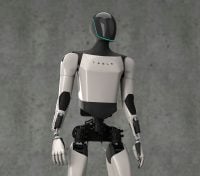
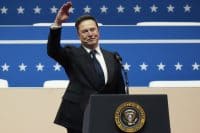
Wedbush’s Dan Ives holds a $600 price target on Tesla, roughly 83% upside from here and close to a double. Tesla is valued as an AI, autonomous fleet, and humanoid robotics platform wearing an automaker’s revenue base. The gap between analyst models and market pricing captures how much of that pivot investors are willing to pay for after a bruising earnings report.
Q2 Spending Compressed Margins
Tesla’s second-quarter earnings collapsed despite accelerating revenue. Non-GAAP EPS of $0.33 missed the $0.5367 consensus by 38.51%, while revenue of $28.24 billion beat by 7.10% on 25.52% growth.
Operating margin compressed to 1.4% as operating expenses surged 47% to $4.35 billion, driven by AI infrastructure spending, R&D, and stock-based compensation tied to Elon Musk’s 2025 CEO Performance Award. Free cash flow flipped to negative $1.09 billion, a 847.95% reversal, as capex climbed 141.81% to $5.79 billion.
Shares fell 17.5% the day after the filing while SPY gained 4.5%. Record deliveries of 480,126 vehicles and 13.5 GWh of energy storage were overshadowed by a $25 billion capital plan investors are no longer willing to underwrite on faith.
Why Ives and the Bulls Are Doubling Down
The bull thesis rests on four pillars: an AI and autonomous mobility re-rating toward a $2 trillion to $3 trillion market cap, high-margin recurring revenue from FSD subscriptions, Optimus humanoid mass production, and vertically integrated compute and battery capex of roughly $20 billion annually.
FSD active subscriptions reached 1.48 million, up 56% year over year, with attach rates above 55% of new North American deliveries. Robotaxi has logged more than 380,000 miles of unsupervised robotaxi across six cities with an “impeccable safety record” and weekly mileage growth Musk pegged at “more than 10% a week”. Cybercab production has started at Gigafactory Texas, and Optimus lines are being installed at Fremont.
Tesla carries 23 Buy, 18 Hold, and 6 Sell ratings, with recent revisions skewing toward reiterations rather than downgrades after the Q2 miss. Prediction markets are cold: Polymarket puts the average August 2026 landing spot at $315.72, and traders assign only 14.5% odds to Optimus reaching commercial release by year-end. Ives’ timeframe is measured in years. The market is measured in weeks.
The EV Peer Group Is Splintered
Rivian (NASDAQ:RIVN) trades at $15.76, down 20.04% YTD, against a consensus target of roughly $18.86, implying about 20% upside. The setup depends entirely on R2 launch execution rather than any AI re-rating.
Lucid (NASDAQ:LCID) sits at $7.78 after a 26.4% YTD decline, with a consensus target near $9.56 for roughly 23% upside. Ratings skew Hold on a new CEO’s turnaround plan and widening cash burn.
General Motors (NYSE:GM) has done the opposite of Tesla. Shares trade at $88.31, up 9.09% YTD, versus a consensus of $101.41, or roughly 15% upside, after GM beat and raised full-year guidance to $12.00 to $14.00 adjusted EPS.
The largest consensus-implied upside sits with Tesla at 21.5%, and by a wide margin if the Ives $600 case is included. Tesla’s dislocation is being priced against expectations no legacy peer carries.
Down 27% While the S&P Ripped Higher
Tesla is off 27.21% year to date and 16.80% over the past month. The S&P 500 is up 13.11% YTD. That is a roughly 40-point spread in seven months.
The stock sits at $327.35 with a consensus target of $397.87 across 47 analysts, with a Buy-lean split. The Ives outlier at $600 is the ceiling. TSLA trades at a P/E of 295, which prices in the AI story analysts are asking investors to believe.
The Bottom Line
The bull case works if robotaxi unit economics scale before Optimus and the Terafab budget swamp free cash flow. Musk’s “10% a week” autonomous mileage compounding, FSD’s 55%-plus attach rate, and $43.5 billion in cash arguably back that bet. Ives’ $600 is the payoff if margins snap back on software and fleet revenue in 2027.
The bear case rests on the risk of another quarter or two of 1% operating margins, negative free cash flow, and Musk-driven headline risk while the market waits for AI monetization to show up in the income statement. Prediction markets are already leaning that direction. The cautious lean is toward the consensus target, with healthy skepticism on the Ives ceiling until deliveries of Cybercab and Optimus become concrete numbers.
Contact [email protected] for any questions or corrections.
Alex Sirois is a financial writer with experience spanning both retail and institutional investing. He has written for InvestorPlace and held roles at BNY Mellon and Bernstein, giving him a perspective that bridges Main Street portfolios and Wall Street analysis.
Alex holds an MBA from George Washington University and has built his career across multiple industries, including e-commerce, education, and translation — a breadth of experience that informs how he breaks down complex financial topics for everyday investors. His writing is conversational, actionable, and grounded in long-term, buy-and-hold investing principles.
At 247 Wall St., Alex focuses on delivering analysis that is both accessible and useful, with a clear emphasis on helping readers make more informed decisions with their money.